
Politics taz
After the election in Israel: Will Eisenkot get the mandate to form a coalition?
Netanyahu opponent and opposition leader Eisenkot receives the most recommendations from the Israeli parties. What this means for forming a government. more...
Deutsch (original) ·Auto-translated to English
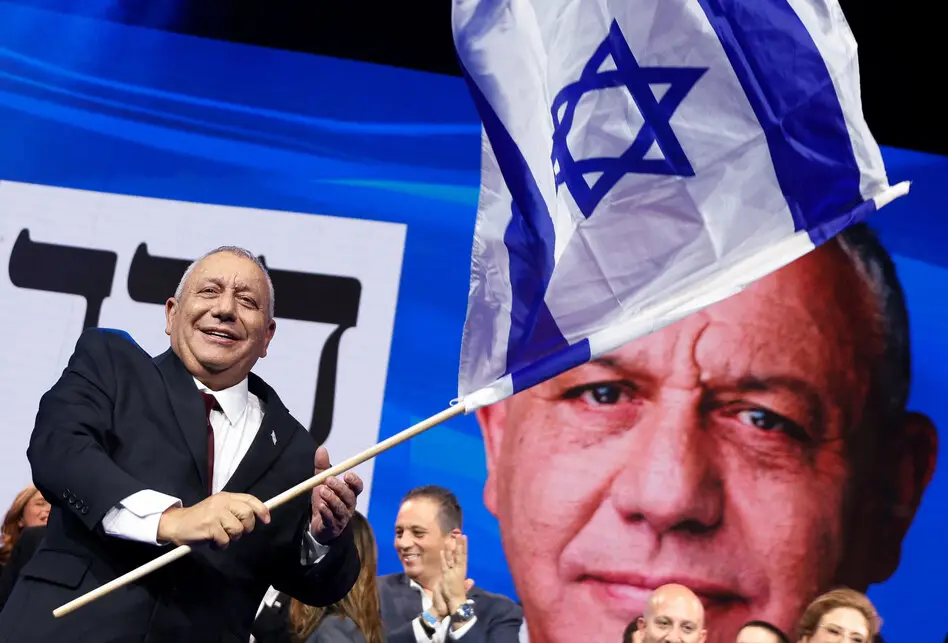
All parties in Israel have now made their recommendations to President Isaac Herzog as to who should be given the mandate to form a new government. As of Thursday evening, opposition leader Gadi Eisenkot had received 67 endorsements - from the Arab Ra'am party, the center-left Democrats party, the center-right Bejachad and Jashar parties, his own party. In addition, the Arab nationalist Joint List surprisingly spoke out in favor of Eisenkot.
Current Prime Minister Benjamin Netanyahu, on the other hand, received only 46 endorsements - from the ultra-Orthodox Shas party and the two far-right parties Religious Zionism and Otzma Jehudit, as well as his own Likud party. The ultra-Orthodox United Torah Judaism (UTJ) party – despite being part of the outgoing coalition – refused to support either candidate.
Although the president receives the recommendations, he has extensive leeway in deciding who he will appoint to form the government. Herzog now has until November 11th to make a decision. After that, the selected candidate has 28 days to form a governing coalition, with the possibility of a two-week extension.
But by then, decisions will already be made: At the top of the current opposition's agenda is the replacement of Knesset President Amir Ohana from the Likud party. He recently stated that he would agree to a vote on his replacement at the opening of the Knesset next week if a majority of MPs demanded this. Other items on the agenda include the repeal of judicial reform laws passed by the Netanyahu government, the establishment of a state investigative commission on October 7, 2023, and the adoption of a law requiring civil or military service for all citizens.
And Netanyahu is showing once again that he is not yet defeated: On Wednesday evening, while Herzog was meeting with the leadership of smaller parties, Netanyahu released his first recorded video message since the elections. In it he warned against relying on “Islamist parties that deny the very existence of a Jewish state.” He stressed that he should lead a "broad national coalition" and claimed that the concerns of "the vast majority of Israeli citizens were being carelessly brushed aside by the leaders of the left-wing bloc" who were forming a government "based on supporters of terrorism."
He also reiterated the claim that “there are serious suspicions that foreign states have intervened with huge sums of money in the election results in the State of Israel.” However, this claim had no influence on the recognition of the election results by the chairman of the electoral commission, Judge Noam Sohlberg.
The head of the domestic intelligence service Shin Bet, David Zini, an official appointed by Netanyahu, recently launched an investigation into alleged foreign financing - without providing any evidence of wrongdoing. The aim: to sow doubt about the election results. Zini recently announced that Arab MP Ayman Odeh was being investigated for allegedly receiving “hundreds of thousands of shekels” from outside parties. He also stated that he wanted to interrogate other Arab party leaders without providing any evidence.
In a text, the Israeli newspaper Ha'aretz refers to Shin Bet officials who told the newspaper that the claims of influence were exaggerated and had no influence on the election result. The police under the right-wing extremist Security Minister Itamar Ben-Gvir from the Otzma Yehudit party arrested several activists from the Arab Ra'am party on election day on suspicion of bribery and election interference - without providing any evidence. By Wednesday, eight days after the election, everyone had been released.