
World taz
After the runoff election in Brazil: Lula shows how it's done
In Brazil, a united left is putting the ultra-right in their place. There is hope again for progressives and Democrats. more...
Deutsch (original) ·Auto-translated to English
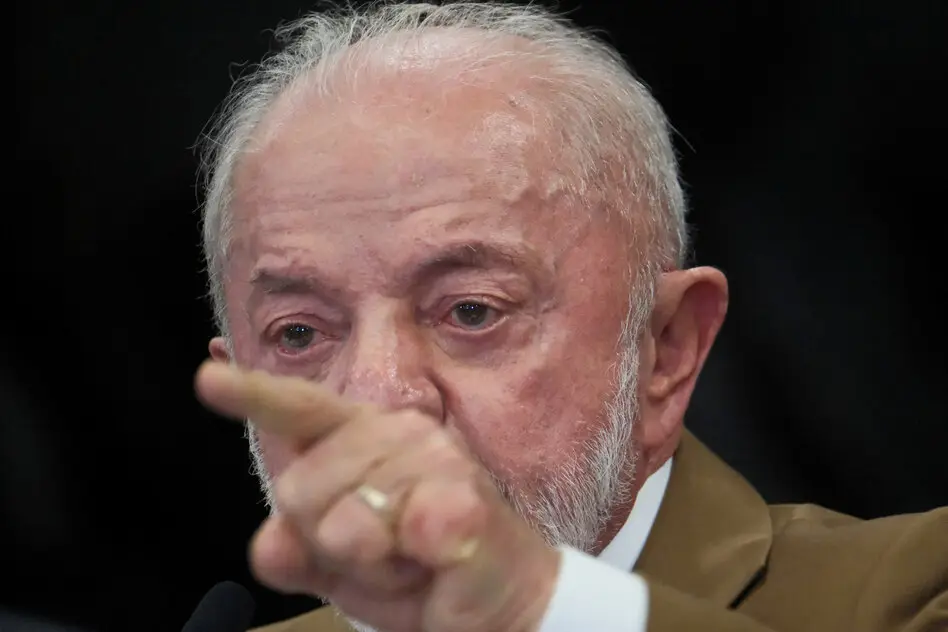
Rarely have progressives around the world celebrated as unanimously as they did after Luiz Inácio Lula da Silva's historic victory in Brazil. Rightly so: Parallel to the social protests in France and elsewhere, the victory of the students in Serbia and now reinforced by the memorable debacle of US President Donald Trump in the midterms, millions have felt the joy of an unexpected political momentum: the advance of the ultra-right can be stopped. The utopia of a better life for everyone is back.
Thanks to hundreds of thousands of mostly independent volunteers who carried his message on the streets and into the digital world, Lula was seen as the embodiment of democracy and social progress. A clear majority recognized that no improvement in their living conditions could be expected from the return of the Bolsonaro clan; their fear of the far right had a mobilizing effect.
Many citizens also now voted for the broad alliance, which extends from the Christian-Marxist-inspired landless movement MST to the conservative Vice President Geraldo Alckmin. Reactionary majorities in parliaments do not make things any easier for the fourth Lula government. But even in his heyday 20 years ago - in 2010, Lula reached the end of his second term in office with a popularity rating of 85 percent - he had a right-wing majority in Congress against him.
The taz is an independent, left-wing and opinionated daily newspaper. We have been arguing in our comments, essays and debate texts since the taz was founded in 1979. We often cannot and do not want to agree on an opinion. That's why you'll find some completely opposing positions here - all part of the very broad left-wing spectrum of opinions.
Six years later, Lula's successor Dilma Rousseff's reign came to an end with a cold coup, an intrigue by right-wing parties and the media. And Lula himself was even sent to prison after a judicial farce for alleged corruption. Now the 81-year-old wants to change his governing style and involve the population more.
Like no other, the pragmatic, undogmatic reformer stands for the successful fight against poverty and hunger. In addition, there is increased participation of formerly excluded people through the opening and expansion of the education system. Inflation is at 4.6 percent. This is low compared to Argentina, where the inflation rate is still many times higher, although it has already fallen significantly under President Javier Milei.
Only recently was the government in Brasilia able to implement the 5-day week, with working hours falling from 44 to 40 hours per week - with full wage compensation. These are important improvements in a country that is still far from getting to grips with enormous problems such as corruption, escalating violent crime and a deep gap between rich and poor. The environmental record of the ex-metalist and oil fan Lula is also mixed, and not just because of the power of agribusiness and finance capital.
However, his re-election is a blessing for Amazonia and therefore the global climate. Statistics on forest destruction show: In his first two terms in office, starting in 2003, deforestation fell by 62 percent, and in his third by 51 percent. In contrast, for climate denier Jair Bolsonaro, it shot up by 51 percent in the four years of his presidency. The left-wing president even aims for “zero deforestation” by 2030. No wonder that the indigenous peoples also see him as an ally.
was taz South America correspondent until 2012, then office manager of the Rosa Luxemburg Foundation in São Paulo and Buenos Aires. Now he is a freelance journalist again.
The Brazilian justice system has clashed with Elon Musk and Mark Zuckerberg on several occasions. Flávio Bolsonaro was blatantly favored by Meta during the election campaign. But through the targeted use of algorithms, Green MP André Janones and the “Lula Army” were able to turn the election on the meta-platforms Whatsapp and Instagram - a novelty in an area where the right-wing extremists seemed unbeatable. Now “General” Janones, as he calls himself, provides digital development aid in Argentina, Spain and France.
And Lula promised further steps to roll back the power of foreign Big Tech oligarchs. In terms of foreign policy, Lula stands for a self-confident demeanor on an equal footing with the USA. He also advocates for diplomatic solutions and multilateralism, for sovereignty and international balance, especially for the weaker countries of the South. However, Ursula von der Leyen probably had less thought about the Brics Plus alliance, which was decried as anti-Western and in which Brazil plays a central role, when she rightly wrote in her congratulations: “Democracy and multilateralism have won in Brazil.”
In his speech to the UN General Assembly in September, Lula said, “War is the declaration of bankruptcy of politics.” And the Special Rapporteur on the Palestinian Territories, Francesca Albanese, whose stance against Israel has repeatedly drawn widespread condemnation, “must not be silenced because she tells the truth,” Lula commented. How nice it would be if the Western European mainstream took note of such self-evident things again!
In Latin America, until recently it looked as if Trump and his comrades would take over the entire subcontinent in accordance with the imperial “Donroe Doctrine”. After a series of defeats for the left in Peru, Colombia, Honduras, Chile and Ecuador, Lula's victory was a much-needed signal of how the right-wing ultras can be put in their place. The progressive heads of state in Uruguay, Guatemala and Mexico retain their most important ally.
Milei in Argentina and the Chilean José Antonio Kast are falling in favor with voters because sooner or later it turns out that neoliberalism, rearmament and reactionary culture war pave the way for extremists to power, but everything gets worse afterwards. As the example of Brazil shows, a popular, mobilizing election campaign with a united left, a self-confident, diplomatically oriented foreign policy without double standards - and of course an eco-social, anti-fascist economic policy - can help counter the ultra-right threat.