
Migration taz
Migrant associations in Saxony-Anhalt: “It’s serious, ladies and gentlemen”
Migrant organizations are concerned that the AfD could soon rule in Saxony-Anhalt. They demand protection from CDU Chancellor Merz and the other countries. more...
Deutsch (original) ·Auto-translated to English
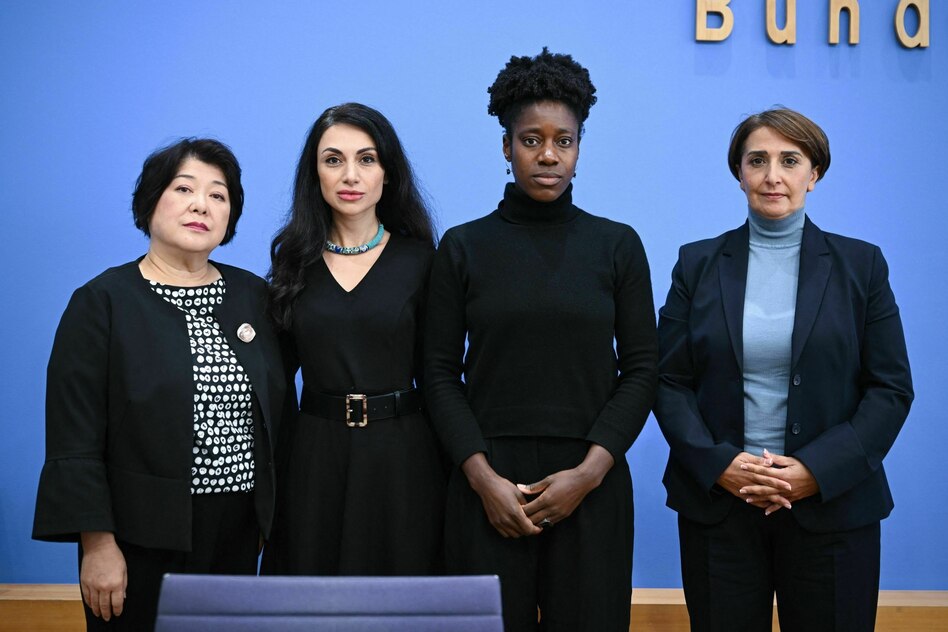
It is no longer about diversity or participation, says Eter Hachmann, the chairwoman of the East German migrant associations (Damost). Since the AfD won the election in Saxony-Anhalt with 44 percent, the mood has changed - especially for migrants, the “targets of the right-wing extremists”.
“People experience exclusion and threat,” reports Hachmann. And she fears: If the AfD governs Saxony-Anhalt from December and decides on the police and schools, then things could get even worse for migrants. They now need effective protection from the federal government of Chancellor Friedrich Merz (CDU) and the governments of the other federal states.
“It’s serious, ladies and gentlemen,” says Hachmann. That's exactly why she and three other women are sitting in front of the blue wall of the federal press conference in Berlin on Monday morning. Next to her: Mehtap Çaglar, the head of the Turkish communities in Germany (TGD), Karen Taylor, the chairwoman of the Federal Conference of Migrant Organizations (BKMO), and Mika Kaiyama from the state network of migrant organizations in Saxony-Anhalt (Lamsa). Together they are calling for a federal-state commission to protect minorities.
Over the past ten years, Lamsa has built a broad structure to support migrants, says Kaiyama. Initial integration, linguistic support, pastoral care. The AfD had already announced during the election campaign that it would cut the money the country uses to promote integration. In this case, Lamsa “cannot save all structures,” even though the association has been on the move for months and is asking for private support.
In addition, the clubs are already under financial pressure. Federal, state and local governments are saving money, Federal Education Minister Karin Prien (CDU) is planning to revamp the “Living Democracy” funding program. This also affects migrant associations, says Karen Taylor. “We will leave people alone” – and this in a situation in which the AfD is concretizing its plans for “remigration”.
Mehtap Çaglar uses several examples to remind us of the consequences that racist thought patterns in authorities have had in the past. When the NSU core trio murdered nine people with a migration background, the police first investigated the families of the victims and spoke of “döner murders”. If the AfD were to rule in Saxony-Anhalt, the question for local people would be: “Who will protect us if those who are supposed to protect us don’t want to protect us?”
In order to counteract this, a federal-state commission should work out what protection gaps there are and how they can be closed - under the leadership of the Chancellery and the Federal Ministry of the Interior. It must be clear how the constitutional state will react if the AfD wants to test the limits of the constitution. Refugees should also be able to be exempted from their residency requirements if they are threatened with racist violence. The federal government should also set up a “protection fund” to quickly support threatened non-profit institutions with money.
Such a protection plan is necessary even before the AfD comes into power. Those affected should be included. “Our protection cannot be decided without us,” says Taylor. So far, the migrant organizations have not identified a strategy. What’s more: “We have not yet been spoken to as organizations.”
In response to a question from taz, the Federal Ministry of the Interior explained that it generally does not respond to demands from the political sphere. The Chancellery referred to the integration officer Natalie Pawlik (SPD). She said on Monday that she considered the demands to be “understandable”. The government will now examine this. The situation for civil society is currently “very serious”. That's why it's important to stand by them, also by people with a migration background.
The Federal Government's Eastern Commissioner, Elisabeth Kaiser (SPD), also promised a “protective shield” for democratically active civil society on Monday. This is what forms the foundation of democracy and holds society together. However, Kaiser left it open what exactly the protective shield should look like. According to taz information, various federal ministries and subordinate bodies are currently checking which funding sources are available to save democracy projects in Saxony-Anhalt should the AfD get serious.
Kaiser called the election in the state a “breaking point”. Since then, hostility towards civil society has been great, as have fears. And she also emphasized how important it is that the federal government now stands behind the democratically active people instead of treating them with suspicion.
This was aimed at Family Minister Prien and her restructuring plans at “Living Democracy”. Natalie Pawlik also made it clear on this point: the renovation plans were “fatal and definitely the wrong way”. According to the SPD woman, “important structures should not be destroyed.” What happens next with “Living Democracy” is currently part of the black-red budget negotiations. The Union is pushing for cuts, the SPD wants to oppose them.
Kaiser, Pawlik and Vice Chancellor Lars Klingbeil also invited around 25 civil society activists to the Federal Ministry of Finance on Monday morning for an exchange. One of the participants, Pascal Begrich from the democracy association Miteinander, emphasized afterwards that one should not have any illusions: “The AfD has come forward with a declaration of war against the visibility of migrant and queer communities, against the vibrant civil society.”
Begrich advocated for an overarching government investment program that supports civil society, democratic structures - beyond “living democracy” and “beyond routines”. Saxony-Anhalt could thus also become a “laboratory for new democratic approaches”.