
Germany taz
“Membering” performance in Berlin: putting fragments of life together
A pottery shard from Bosnia, an archive: the artist Dragana Bulut is about collective grief in her performance “Membering” in the Sophiensälen. more...
Deutsch (original) ·Auto-translated to English
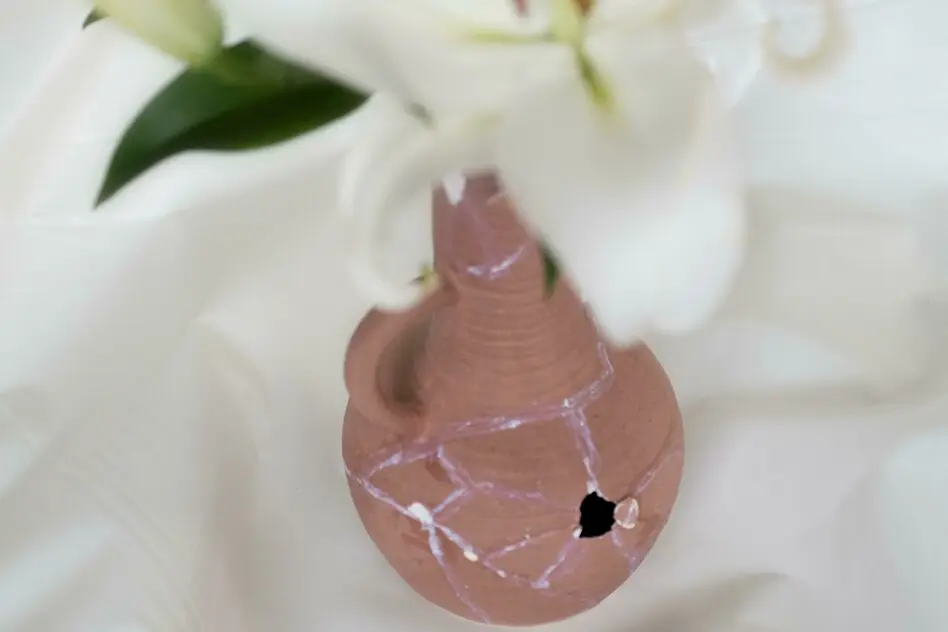
Do you know Kintsugi? No? This is a Japanese craft that involves putting together broken ceramics and applying a visible gold varnish to any broken points. What was once destroyed should be given new value. Kintsugi is considered a symbol of resilience and personal healing. Crises, breaks and scars become part of life; they do not make a person weaker, but rather help make him or her more expressive.
In her participatory performance “Membering”, the artist Dragana Bulut takes up the Kintsugi concept to make it clear: What is once broken will never become what it once was, but something new can emerge.
At the beginning the music swells in the Sophiensälen, the artist enters the room in a red overall and begins to smash clay flower vases with a hammer. She proceeds with concentration, without any haste. The process of destruction is just as much a part of it as that of restoration. Once finished, the artist remains silent in a pose on stage, a single shard in her hand.
Then the audience is asked. It should take a seat at installed workstations and start collecting shards of the destroyed vases. A woman gives instructions and you are in the middle of an archive whose remains need to be put together. In between, the artist is questioned, as is believed to be common in the concept of trauma therapy. According to what she is feeling and where in her body. What it's like to be stared at in this room full of people.
It's difficult to get involved in this part, as the sea of fragments wants to be put together in front of you at the same time. You sit in groups of three and have to use brushes to remove dust from the shards before gluing them back together. The stations are well equipped and give the impression of an archaeological site, including Polaroid cameras for the documentation process.
The shard in Bulut's hand, as she reveals, is not from the room. It is a ceramic shard from her grandfather's destroyed house in southern Bosnia. She traveled there following the footsteps of her family history and found them in the ruins, which are now covered in fig trees. She carefully passes the shard to the audience and wonders aloud who held this piece of crockery and what path it took to get to her possession.
“Membering” is not about individual grief, but about collective grief. Based on her own family history, which begins in the Second World War, when her grandfather's village was destroyed and his first family was murdered, Bulut takes the audience back to that time. Using photos and video material, she illustrates where life once was and how it became something that she still carries with her memory today.
Admittedly, putting the broken fragments together is fun. Where the three of you create something together, an invisible bond is created that, just as fragile as the resulting works of art, carries you through the evening. Things get emotional when Bulut invites you to imagine someone who is no longer a part of your life. At this point the busy crafting audience becomes very quiet, reflects and conjures up the invisible.
In a world where it's all about consumption, an evening with Bulut is a welcome change: you shake off November-related tiredness, create something new and even do a little self-healing in the process.