
Germany taz
Melanie Berger-Volle died: She remained a rebel until the end
The Viennese Trotskyist and Jew Melanie Berger-Volle has died. Thanks to Harakiri actions, she survived the Shoah, got involved and lived to be 105 years old. more...
Deutsch (original) ·Auto-translated to English
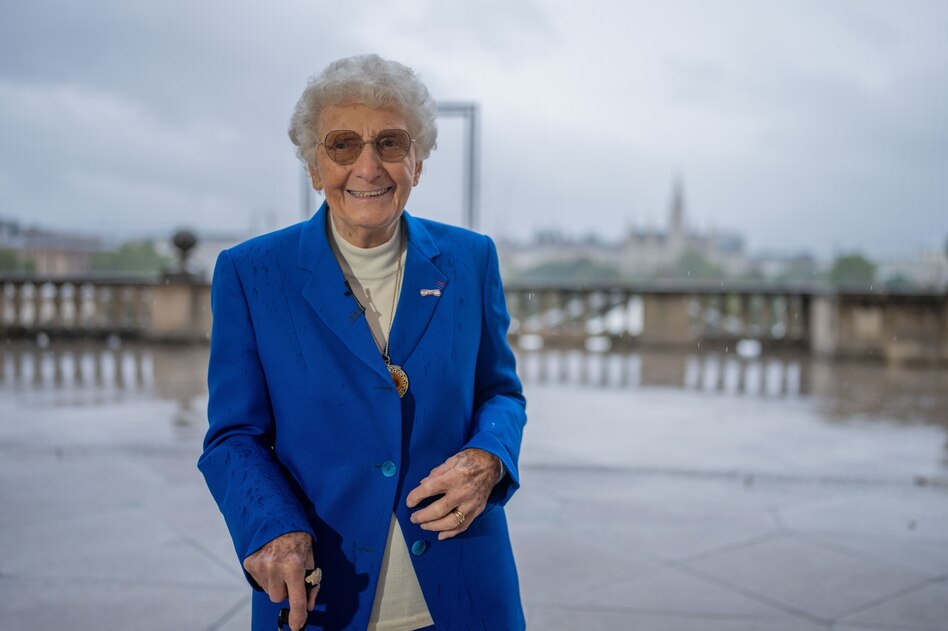
She also rebelled in the hospital: When they temporarily only had a stretcher instead of a hospital bed, she sat on a chair and went on strike. That was only a few weeks ago. Melanie Berger-Volle was already quite rickety, but not so weak that she couldn't show them again. A bed for her was quickly organized.
The resistance fighter from Vienna was a master of understatement. If anyone asked her what she had done, she would often say, “just a small thing.” At the age of 14, she was already sticking notes against specialistism on the walls of houses in Vienna. The teenager saw the poverty around her and wanted to improve the world. She joined the Revolutionary Communists, a Trotskyist splinter group that dreamed of world revolution and campaigned against both the Nazis and the Stalinists.
After the annexation of Austria in March 1938, the 16-year-old was doubly at risk as a leftist and a Jew. In May she decided to leave her country. This was followed by escape and persecution, which she miraculously survived almost unscathed. In May 1938 she fled to France via Belgium. But in the country of their dreams, even Nazi opponents became unwanted people after the war began. She fled further to southern France and was arrested by the French police in January 1942. An informant had betrayed their small resistance group.
In prison, a special team tried to beat the names of her comrades out of her, but she kept quiet - according to archived police reports in the town of Montauban. Berger was sentenced to 15 years in prison and transferred to Marseille prison, where things got tight for her: the Germans had now also occupied the south of France. The Gestapo man Klaus Barbie, who was also called the Butcher of Lyon because of his cruelty, combed the prisons with his henchmen for political prisoners.
Using short messages that she was able to smuggle out of prison, Berger instructed her group to free her. And so on October 15, 1943, five figures, more or less well disguised as Gestapo officers, marched into the prison wing of the Marseille hospital where she lay with acute jaundice. With snappy German orders, they managed to get Melanie Berger out for supposed interrogation. After the cinematic Harakiri action, Melanie Berger went into hiding in Lyon, where she recovered and took over courier services for the French Resistance.
But her odyssey didn't end with the liberation: she couldn't celebrate with the French - it was too dangerous because of her German accent. And the trips to Vienna after the end of the war were a risk: the Soviet occupiers deported Trotskyists to Siberian camps.
With her husband, the journalist Lucien Volle, whom she met in Vienna, she decided to return to France in the early 1960s. It was the time when former SS brigade leaders in Austria celebrated their first successes with the newly founded FPÖ.
After her husband's death, Melanie Berger began to tell stories about her life, and did so tirelessly - mostly to students in Saint-Étienne, a city southwest of Lyon, where she lived for the last few years. It took a long time for people in Austria to recognize who they had let go: it wasn't until she was 93 that she received her home country's Gold Medal of Merit. Melanie Bergner died on October 21st in Saint-Étienne.