
Germany taz
More money than Klingbeil estimated: agreement on the budget for 2027 was achieved
The Bundestag's budget committee reached an agreement overnight. Expenses and debts increase. These are the details. more...
Deutsch (original) ·Auto-translated to English
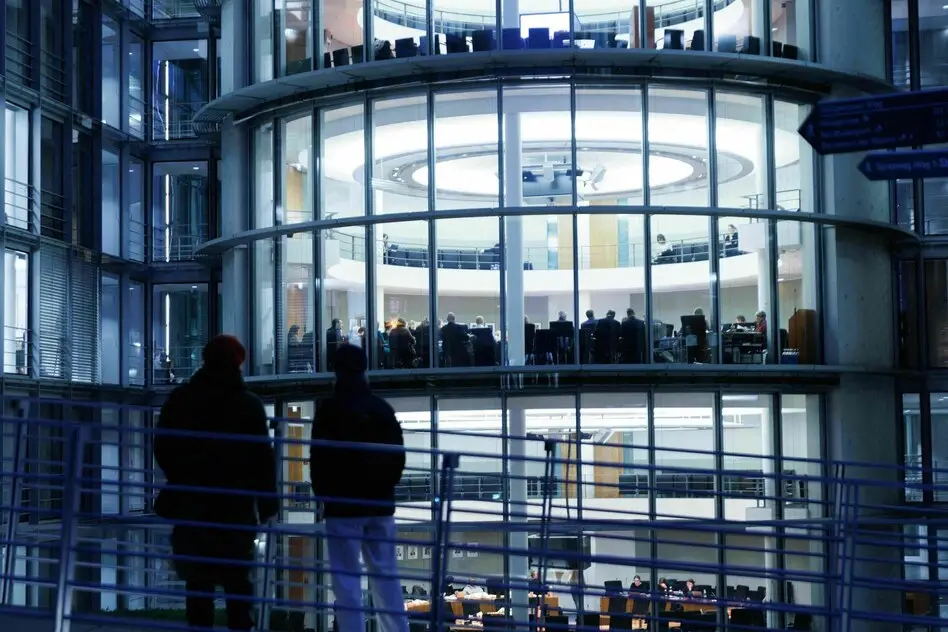
afp | The budget for the coming year is in place: The Bundestag's budget committee put the final touches to the budget in its adjustment meeting and reached an agreement. As budget politician Sebastian Schäfer (Greens) told the AFP news agency on Friday morning, federal spending totaling 555.436 billion euros is planned in the core budget.
This is even higher expenditure than the 555.4 billion euros originally planned by Finance Minister Lars Klingbeil (SPD) and also more than in the current budget. The figures for the planned debt are also clearly pointing upwards: According to the now unified budget, net borrowing of 122.972 billion euros is planned for the coming year - after 98 billion euros this year.
Together with the debt-financed special funds for infrastructure and climate neutrality as well as for the Bundeswehr, the new debts will total around 210.413 billion euros next year. This number will rise steadily in the coming years and will result in tens of billions in interest payments due every year.
The federal government explains the large sums primarily with the international economic and security situation, for example with the consequences of the wars in the Middle East and Ukraine. This entails massive investments in defense capabilities.
On Wednesday evening, the Union and the SPD reached an agreement on important controversial issues before the decisive discussions on the 2027 federal budget. The promised reduction in electricity tax for everyone will initially not be possible because, according to the information, the around 5 billion euros required for this cannot be financed. Eyes now turn to the coalition committee on Tuesday.
The Union and the SPD also agreed that cuts originally planned in the social sector would be defused. After massive resistance from business, the plastic tax should not come after all; the sugar tax should be postponed by half a year to 2028.
“The 2027 federal budget itself is becoming a major future risk,” Schäfer told AFP. “Instead of consistently investing in infrastructure, climate protection and economic strength, the coalition is abusing the special fund to plug its budget holes,” criticized the Green politician.
He continued: “This federal government is incurring new debt without creating a new future.” The Chancellor “showcased a reduction in electricity tax for months and then didn’t deliver.” “With this budget, the coalition is undermining confidence in public finances, damaging growth, wasting opportunities for the next generation and preventing people from making their lives affordable.”
Left-wing politician Dietmar Bartsch also expressed massive criticism of the agreement. "The Chancellor wanted to reduce the electricity tax. This budget doesn't even bring that to the citizens," Bartsch told AFP. “This is nothing less than a slap in the face from the Vice-Chancellor to the Chancellor, who is once again the announcement Chancellor.”
According to Bartsch, the coalition has “lost itself in a debt labyrinth that only brings one thing to citizens: astronomical interest payments and rising taxes in the coming years with simultaneous cuts.”
The left-wing budget keeper continued: "It would be best for the future viability of this country if Lars Klingbeil did not present another budget. What has been done in less than two years is becoming increasingly difficult to correct."