
World · taz · · 2h
Massacre victims in Iran: The contradiction of the fathers
Deutsch (original) · Auto-translated to English
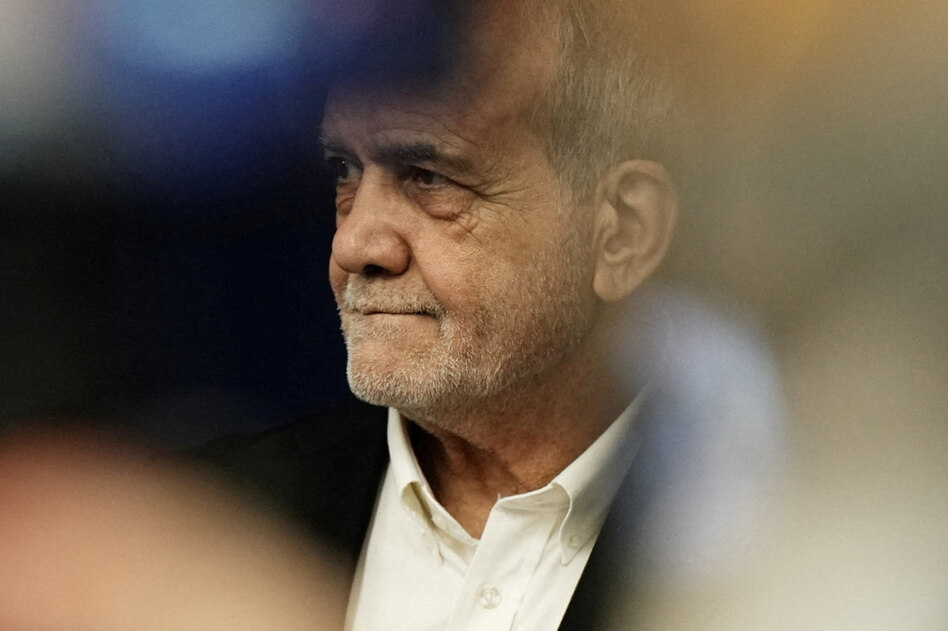
When thousands of protesters died in just two days in Iran in January, the Iranian regime quickly developed its own version of the events: that Mossad agents and armed terrorists had infiltrated the crowds, leading to the "tragedy" in which, according to the UN, far more than the Iranian government's figure of 3,038 people died.
Now the Iranian government used the stage of the UN General Assembly until September 28th to bring exactly this narrative to the world. In his speech to the UN and in interviews with Western media such as Fox News and Face the Nation, Iranian President Massoud Peseschkian repeated the usual talking points and called the mass protests an "attempted coup." Mostly without any significant objection from journalists.
But for a few days now, it has been the victims' relatives themselves who have publicly contradicted the Iranian president - at risk to their life and limb.
What is remarkable about the videos that various fathers of killed demonstrators have posted online is the calmness with which they refute their president's claims.
For example, there is the father of Sepehr Shokri, a protester who was 25 years old when he was hit in the chest and killed by a military projectile from above at 9:20 p.m. in eastern Tehran on January 8th. Sepehr's father is already painfully familiar to many Iranians. Immediately after the massacres, a video was released showing him sobbing for 12 minutes under piles of corpses, searching for his murdered son.
In response to Peseschkian, Shokri now argues in a coolly rational manner: "I would like to say to President Peseschkian, who described our sons as armed rebels and terrorists at the UN: On what basis do you make these statements? (...) I call on Tehran's police chief and the head of the criminal investigation department to check all surveillance cameras in the area." Finally, Shokri holds up a mirror of her own faith to the Iranian rulers: “Imam Hossein says: ‘Tell the truth, even if it is not in your favor.’ Aren’t you well-versed in Shiite teachings, Mr. Peseschkian?”
Another father poses in front of the camera with a picture of his son, the murdered architecture student Erfan Abdipour. Abdipour was hit by two bullets in the chest near Tehran's Aryashahr Square, where he joined the protests after working at his brother's restaurant. With his eyes closed, the father responds to the accusation of an attempted coup: "There are no military barracks or other security-related buildings around Aryashahr Square, so what was my son supposed to 'take' there?"
Similar statements, in video and written form, were made by dozens of other relatives, brothers, sisters, fathers and mothers. The videos were shared thousands of times on Persian-language social media. Independent reports from Amnesty International and a UN commission of inquiry, published in September, support the statements of the relatives. Accordingly, Iranian regime forces systematically committed “crimes against humanity” through the mass killings in January.
The Iranian rulers should still be satisfied. Because they managed to use the UN General Assembly as a major PR show. Brushing aside the reality of repression and terrorist financing, Peseschkian portrayed Iran as a victim of “attempted coups” and “American terrorism.”
Part of this strategy was probably the meetings with high-ranking EU politicians, such as the EU foreign policy chief Kaja Kallas and the German Foreign Minister Wadephul. Iran is apparently proactively seeking this closeness and its legitimizing effect, as the Green EU parliamentarian Hannah Neumann suggests on Platform X: She too was invited to a meeting with the Iranian ambassador. Unlike other politicians, she declined the invitation.
Read the full story at the source
Source: taz