
Germany · taz · · 4h
Dilapidated Rhine crossing: The bridge of the Bonn Republic
Deutsch (original) · Auto-translated to English
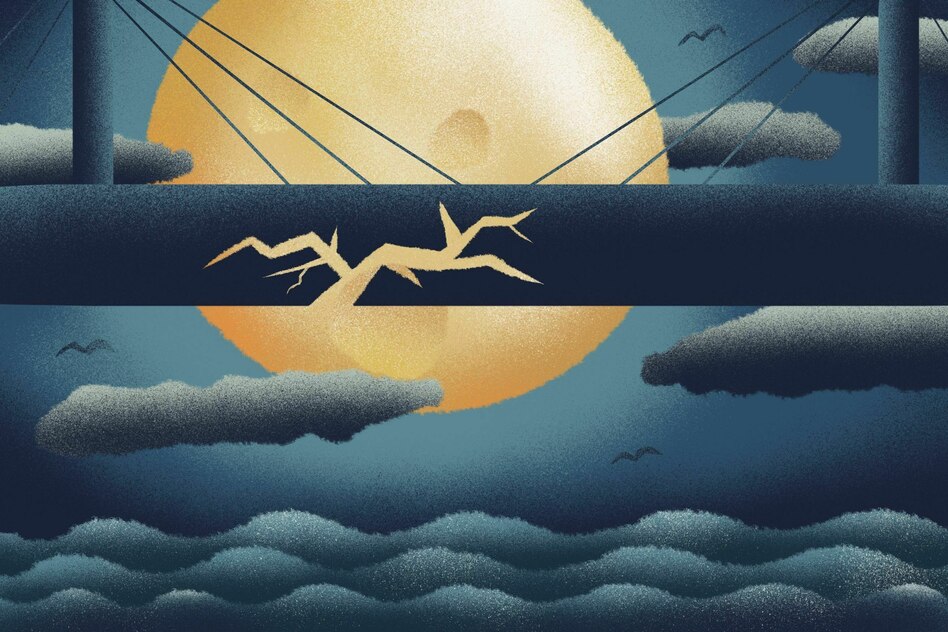
Shock, what a crater! A stump of the amputated motorway rises a good five meters into the sky above Graurheindorfer Straße, a stone's throw from the Ministry of the Interior, headquarters in Bonn. And then about 30 meters further on, its damaged continuation rises gently behind a mountain of rubble, blocked by excavators and containers: the Friedrich-Ebert-Brücke, normally by far the busiest of Bonn's three Rhine bridges.
The noise protection glass panes remain clearly visible from the edge of the construction site. In 2024 one of them got loose and crashed onto the towpath: Phew, lucky, nobody hit! To the left and right of the road, which is now closed, they mark how the path would continue towards the Rhine and then across it, from the west bank to Beuel, the east of Bonn.
But now there is a hole between the foreshore and the river bridge. The sight almost brings tears to your eyes, it feels so painful and sudden. Amazing: It's just a highway bridge. And the news was known and the reason for making the pilgrimage here. A number of tourists actually came to take selfies in front of demolition work: at least since Friedrich Schlegel hailed them as “monuments of human heroism” in 1802, the ruins of the Rhineland have been considered sights of European importance.
As the first cable-stayed bridge of the particularly elegant multi-cable type, the Friedrich Ebert Bridge in Bonn set standards when it opened in 1967. It served as a modernist-optimistic landmark for the federal capital at the time.
East German tourists. In order to push back the AfD, it would be necessary to discuss from the five federal states of the former GDR territory what “has gone wrong in West Germany in recent years and decades,” as suggested by Saxony-Anhalt's former Prime Minister Reiner Haseloff (CDU).
Nothing works on the bridge and Bonn's traffic has collapsed. It is not advisable to travel by car in urban areas due to traffic jams in which buses are also parked.
The news that the Friedrich-Ebert-Brücke had been hastily shut down at 3 p.m., “as a precautionary measure,” as the press releases said, was on all nationwide news channels on June 3, 2026. During inspections, structural damage to the supporting structure of the approach bridge was discovered. The prospects are also uncertain. The demolition and new construction of the foreshore bridge is supposed to be completed in 2028. But then a new construction of the main bridge should slowly begin. According to ADAC, the loss of this Rhine crossing will cause 55 million additional vehicle kilometers to be driven every year.
The BAB 565, one of the 20 busiest motorways in Germany, runs over it: until it was closed, a good 100,000 motorized vehicles used the bridge every day, most of which now roll through the Bonn urban area. Other road users remained uncounted. As early as 1964, a pedestrian path was planned to the left of the motorway and a cycle path to the right. Admittedly, this trail was always a windswept, frightening place for children. Next to thundering cars and so high above the river, their 2.75 meter width felt so narrow! But the trail was there.
This text first appeared in wochentaz, our weekly newspaper from the left!
Every week, wochentaz is about the world as it is – and as it could be. A left-wing weekly newspaper with a voice, attitude and the special taz view of the world. New every Saturday at the kiosk and of course by subscription.
In order to see through the grille how the cycle ramp winds up to the bridge, you have to walk down to Römerstraße, through the social housing estate on Friesenweg. During the day it is just as loud there as usual due to the construction noise. But residents can now open the windows at night. The unfamiliar silence seems almost ghostly.
The only thing that is currently being torn down is the banal concrete foreshore bridge, which has been brought to its knees not least by the lack of maintenance in transport policy. This also encourages the condition of infrastructure to deteriorate overnight as if by magic: in 2024, to stay on the subject of the motorway, meter-deep pits of hell suddenly opened up on the embankment of the BAB 27 in Lower Saxony, and in 2021 an evil spirit drove into the Rahmede valley bridge in Sauerland, which was then blown up. Of the 6,000 motorway bridges in North Rhine-Westphalia, 30 percent are considered in need of renovation. Most come from the 1960s.
Their technology-loving optimism is expressed in the steel center section of the Ebert Bridge, Germany's first multi-cable bridge with cable bracing on just one level. From below on the bank you can see how the sun plays in the 80 red ropes on four gigantic harps with which the road slab is suspended from two 55 meter high pylons. They rest in the Rhine in giant granite-clad slippers; powerful, and yet with a dance-like elegance, as if the bridge were inviting you to break open.
Was it intended as an allegory of the “new, more flexible policy towards the East” that CDU Chancellor Kurt Kiesinger, of all people, had proclaimed five kilometers further south and just eleven days before its opening at the state ceremony marking German Unity Day in the Bundestag? In retrospect, his speech on June 17, 1967 surprisingly seems like a first, cautious step on Willy Brandt's heroic path to change through rapprochement. But all of that was so long ago that it is certainly no longer true and has long been in ruins.
Read the full story at the source →
Source: taz