
Germany · taz · · 51m
Marie Kreutzer on “Gentle Monster”: “That won’t be told for another hundred years”
Deutsch (original) · Auto-translated to English
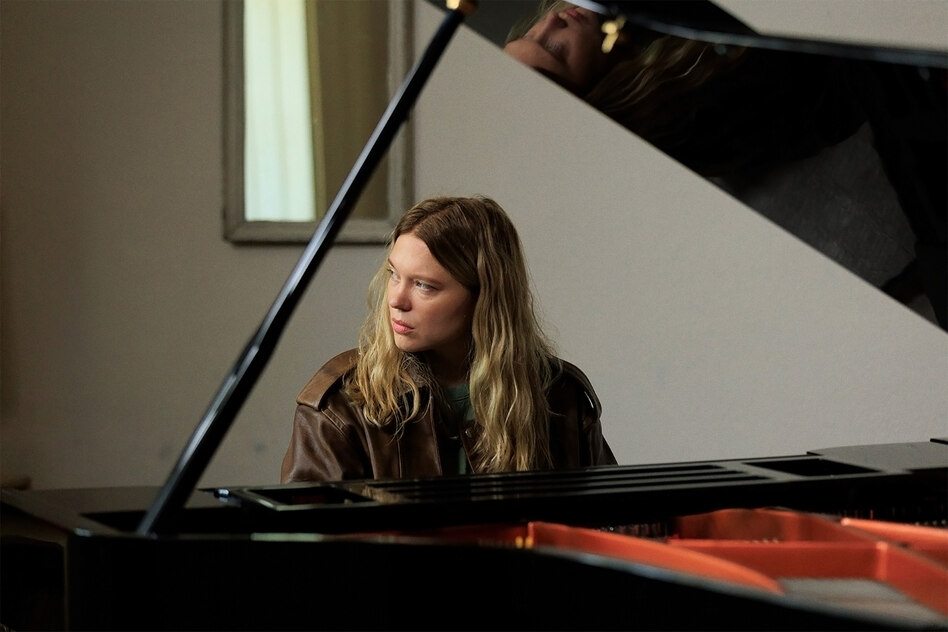
In “Gentle Monster,” the husband of musician Lucy (Léa Seydoux) is arrested for possessing child abuse images. While she struggles with the truth, the drama also follows police officer Elsa (Jella Haase), who is confronted with male aggression and traditional role models in her own parental home. In an interview, Austrian director Marie Kreutzer explains why the two perspectives belong together for her - and how the Florian Teichtmeister case influenced her work on the film, which premiered in the Cannes competition.
taz: Ms. Kreutzer, what was the starting point for “Gentle Monster”?
Marie Kreutzer: I read an article in 2020. This was a major investigation by several journalists into a large ring of pedo criminals in North Rhine-Westphalia that was uncovered at the time. It was about investigative work, but also about individual cases. The article was very explicit, very hard to read. And he showed me something that wasn't clear to me or that I perhaps didn't want to admit: that I definitely know not only the victims, but also the perpetrators. The article made it clear that it can be anyone, even a nice guy. The creepy guy behind the bush is a rarity. That was the starting point at which I thought: I can only make a film about this. Because – what else am I supposed to do?
Marie Kreutzer was born in Graz in 1977. She studied Romance and German in Graz and Vienna. She then studied screenwriting and dramaturgy at the Vienna Film Academy. Her feature film debut “The Fatherless” was shown at the Berlinale in 2011. She was represented in the Berlinale competition in 2019 with “The Ground Beneath Your Feet”. The historical film “Corsage” was shown in Cannes in 2022.
taz: You don't tell the story from the perspective of the perpetrator, but instead focus on his partner, Lucy. She is a musician, mother of a son, confident - and is suddenly confronted with suspicions against her husband, which question her previous life. What interested you about this character and his situation?
Kreutzer: There's this saying: "Take your worst fear and write about it." And I think one of the worst fears for parents is that their child will die or something will be done to them. But if this danger comes from someone you love, it is of course a much greater risk. I was never interested in how the perpetrator was doing, what he was doing and why. Perpetrators receive far too much attention from society and the media anyway. I'm more interested in: How do we as an environment deal with a case like this? It's always very easy to judge from a distance, but not so close up. So how isolated is a case like this? Lucy also represents society. How reluctantly do we look? How would we like there to be a harmless explanation? How would we like not to deal with such cases?
“Gentle Monster.” Director: Marie Kreutzer. With Léa Seydoux, Jella Haase and others Austria/Germany/France 2026, 112 min.
taz: There is a second main character, the police officer Elsa. She is involved in Lucy's case and at the same time looks after her father, who suffers from dementia and who treats his carer condescendingly and physically harasses him. Why was this second perspective important to you?
Kreutzer: I thought: If we just tell Lucy's story, then the audience can sit back and say: "Bad story, has nothing to do with me." Through Elsa, the whole thing takes on a different dimension because it becomes clear: for her, this is just one case in a thousand. She's constantly dealing with it, tomorrow she'll be in front of a different door. That's why it was clear to me that it had to have its own story that reflected some of that.
taz: With Elsa, much more everyday situations of male dominance come into focus: In addition to the abusive father, there is the brother who leaves a large part of the care work to Elsa - but gets recognition for taking care of a broken lamp...
Kreutzer: I'm glad you said that. Men often don't understand the scene. On average, this led to funny situations. Men have repeatedly said to me: “There’s no need for this scene, it doesn’t say anything.” Some women, however, expressly thanked her for the scene.
taz: Lucy is about an extreme case that no one in society would put into perspective. With Elsa, on the other hand, you exhibit behavior that is often tolerated or excused. Do you see a connection between these different forms of border crossing and violence?
Kreutzer: Absolutely, it starts very early and actually both have to be contradicted. But: the closer someone is to us, the more we accept them. If it's someone we know, respect, or love, we're inclined to say, "Yeah, that's just how he is. He's so old. He makes jokes like that." Or: “Different generation.” We apologize and justify a lot. That's what I think Lucy and Elsa have in common: they both have a hard time being honest with themselves.
taz: After the premiere of “Gentle Monster” in the Cannes competition, this aspect was controversially discussed: the fact that you addressed both pedocrime and everyday forms of male dominance in a film. In some reactions this connection was seen as a provocation. Did that surprise you?
Kreutzer: I find it interesting that some men react so bluntly to it. I don't read reviews, but I've noticed it in interviews. A male colleague of yours actually asked me: “This story, the woman is like this and the man is like that – will it soon be told?” And I said - I respect him very much and have known him for a long time -: “Do you actually know what world we women live in?” Apparently not! Of course, this won't be told for another hundred years.
taz: What is it about this relationship between women and men that persists so stubbornly?
Kreutzer: For me the origin is always the same. We are socialized to believe that the greatest value we have in this life is to be beautiful. And men are taught that the greatest thing they can achieve is to be powerful. This lust for power or this desire for power is, I believe, the origin of the relatively small conflict in Elsa's parents' house, of Lucy's story and of all the wars that we have in this world. It's all the same problem, in my opinion.
taz: You said at the beginning: “I can only make a film about it.” What should remain of “Gentle Monster”?
Kreutzer: I think overall the question would be: What can I do? And on all of these levels. All of this starts earlier than with pedocrime or rape. So: How can I talk to my children about this? On the one hand, to protect them better and make it clear to them early on what their limits are. On the other hand, also to make them better people who will not repeat such behavior. But even if you don't have children, it's ultimately about honesty - towards others and yourself. About not looking away and not laughing things off.
taz: You said that the thought occurred to you in 2020 that you probably knew the perpetrators yourself. It later became known that the actor Florian Teichtmeister, with whom you worked on “Corsage,” had possessed depictions of child abuse. This gave the question at the beginning of your film a personal dimension. What did that do to your work on Gentle Monster?
Kreutzer: That was of course a huge shock. Since our film, “Corsage,” was currently in the media, I was given responsibility as one of the directors who worked with him. People even attacked me on the street. At first I thought: I can't make this film anymore.
taz: What changed this thought then?
Kreutzer: I realized relatively quickly: That's probably exactly the reason why I have to do it. Because it confirmed my original idea that I definitely knew the perpetrators. On the other hand, this issue has certainly made me stronger as a person and as a director. Once you've been in a shitstorm like that, you don't care if one comes again. I say what I want, I say what I think and I make the films the way I think they are right. This resilience, not to depend on what others think, is urgently needed in this profession. And it has become stronger.
Read the full story at the source
Source: taz