
World · taz · · 1h
Madagascar is calling: On the other end of the line
Deutsch (original) · Auto-translated to English
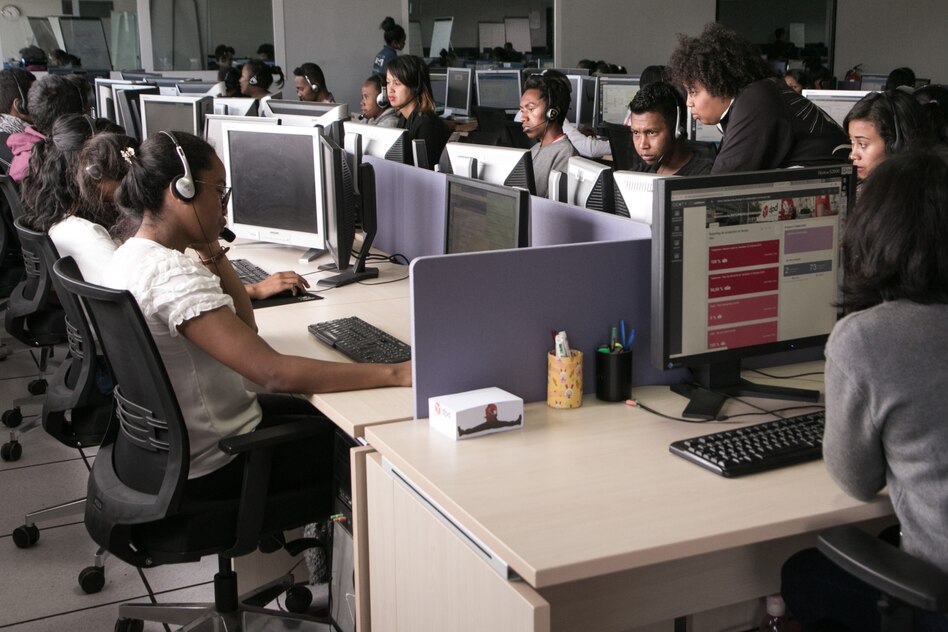
It's 6 p.m. in Antananarivo, the capital of Madagascar. Office workers stream onto the streets, shopkeepers lower their shutters, the hustle and bustle of the city gives way to the silence of the night. For most people, the workday is over. For Njara he starts. She enters one of the largest call centers in the country, joins almost a hundred colleagues, puts a headset over her head and sits down in front of a computer screen.
In a few moments she will hear voices from France. Some callers need help. Others are frustrated before it even takes off. Njara is the voice on the other end of the line who deals with strangers' problems. There will be 30 to 40 that night. “People call because something isn’t working or because they want to complain.”
Colleagues from 16 African countries are taking part in the 5th Africa workshop of the taz panter foundation. This also creates a 64-page, elaborately designed magazine. It can be ordered by email to stiftung@taz.de with the subject “Africa Magazine” and your name and postal address. Thank you!
The magazine's texts also appear here on taz.de.
Would you like to support the taz Panter Foundation:
• or via the foundation’s account details:
Most people have no idea where Njara is. They hear fluent French and don't know that the young woman is thousands of kilometers away on an island in the Indian Ocean.
French companies come to Madagascar because there are many French-speaking university graduates and the time difference with Europe is favorable. But there are weeks when the roster turns Njara's life upside down. She works exclusively night shifts, sometimes for three months at a time.
Her shift ends at 2 a.m. when the streets are almost empty. The company sends a driver accompanied by a security guard to take employees home. Still, she can never fully relax. “Some colleagues have already been attacked or robbed.”
Around 45,000 Malagasy people earn their living in call centers, the industry is one of the fastest growing in the country. There are over 230 call center companies on the island. The industry accounts for around a third of job offers. The sector attracts thousands of overqualified university graduates who have studied law, communications, business or languages. The industry offers what much of the local job market cannot: immediate employment and a steady income.
Njara had other plans. She was about to complete her master's degree in law and was planning a legal career. The corona pandemic thwarted that. The call center was supposed to be a temporary solution. Almost six years later, she is still there. “Initially, people come to earn enough money to finish their studies,” she says. "Later they can't find a job in the field they studied - or the pay is worse than in the call center. So they stay."
The minimum wage in Madagascar is around 60 euros per month. Call center employees earn 120 to 180 euros including bonuses, night supplements and meals, while team or department managers sometimes earn over 240 euros.
But Njara says the reality is more complicated. “Sometimes you wait months or even six months for bonuses that you have already earned,” she says. "You have to file complaints until they get paid out. Sometimes they don't get paid out at all."
For Njara, the most difficult part of the job is the emotional toll. Many callers are already upset before she even has a chance to help. "It puts a lot of psychological strain on sensitive people. After a while you no longer feel like yourself."
Support the taz panter foundation and its international projects with a donation. Learn more
About 350 kilometers east of the capital, in the coastal town of Toamasina, it is almost midday when Fitahiana wakes up and prepares for her day. The city has been bustling with activity for hours as she gets ready for her shift from 2 p.m. to 10 p.m. Your schedule changes from project to project, but one thing always remains the same: your working day is based on overseas clients.
Like Njara, Fitahiana never imagined working in a call center. She studied information and communication sciences at a private university. But financing her studies became difficult. “I had to work, tuition fees and teaching materials were expensive.” At the time, call centers were almost the only ones offering jobs that didn't require a degree.
Today Njara works in sales. She spends her afternoons calling people who have already requested information about a product. Some live in France, others in other European countries, in the USA or in Africa. Some are ready to listen, others hang up before she can even introduce herself. "You're the one who bothers the person you're calling. Sometimes people say, 'Don't ever call again!' even if they've previously expressed interest." Then you have to calm them down and move on.
Initially, Fitahiana also worked on customer satisfaction surveys. To do this, she had to contact people whose numbers came from external databases. People often reacted negatively. At the end of her shift, she feels like her body is still following the rhythm of the call center. "I never get a good night's sleep because I only wake up in the middle of the day. The housework is always left behind." The calls don't stop and the many hours in front of the computer make her eyes tired.
Nevertheless, the job doesn't only have bad sides. Over time she became more confident. Dealing with difficult conversation partners has become easier and she now enjoys the challenge. The salary and bonuses make her feel recognized.
Telephone customer service is no longer the only work outsourced to Madagascar. According to the business association EDBM and the tech association GOTICOM, companies from other tech industries such as AI or recruitment have recently also been coming.
Six years after her supposedly temporary start, Njara still hopes to work as a lawyer. Your diploma is in a folder at home.
Read the full story at the source
Source: taz