
World taz
Air traffic in the USA: Technology breakdown causes thousands of flight cancellations
Due to “instability” in the radio and radar system, the US Federal Aviation Administration temporarily imposed a nationwide take-off ban - with significant consequences. more...
Deutsch (original) ·Auto-translated to English
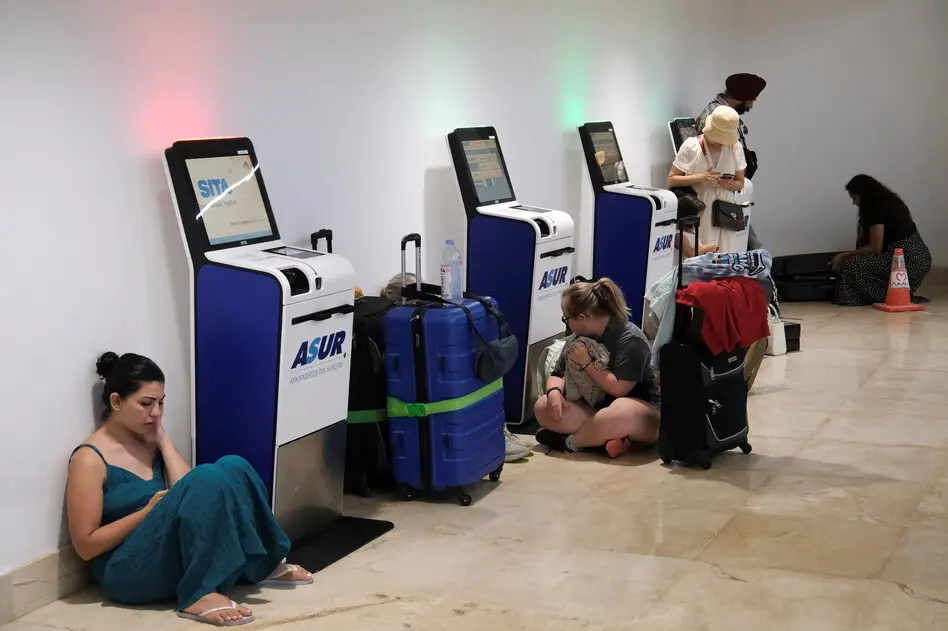
The United States of America had to close its entire airspace on Friday. Thousands of flights were forced to land or diverted. Passengers were stuck in the airports and had to look for alternative ways to get to their destination. It was the longest closure of US airspace since the terrorist attacks of September 11, 2001 and the first complete closure since January 2023.
According to US Secretary of Transportation Sean Duffy, the reason for the extraordinary measure was a failure of several outdated air traffic control systems, which affected both communication between air traffic controllers and aircraft and radar surveillance of the airspace.
US Secretary of Homeland Security Markwayne Mullin said the airspace closure was a “pure precautionary measure” and that “at no time were lives in danger.”
More than 10,000 flights were affected by the disruptions, which paralyzed the world's busiest airspace for more than four hours. Delays and cancellations are likely to last into the weekend.
According to the online service Flight Aware, airlines had canceled more than 6,600 flights by Friday evening local time. Flights from Europe to the USA were also affected. Around 1,500 flights have already been canceled for Saturday.
Some passengers had to wait for hours in planes on the apron before a decision was made about what to do next. Passengers posted videos and wrote comments on social networks about the situation at the various hubs in the country. The travel plans of several teams from the US professional leagues NHL and NBA as well as college football were also disrupted by canceled flights. However, these flights should be given priority, explained Duffy.
Mullin and Duffy said during a press conference at the White House that there was no indication so far that a cyberattack could be responsible for the technical disruptions to the air traffic control systems. However, she didn't want to rule it out completely.
In addition to regular passenger flight operations, the disruption also affected the logistics industry. Shipping companies like FedEx, DHL, and UPS move hundreds of millions of tons of freight and mail by air every year. These flights were also stopped by the nationwide take-off ban.
Transport Minister Duffy could not guarantee that such a disruption would not occur again. “We're dealing with an incredibly old air traffic control system,” Duffy said. He predicted that without fundamental modernization, “failures will continue to occur in the future.” In his press conference, he therefore called on the US Congress to provide his agency with the necessary resources to modernize the outdated system.
"Many of our control towers are almost 100 years old. [...] Our air traffic controllers have buildings with leaky roofs. The air conditioning systems don't work... and the elevators are also broken."
The US Congress approved $12.5 billion for the modernization project last year. Since then, old copper cables have been replaced by fiber optic cables at many airports, and outdated radio systems are also being gradually replaced. The US government under President Donald Trump is asking for an additional $30 billion to bring the entire air traffic control system up to date.