
Germany · taz · · 3h
LNG boom in Mozambique: The gas is there. Not the prosperity
Deutsch (original) · Auto-translated to English
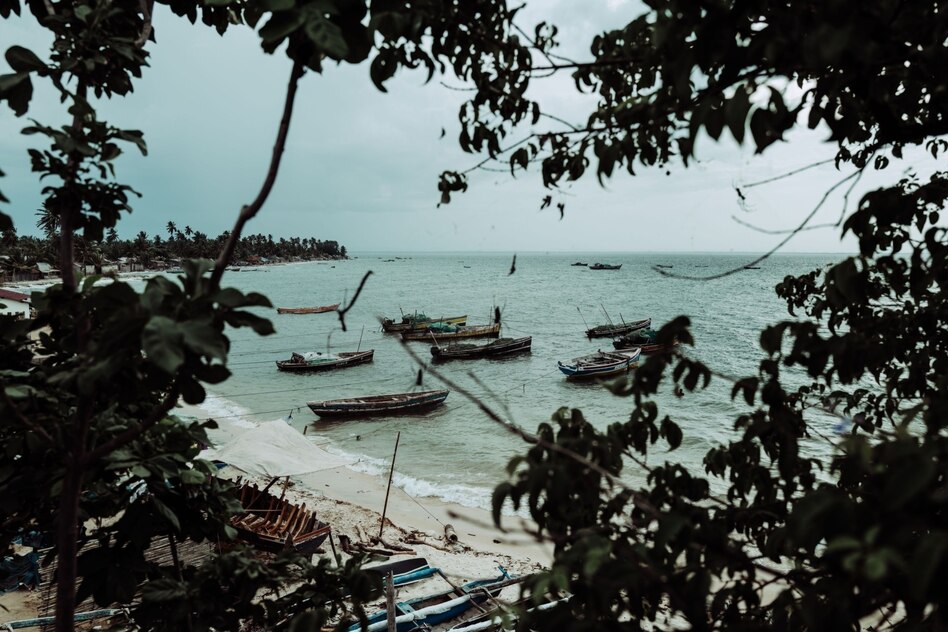
Around 3.5 trillion cubic meters of recoverable natural gas are said to be stored in the Rovuma Basin off the coast of Cabo Delgado province in the far north of Mozambique. The discovery of the huge deposits from 2010 was seen by many as an opportunity to restructure the country's economy and improve the living conditions of the population. But for young people like 28-year-old Abdul Amadeu, the hope that gas would bring new opportunities to Cabo Delgado province has so far remained little more than a distant hope.
Amadeu comes from the city of Palma in the far north of Cabo Delgado, just a few kilometers from the LNG plants. To find a job, he still had to move more than 2,000 kilometers to the capital Maputo.
Support the taz panter foundation and its international projects with a donation. Learn more
“I don’t earn much here, but it’s much better than at home,” says Abdul Amadeu. But even in Maputo he only found work in a market on the outskirts of the capital. “At least I’m not just sitting here doing nothing,” says Amadeu.
His monthly income in Maputo of around 200 US dollars is at least enough to send some money to his family in Palma. His greatest wish is to one day renovate the house where his mother lives in the north of the country.
But given the large construction and development projects he observed in Palma almost a decade ago, he did not expect to still be in such modest economic circumstances so many years later.
Stories like Abdul's are common in Mozambique. Many young people are leaving the regions around the megaprojects in search of better opportunities in the capital or even in neighboring countries. They do not see any immediate benefit for themselves from the gas projects.
In the communities of the Palma district and other parts of Cabo Delgado, the promise of development through gas projects clashes with the reality of life for many residents.
The already extreme poverty appears to have become even worse. Many families lost their agricultural land as space was made for construction sites and other infrastructure related to the projects. The allocation of new areas is causing resentment because communities now have to travel long distances to reach their fields.
The situation has been made even more dire by the terrorist attacks that have plagued the province of Cabo Delgado. They led to mass displacement, destroyed houses and significantly restricted economic activities.
Overall, investments in Mozambique's natural gas projects are estimated at more than $50 billion. The Mozambican government estimates total revenues from liquefied natural gas (LNG) since the start of commercial operation of the Coral Sul FLNG floating facility in November 2022 and December 2025 at $252.8 million.
Colleagues from 16 African countries are taking part in the 5th Africa workshop of the taz panter foundation. This also creates a 64-page, elaborately designed magazine. It can be ordered by email to stiftung@taz.de with the subject “Africa Magazine” and your name and postal address. Thank you!
The magazine's texts also appear here on taz.de.
Would you like to support the taz Panter Foundation:
• or via the foundation’s account details:
Expectations were also high when it came to creating jobs. TotalEnergies, which operates the LNG project known as Area 1, announced in 2023 that it would create at least 10,000 direct jobs over the following two years, primarily for the population of the Palma district.
For young people with low levels of education like Abdul Amadeu, these are just empty promises that are not reflected in the everyday lives of their communities.
“Mozambique is not a country that lacks resources,” says Clésio Foia, chief economist at the Fundec economic foundation. But the wealth from natural resources “has not yet translated into economic development for the majority of the population.” Certain social groups are further excluded and there is a lack of political measures to take the interests of all parts of the population into account.
Researcher Justino Nhare sees structural poverty and the marginalization of certain social groups in Mozambique as closely linked to the country's dependence on foreign countries. “Almost 22 percent of our budget depends on foreign aid,” says the researcher. As long as the country relies on external resources to finance areas that should be the pillars of national sovereignty, it is difficult to defend its own sovereignty and the interests of local communities. Nhare also points to the extent to which Mozambique is exposed to foreign creditors.
Debt must “bring actual returns” to the country, says Nhare. However, Mozambique's financial dependence is reflected in political dependence and limits the country's room for maneuver when making important decisions in sensitive areas such as health, education and infrastructure.
A study by the Center for Public Integrity (CIP) examined the immediate financial impact of Mozambique's natural gas projects. The focus is also on the fact that the state had to take out loans of around $1.4 billion to secure its participation in the Area 4 gas project consortium. This was the only way the state-owned Empresa Nacional de Hidrocarbonetos (ENH) could enter Area 4.
According to CIP's calculations, the state's stake in Coral Sul will only bring significant net income to the state from 2033. Until then, ENH's dividends will be used entirely to service debt.
“I just hope that one day things will change,” says Abdul Amadeu. He is now trying to realize his dreams far away from the gas megaprojects. "They say we are a country with a lot of resources. But in practice you don't see any of that. If we at least had jobs, we could take the rest into our own hands," he says.
Read the full story at the source
Source: taz