
Germany · taz · · 2h
Oil crisis caused by the Iran war: Merz wants to relieve drivers
Deutsch (original) · Auto-translated to English
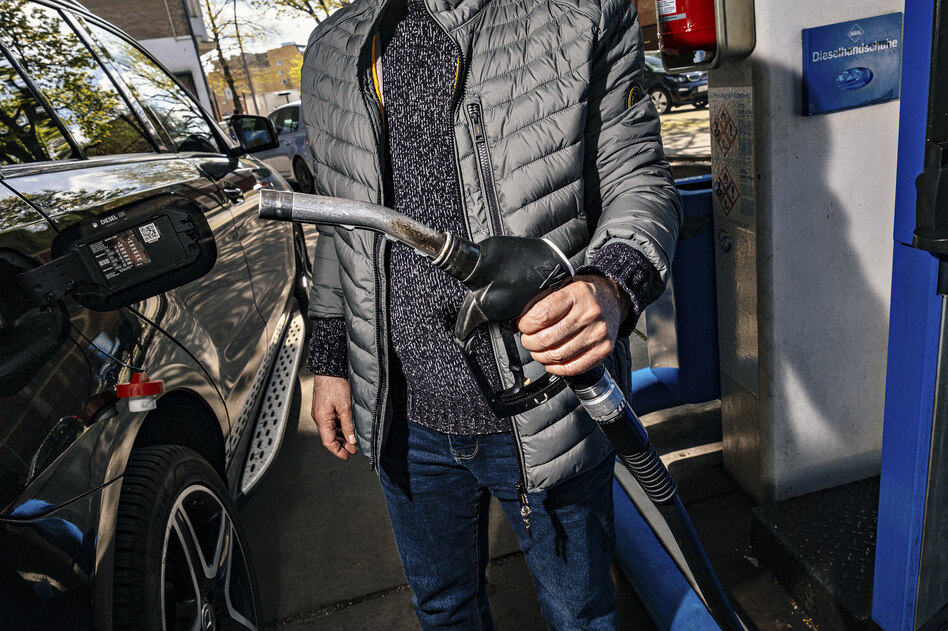
Friedrich Merz wants to relieve the burden on drivers at the gas pump. Especially for people who rely on cars every day, “a limit has been reached,” said the Chancellor on Tuesday at an event organized by the foreign trade association BGA in Berlin. “I believe we need to act.”
The CDU politician was unable to say on Tuesday exactly how he wanted to act. The “exact set of instruments” is still being explored, within the federal government and with the federal states. “Very soon,” the Chancellor promised, there would be a proposal.
Fuel prices at German gas stations have recently continued to rise. According to ADAC, a liter of E10 premium gasoline cost a nationwide daily average of 2.286 euros on Monday - more than ever before and a good 1 cent more than the day before. The price for a liter of diesel was 2,412 euros, just a few cents below the previous high.
The background: Since the governments of the USA and Israel began war against the Iranian regime in February, the world market for crude oil has been under pressure. The Strait of Hormuz, an important sea route for oil and gas transport from the Gulf states, has been virtually blocked since then. It is unclear how many tankers and freighters can pass through the strait daily; The International Maritime Organization (IMO) recently reported that around 400 ships are still stuck in the Persian Gulf.
Iranian armed forces repeatedly attack energy infrastructure in the Gulf states, and the US military destroyed five Iranian oil tankers just a few days ago. Another important transport route, the Bab al-Mandab Strait in the Red Sea, has apparently been controlled by the Houthi militia in Yemen since last week.
The result: less crude oil is available worldwide, which drives up the price of oil. Because Germany sources oil and liquid gas primarily from other regions of the world, fossil fuels have not been in short supply here, but they have become more expensive. This not only affects private drivers, but also transport companies in industry. Mineral oil companies are taking advantage of the crisis and making gasoline and diesel even more expensive - according to the environmental organization Greenpeace, the companies made additional profits of 976 million euros on the German gas station market in July, more than ever before.
Meanwhile, business representatives and tabloid media repeatedly accuse the state of profiting from the crisis. However, that is not true, said a spokesman for Federal Finance Minister Lars Klingbeil (SPD) on Monday: The energy tax that the federal government collects on the sale of gasoline and diesel, for example, is fixed at 65.45 cents per liter for gasoline and 47.04 cents per liter for diesel, regardless of the selling price.
The VAT is charged as a percentage, so the revenue from it theoretically increases with higher prices. However, diesel sales in particular fell in the first half of this year, probably due to higher prices - the lower sales volume offset the potential additional tax revenue.
“The impulse to relieve people of rising living costs is right,” said Lena Donat, mobility expert at Greenpeace, after Chancellor Merz promised relief. “Across-the-board tax cuts would be the wrong approach.” Donat suggests skimming off the excess profits of the oil companies and thus, for example, reducing the price of the Germany ticket back to 9 euros. “This noticeably reduces the burden on households and also reduces fuel consumption.”
Finance Minister Klingbeil wants to campaign for an excess profits tax at EU level. So far, however, the Union has largely rejected the proposal. In the same way, she has so far resisted a cap on fuel prices, such as the one in Belgium. Brandenburg's Prime Minister Dietmar Woidke (SPD) demanded on Tuesday that the state should set a maximum price for fuel based on the price of crude oil as well as transport and distribution costs and thus cap the costs for buyers.
Federal Economics Minister Katherina Reiche (CDU), on the other hand, wants to provide targeted relief to particularly affected people with direct payments - surprising given the fact that the CDU had always railed against climate money, a proposal from the traffic light government with a similar effect. Claudia Kemfert, energy expert at the German Institute for Economic Research, now also believes that “targeted relief, for example through mobility money or climate money,” makes sense.
Read the full story at the source
Source: taz