
Germany taz
Supply chain law in Serbia: On wear and tear
In Serbia, workers produce components for Mercedes-Benz – with health consequences. The German supply chain law is intended to protect them. How effective is it? more...
Deutsch (original) ·Auto-translated to English
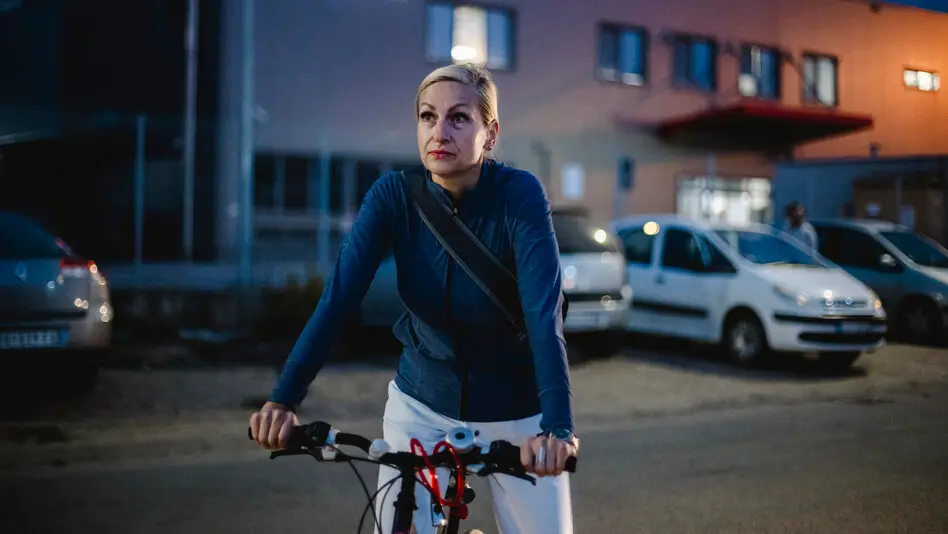
T he only thing we get from this work are illnesses - occupational diseases," says 54-year-old Mirjana Nešić. She has dark circles under her eyes and red calluses on her hands. "I have cramps in my fingers, my shoulders only function at 20 percent. I get injections in my elbows every six months because the pain is unbearable." Nešić has been working at the Korean auto parts factory Yura in southern Serbia for almost 15 years. There she produces cable harnesses – including for Mercedes-Benz.
Around 100,000 people work in Serbia's auto parts industry. Women in particular produce electrical components, seats and tires there - often for low wages and under enormous time pressure. Employees and trade unionists report chronic pain, insults and sometimes physical attacks from superiors in numerous factories.
In 2024, their union filed a complaint - in Germany: with Mercedes-Benz, Audi and the responsible Federal Office of Economics and Export Control (Bafa). The German supply chain law obliges companies to respond to violations of human and labor rights by their foreign suppliers.
Leskovac. The city of almost 60,000 inhabitants is anything but wealthy. Old tractors chug through the streets, bookstores advertise “school books on installments.” After the breakup of Yugoslavia and the global economic crisis at the end of the 2000s, the south of Serbia was considered a “valley of hunger”. Then, starting in 2012, several auto suppliers settled in the region: corporations based in Ireland, Turkey and Korea opened factories and hired thousands of workers. The factories were established during the government of the Serbian Progressive Party (SNS). After the election victory of the student list in October 2026, the country is now facing a change of political power.
Flat factory buildings are lined up on the edge of Leskovac. The afternoon sun is burning on the asphalt, the road in between is empty. Until the factory gates open and hundreds of women and a few men stream out. “Yura mainly employs women because we are considered a light industry,” explains Mirjana Stanković, untying her black bicycle.
As is often the case, after the morning shift she meets her colleague Mirjana Nešić at Atina Lux. The terrace of the café overlooks the lively market square in the city center. The two women don't find it easy to find work at Yura.
Quite the opposite: Working on the assembly line is tough, says Nešić. She herself works in pre-assembly. There she puts wires into connector housings and wraps the cable bundles with adhesive tape – doing the same thing all day long. After 15 years, her fingers, shoulders and elbows become so cramped that she requires regular treatment. Like many of her colleagues, she suffers from chronic pain and limited mobility in her shoulders, elbows and fingers.
The Supply Chain Due Diligence Act (LkSG) has been in effect in Germany since January 1, 2023. It obliges companies with at least 1,000 employees to respect human rights and environmental standards in their supply chains. You must analyze risks, prevent violations and intervene in the event of irregularities.
The Federal Office of Economics and Export Control (BAFA) monitors compliance with the law. It can request documents, enter business premises, order measures and impose fines.
The Union and the SPD want to abolish the reporting requirement and limit fines to serious human rights violations. The Bundestag has not yet passed a corresponding change in the law.
Yura, on the other hand, explains that they adhere to the highest industry standards when it comes to health protection: “Claims about systemic health damage among employees and frequent serious physical injuries do not correspond to the actual situation in the company’s production facilities.” The Leskovac orthopedic surgeon Aleksandar Rangelov, on the other hand, even has a name for his patients' tendonitis, severe back pain and chronic exhaustion: the “Aptiv syndrome”, named after another auto supplier in the city. Even at a young age, many women in Leskovac are marked by work in the supplier factories, says the doctor.
This is mainly due to the enormous pressure, says Mirjana Nešić: "The targets are constantly being increased. At one point the number of items we have to deliver per shift as a team is 80, after a week it's 100 and then it's 110." Yura itself says: “The production lines at Yura Corporation factories operate according to scientific and industrial time measurement standards that are used throughout the global automotive industry.” However, the company's annual reports show: Since 2022, output per worker has increased year after year, while investments fell. Mirjana Stanković also reports that psychological pressure is exerted: “If we are not fast enough, we will be shouted at and humiliated by our shift managers.”
Yura itself emphasizes that the company “pursues a zero-tolerance policy towards any form of yelling, insults, humiliation or inappropriate behavior.” Any aggression in the workplace will be strictly sanctioned. In October 2024, a supervisor was fired after verbally abusing female employees and kicking a chair, causing them to seek medical attention.
Nevertheless, incidents like these fueled a climate of fear, says Vladimir Simović. The Belgrade sociologist conducted a study on working conditions in the Serbian auto parts industry. In many companies, female workers are insulted, threatened and harassed by shift managers. The aim of the pressure: “The women on the assembly line should work as quickly as possible.” Anyone who disagrees will be punished: “Employees report that they are threatened with dismissal if, for example, they campaign for wage increases or want to form a union,” says Simović.
One person who exactly that happened to is Predrag Stojanović. The father of the family still looks depressed today when he remembers his dismissal five years ago. “Because I formed a union at Yura, they fired me.” The company denies any connection: "The termination of the above-mentioned employee's employment contract had no causal connection whatsoever with union activities or union membership. At the time of the termination decision, the employee was not a union member and did not hold any position as a union representative." The basic court in Leskovac sees it differently: When Stojanović was fired, he was already a union representative at the plant. The court ruled in 2023 that the termination was unlawful and Yura had to reinstate him. Stojanović returns to work – after 22 months. "During this time I became a father. I was 40 years old and couldn't even buy milk for my own child. That made me despair."
Still, giving up is out of the question for Stojanović and his colleagues. In 2024 they come up with a new idea: They want to hold Yura's German customers accountable. The German supply chain law obliges you to ensure compliance with labor and human rights among your suppliers.
On June 21, 2024, the Independent Serbian Metalworkers' Union (SSMS) files a complaint with Audi and Mercedes-Benz. “We had really high hopes for the supply chain law,” says Yura worker Mirjana Stanković. “We fully expected that German companies would do something about the miserable conditions in our company.” Have these hopes been fulfilled?
Upon request, Audi said it was not a direct customer of Yura, but had “reviewed the allegations and closed the case accordingly.” According to the Supply Chain Act, companies must also intervene with indirect suppliers as soon as they have concrete evidence of violations. The company does not want to reveal to the taz how Audi followed up on these tips. Slavko Blagojević, secretary of the SSMS, criticized: “We never received an answer to our complaint from Audi.”
And Mercedes-Benz? "After we found out about the allegations, we immediately approached our supplier to seek clarification. In addition, we worked towards an independent audit according to the internationally recognized standards of the Responsible Supply Chain Initiative (RSCI). The deviations identified were addressed together with the supplier as part of a corrective action plan and checked in a later follow-up audit," says Mercedes.
Mercedes does not reveal what grievances the audit found and what Yura had to change as a result. Nor who carried out the RSCI audit. The taz was able to confirm: the first test was carried out by the testing company TÜV Rheinland in January 2025, and the follow-up tests were carried out a few months later by TÜV Süd. The taz has excerpts from the test report. They show: Yura passed the inspection in autumn 2025 with top marks.
When the inspectors commissioned by Mercedes came to the factory in Leskovac for the first time on January 22, 2025, Predrag Stojanović says he hardly recognized his workplace: “The toilets were scrubbed, the assembly line was running three times as slowly as usual, and the shift managers were suddenly friendly.” In fact, the audit found no violations of RSCI standards when it comes to mistreatment and harassment in the workplace.
The auditors registered the case of the abusive manager from 2024. However, Yura separated from him and trained other managers, especially those from Korea, in order to “understand cultural differences”. The company also has a confidential complaints system. The audit concludes: “At the time of the audit, no evidence of physical, verbal or psychological abuse was found.”
The workers who spoke to the taz see it differently. Insults and threats continue to be part of everyday life in many areas of the factory. The single mother Mila therefore left Yura in 2026. She doesn't want to read her last name in the newspaper. Today she works in a small shop on the outskirts of Belgrade. When she talks about her time with Yura, she still tears up. She was shouted at and embarrassed by her superiors every day. "I cried almost every day after work. But what was I supposed to do? Not only me, but also my children depended on this job."
Mila reports that she was pressured by her superior to leave the union during the first audit in January 2025. “Our superior threatened us: If we don’t sign the resignation form, we will be fired on the spot.”
Union chairman Stojanović presented the examiner on behalf of Mercedes with the written witness statements and resignation forms from Mila and another colleague - as evidence that Yura was still putting union members under pressure. “I said: Call these workers to talk, here are their numbers.”
Did the examiners miss these clues? “According to the assessment documents we have, there are no references to the specific witness statements and withdrawal forms mentioned in your question,” says the audit firm TÜV Süd. Randomly selected union members were interviewed. The result: Yura meets the RSCI standards.
Workers could freely join the union and organize without employer interference, the report said. And Mercedes also declared the Yura case resolved on January 15, 2026: “The RSCI assessment on site confirmed that the identified deficiencies had been remedied,” the company wrote to the complaining union SSMS.
For Annabell Brüggemann, an expert on supply chain law at the European Center for Constitutional and Human Rights (ECCHR), the Yura case shows a fundamental problem: audits by external companies usually do not get to the root of the company's problems. "Sometimes training is given, sometimes a mailbox is set up for complaints. These are typical sham measures that simply don't work," says the lawyer - especially not when companies specifically intimidate union activists. The expert believes that Mercedes should have spoken specifically to those affected like Predrag Stojanović and his colleagues to find out which steps actually help.
Bafa is actually supposed to ensure that German companies comply with their obligations under the Supply Chain Act. But the authorities apparently see no further need for action in the Yura case. In February 2026, she declared the process closed. Mercedes-Benz “undertook extensive investigations into the facts of the case in the course of the proceedings and took extensive preventative and remedial measures.” How Bafa came to this assessment remains unclear. When asked, we “basically do not comment” on individual procedures.
Recently there have been increasing reports that Bafa is only enforcing the supply chain law to a very limited extent. Instead of the 101 planned positions, only 40 employees are working on it. For 2025, Bafa had planned around 1,100 unrelated, risk-based checks. In fact, it only opened 308. This emerges from the federal government's response to a small question from the Greens in July. As early as September 2025, the Ministry of Economic Affairs instructed Bafa to exercise restraint in implementing the law.
The coalition wants to weaken the law anyway, but the Bundestag has not yet decided to do so. "The federal government is basically instructing Bafa to weaken the supply chain law - and is thereby simply implementing a change in the law that parliament has not yet decided on. This is extremely worrying in terms of democratic policy and constitutional law," says Brüggemann. The supply chain law is not only wobbling in Germany: the supply chain directive that has already been passed has now also been weakened again at the EU level.
In Leskovac, Serbia, the conclusion to the supply chain law is bitter: “It all turned out to be a big lie,” says union leader Predrag Stojanović. According to Bafa, Mercedes has committed to “reviewing the effectiveness of the measures at Yura and taking further measures if necessary”. Yura continues to fight the union, the company's employees tell the taz. And Yura's lawyers actually pursued a lawsuit from 2021 until March 2026. The goal: to remove the union at the Leskovac plant from the register. The company argued that it was improperly incorporated. The Serbian administrative court rejected this on March 10, 2026.
Mirjana Stanković is not discouraged by all of this. She proudly stands in front of the fence that shields the factory premises and points to the factory halls: “We went on strike in there in 2024.” Over 20 days, she and her colleagues repeatedly stopped work and pushed through some of their demands. “For example, sick leave will no longer be punished with bonus deductions.” The complaint under the Supply Chain Act, however, hardly brought any concrete improvements. Instead of hoping for help from Germany, she and her colleagues would have to fight themselves - Stanković is certain of that today.
This research was supported by a grant from the IJ4EU fund. The International Press Institute, the European Journalism Center and all other partners of the IJ4EU Fund assume no responsibility for the published content or its use.