
Politics · taz · 5h
State elections in Saxony-Anhalt: A village before the election
Deutsch (original) · Auto-translated to English
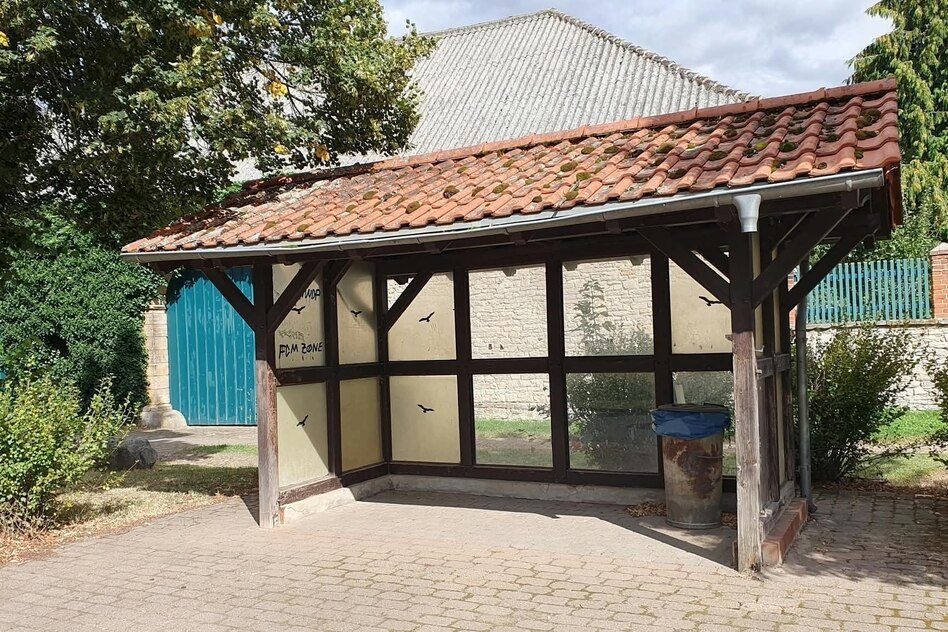
As a rule, no bus to the next larger town stops at the bus stop in Meilesleben. Only the school bus runs here regularly, mornings and lunchtimes, on weekdays. If you want to attend doctor's appointments, go shopping or have to get to the nearest train station, you drive yourself. As always. Always.
Around 475 people live here, in the Börde district in Saxony-Anhalt. A post mill from 1848 stands on a hill west of the village, and the federal highway 1 runs through the middle of the village, as if the village were a stopover on the way from Braunschweig to Magdeburg. For some people it may be.
There is no supermarket, no bakery, no village pub. Only in the athletes' home do you meet every now and then on Sundays from 10 a.m. to have a beer, read the Bild newspaper or talk about life, family and sport. This is the center, if there is one. Anyone who needs more leaves. Anyone who stays stays because it's home.
I know the bus stop in question well. As well as you know a place from your childhood. I grew up here, in Ziegelsleben, a district of the municipality of Ingersleben. It was a beautiful childhood. The people were nice to each other, there were village festivals, a sports club and a volunteer fire department where half the village met regularly and voted in elections. Same this time too.
I'll be here again at the end of August, shortly before the state elections in Saxony-Anhalt. There are no election posters hanging on the community lampposts. The mayor doesn't know why either, he says. While the streets in other places are lined with blue posters, Meiler life seems strangely forgotten.
In the 2025 federal election, the AfD achieved a good 37 percent in Saxony-Anhalt. In the municipality of Ingersleben, to which Meilesleben belongs, she managed to get 45.7 percent of the second votes. Back then, almost every second person here voted for a firmly right-wing extremist party.
I wanted to talk to three people like that. Two refused. Out of caution, as they write to me via Whatsapp. "This is really a very charged topic. Please don't be mad at me. But I don't have any nerve about it right now," wrote one. "I don't want to talk about it. It's all politically very difficult." said the other. When I asked what they meant by that, only one answered me: "These current policies are giving me blood pressure and a bad mood. Kind regards." Greetings back, I write. But think to myself: how cowardly!
So it is not silence out of indifference. It is a silence of consideration. Because you might know that if you talk too loudly here, you risk that the next greeting will be colder and that you will no longer be asked at the next garden party. In a village where you live next door to each other, every opinion has weight. So you stay silent. Some because they vote for AfD and know that it won't go down well everywhere. The others because they don't do it and don't feel like endless discussions. In the end, people prefer to talk about the weather.
I have always remembered Meilesleben as a quiet place. Every now and then a lawnmower, here and there a tractor driving through the streets. Due to its location near the A2, you can also hear the quiet roar of the motorway, depending on the wind and weather.
Today it's different. The B1 is busy, a construction site on the motorway makes the place a traffic junction. It's more restless than usual, more charged.
I'm talking to Jan-Henrik Wolter, 28, a farmer in the village. We grew up together. In contrast to me, he returned after studying in Saxony and Mecklenburg-Western Pomerania because he values village life and the community, he says.
Jan-Henrik and I haven't talked about politics often. I haven't talked much about politics with almost anyone in the village. Not because I want to avoid arguments, but because I'm afraid that people I like will say things I can't stand. That they vote for a party whose program I reject. That I find out that they have views that I don't share with them.
Today I would like to change that and ask a few people directly which party they vote for and why. Jan-Henrik is busy, a tractor is running in the background, it's busy on his parents' farm. Our conversation is interrupted several times by calls. You only notice that something is missing when you have been somewhere else, says Jan-Henrik. Unlike others here, he has traveled all over the world. Lived in New Zealand for years and got to know foreign cultures.
He observes that the mood in Germany has become worse, the tone is harsher, and no one is looking positively into the future. “We Germans are not a people prone to optimism anyway.” The frustration he feels in the village is not just within the village. It is general. And this is reinforced by social media. People read negative news, which is reinforced by the algorithm, and get into a spiral in which they only see the frustrating things. And then they just choose.
He keeps saying I shouldn't misunderstand him, but he can understand why people here vote for the AfD. “The AfD has it easy, they are not in government right now and can blame others.” But people ignored that there were external factors that led to today's crises. Corona, war in Ukraine and Iran. “The inflation, the high prices – that doesn’t come from the refugees,” he says. “There are other reasons for that.” But many blamed migrants because it was easier. Because the AfD tells them that.
If someone in the village thinks the AfD is good, they try to disagree on a factual level. Often, he says, people aren't that far apart. It's more a matter of trust. Or from disappointments.
Unlike me, Jan-Henrik is not afraid of an AfD government. He trusts the courts and the separation of powers. “I’m more concerned about the social climate, that it will become even more tense and that people will come together less.” What AfD voters said has now become more normal. In the village he tries to stay in conversation. With everyone. Also with those who vote for AfD.
I continue walking up the street, past my parents' house. After a ten-minute walk, I almost crossed the entire village. My next encounter is with Werner Brandt, 75, pensioner. He's a rather quiet guy. Relaxed. In the village he is valued for this and for his sociable nature. When I asked him, he only votes for parties that don't get into the state parliament. Not out of protest, but out of principle. The big parties cost too much money and promised nothing. It doesn't sound bitter. It sounds like someone who has heard it all before.
Every Friday we meet in the neighborhood for a beer, he says. Opinions sometimes clash there. Neighbor Harald votes for the blue. “You can choose that one, I won’t choose that one, nothing changes anyway,” he always tells him. That's how we talk about politics here. Not loud, not arguing. One says what he chooses, the other says what he chooses, and then you continue drinking.
Werner also says: “There is complaining at a very high level.” And yet: The money that would be made here should stay in Germany, he believes. Nursing homes, infrastructure, the railways are suffering. These are not small concerns. That has to change. But he doesn't vote for AfD. They made promises they couldn't keep. Like everyone else.
Harald Timm, also in his mid-70s, votes for AfD. He belongs to the regulars and knows every stick and stone in the village. When he talks about politics, his voice gets louder, his sentences quicker and shorter. “We’re hanging out in the country.” No public transport, no shopping, no local doctor. Anyone who needs a doctor has to drive, given the high fuel prices. The parties made promises and kept none of them, says Harald. The Merz government has to go, there has to be a change. “I am a frustrated voter against this system.”
He becomes even more specific: He hopes that the AfD will change something in migration policy. Those who did good work could stay. The others who receive social benefits “without anything in return” would have to leave the country. His older relatives, all in the home, must be “really bleeding.” Her generation would have “built Germany”. He doesn't even want to think about his grandchildren.
This is the image that many people have: migrants as a burden. The reality is more complex. According to the Institute for Labor Market and Occupational Research (IAB), 64 percent of the refugees who came to Germany in 2015 are now employed and pay taxes. Many work in sectors without which the system would collapse: construction, agriculture, care. Also in the homes that Harald is talking about.
But the economic factor is not the only criterion. For many people, Germany is simply home. Even if they can't work. Even if they are old or sick. Just like Harald's relatives in the home. They also no longer contribute to the gross domestic product. If only those who contribute are allowed to live here, it will change the idea of what community means.
I'm still meeting Manuela Gericke. She is in her early 50s and when she speaks, it is cautious. She hesitates, thinks about it, chooses her words carefully. In the village she is rather inconspicuous, not one that is loud. But she has a clear opinion. “You don’t feel left behind at all,” she says. Everyone has a car, you can go everywhere, you are kept up to date through the media.
Nothing has changed since the fall of communism, the people have remained the same and so has the place. Problems? Yes, there are, but they go way back and no party will solve them. Certainly not the AfD. “They don’t do anything better than other parties; if anything, it gets worse.” The protest vote is rubbish. Bring nothing.
And then she says something that stays in the room: “I’m afraid that the AfD will govern.” So fear. There's finally this word that everyone has been talking about for months. I ask her what she's afraid of. "If the AfD comes to power and they implement everything they have planned, then it will be expensive. For everyone. And who has to pay? We, of course. I have existential fears."
This fear seems justified. Economists have been warning for months that the AfD's economic policy plans ahead of the state elections in East Germany cannot be financed. Experts from the Leibniz Institute for Economic Research in Halle point out that the “misguided ethnic idea” that everything would be better without foreigners could have serious consequences, especially in a federal state that is suffering like no other from massive demographic change and a shortage of skilled workers.
But what does Manuela do about it, I ask her. It's simple, she says: don't vote for the AfD. That's all. She consciously skips over the political section of the newspaper when she reads the newspaper together with colleagues. She simply wants to avoid disagreements.
If someone in the village said openly that they were voting for AfD, she would say: “Well, fine, if you think it’s right for you.” You can't stop people from doing it. That is democracy. And that's a good thing. “I don’t feel like making stupid statements.” She only expresses her opinion if she knows that the other person shares it. That is not cowardice. It is a strategy.
But it means: In a community where almost every second person votes for AfD, it seems that conversations about politics often only take place between people who already agree.
I have finished my tour of the village and am back at the bus stop. A few cars rush past, the wind carries the quiet hum of the A2 across. A bus isn't coming now either, it's Saturday after all. No school.
It is not yet clear what the state elections in Saxony-Anhalt will change. Where the people in the village actually make their crosses is also not the case. But their motives are clear: Harald chooses out of hope and frustration. Jan-Henrik from objective considerations. Werner is on principle with a small party. Manuela hopes that the familiar will remain. After this Sunday, they will all continue to sit together on beer benches at village festivals, greet each other as usual, lend out lawn mowers and help build the carport.
What the numbers after the election won't show is what happened before - or didn't happen. The WhatsApp messages that weren't written. The questions that weren't asked. The sentences you broke off because it was easier to talk about the weather.
Is it fear? Maybe for some. The concern that a firmly right-wing extremist party could govern. For others, frustration with parties that don't keep their promises. But for most people it's something different: it's the feeling that talking doesn't help. That a conversation about politics often destroys more than it achieves. That you suddenly see the neighbor with whom you have shared the lawn mower for 20 years differently. So you stay silent. Not because you have nothing to say. But because you have too much to lose.
Maybe not much will change after election Sunday. Hopefully the traffic will soon be less once the construction work on the motorway and the associated diversion through the village are finally finished. At least everyone agrees on that.
A party like the AfD promises community. “Cohesion”, “homeland”, “feeling of togetherness” – these are her words in the election campaign. But what happens when a party that sells community becomes more and more divided? What if she also makes promises that she can't keep? Then in the end there won't be much left of the village that she claims to protect.
It's dangerous to live next door to each other and not talk to each other. Because silence turns into distrust. Because mistrust turns into distance. And because distance eventually turns into indifference. It's not a sudden break. It's a slow drifting apart. People still greet each other. You still help yourself. But people don't talk anymore. And at some point you ask yourself: Do I still live in a village? Or just next to each other?
Read the full story at the source →
Source: taz