
Germany taz
Beverau landscape protection area: The donkey should stay
The Bundeswehr wants to expand a barracks in Aachen and destroy hectares of nature to do so. A new federal law plays an important role in this. more...
Deutsch (original) ·Auto-translated to English
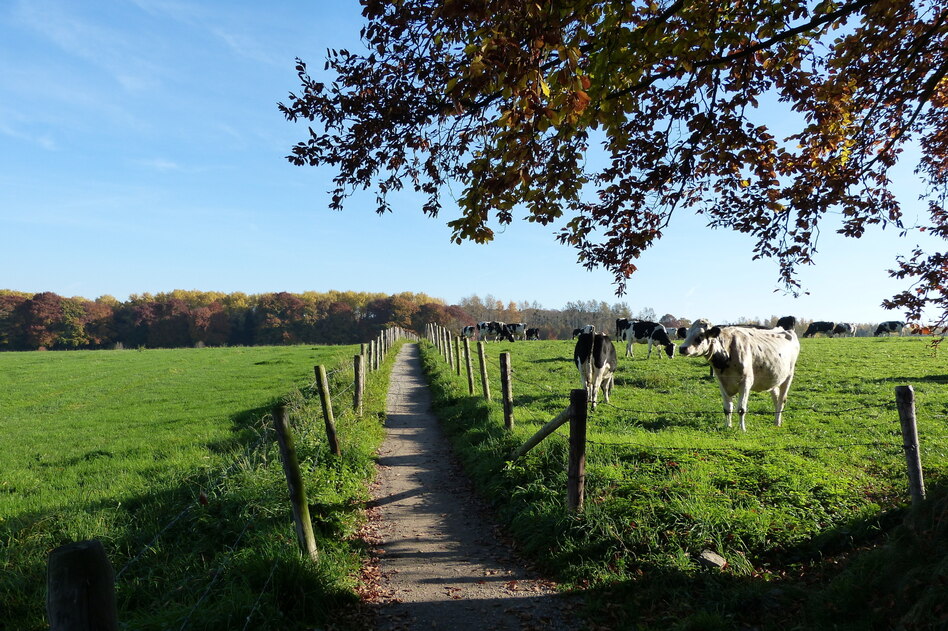
The Bundeswehr could hardly have chosen a less suitable location. A huge barracks complex is to be built in, of all places, the Beverau landscape protection area in the southeast of Aachen. Sealing and destruction of nature on 28 hectares, which is almost 50 football pitches.
The Beverau local recreation area, a meadow and forest landscape barely more than two kilometers as the crow flies from the center of the North Rhine-Westphalian city, is of outstanding ecological importance, especially as the most important of Aachen's three cold air corridors. Measurements show that it is up to 7 degrees cooler here in summer than in the heated city down in the valley basin. The area is considered the largest natural air conditioning system in the municipality.
The planned expansion of the small Dr. Leo Löwenstein barracks on the edge of the Beverau to include training wings, vehicle halls and a traffic training area, possibly for tanks, is also outrageous because of the long secrecy. The city society reacted with shock to the first reports in August from the Aachener Zeitung, including the administration, which claimed to have known nothing further.
Negotiations to sell the meadows from the previous owner, Gut Schönthal GmbH, are now well advanced, according to the Bundeswehr. And the city? Mayor Michael Ziemons (CDU) was quoted as saying: “They don’t need us, we’re out.” As soon as the Bundeswehr Infrastructure Acceleration Act is passed in Berlin - its second reading is currently imminent in the Bundestag - the military can do what it wants much more easily. The general infrastructure future law, passed by the Bundestag in June 2026, already provides many opportunities to neglect ecological issues, for example when public buildings or motorway corridors are built.
Things were different in 2014: Gut Schönthal GmbH wanted to build a housing estate on the Beverau meadows. With various reports and ecological reasons, the request was rigorously rejected - despite the housing shortage. But now there is a threat of destruction – despite the climate crisis.
It was only when Aachen lawyers recently explained in detail how the city could defend itself against the army's plans through administrative courts that there was some political movement on the matter. Almost a week ago, at least formally, there was unanimous resistance in the city council. All parliamentary groups present unanimously condemned the anti-democratic project against the council, administration and citizens.
Meanwhile, a CDU city councilor calculated: If there was a downpour in the asphalt barracks in Beverau, with just 50 liters per square meter, almost 15 million liters of rainwater would have to go somewhere. They would shoot across the Beverbach through the zoo into the city. “The problem cannot be ignored,” he said dryly. During the Eifel floods in 2021, Aachen was only partially affected, but individual areas of the city were briefly flooded across this water front. Mayor Ziemons, who is considered an expert flag-twister after a year in office, announced talks with the military for November.
Meanwhile, citizen protests are swelling: the first thousand have joined together in a group on the messenger Signal. There have been weekly strategy meetings since the beginning of the month - and there is a lot of attendance. Because the Beverau is walked and jogged through on the Donkey Trail, the initiative has boldly called itself “Save Donkey Trail”. And because Aachen is an example of future land grabs by the Bundeswehr elsewhere, citizens want to warn and inform petition committees and environmental ministries. “The militarization of society must not take precedence over everything,” says one initiator.
On Friday, hundreds of Eselsweg rescuers want to gather for a rally at Aachen's Neumarkt. Later appointments are not ruled out. A young man has already announced that he will be the first to move his tent to the Beverau meadows.