
Politics · taz · · 2h
Labor Party Conference in Great Britain: A pinch of hope
Deutsch (original) · Auto-translated to English
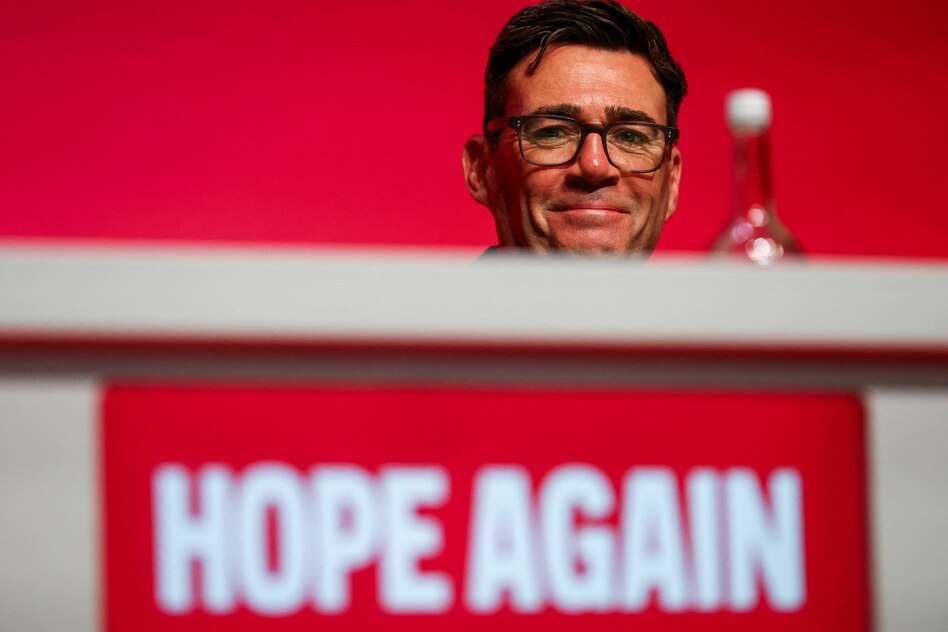
Actually, it's the same as always. The annual party conference of the British Labor Party has been running since Sunday in the Labor stronghold of Liverpool. Like every year, EU activist Steve Bray plays the European anthem at full volume on his loudspeaker system at the entrance to the huge conference area in the historic harbor. Groups distribute leaflets and thousands of delegates push their way through the security barriers.
Behind it, advertising stands and side events await, at first glance more than ever before. The entire party conference seems to be experiencing an unusually high number of people, people are queuing up for events, and there is not a vacant seat in the plenary hall. It is Labour's third party conference since coming to power in 2024 - but the first with new Prime Minister Andy Burnham, who replaced Keir Starmer in power in July.
We're talking about a restart. The motto of the party conference is emblazoned in white on a red background: “Hope Again!” – Hope again!
Emily Arkell and Andrea Hodgson definitely need hope. The two councilors are survivors of Labor's disastrous defeat in the north London borough of Haringey in May's local elections, when Labor lost massively everywhere, making Starmer's demise inevitable. Labor had ruled Haringey for 55 years, and now the Greens came to power. Elsewhere, the right wing of Reform UK won in many cases.
“We’re hoping for an announcement on Thames Water,” says Arkell. The private London water provider is blamed for inadequate drinking water supplies and high water bills, it made high profits and invested too little, it is said - perhaps it will be nationalized? Hodgson would like to see the regeneration of struggling shopping streets and more new housing. When Labor took office in 2024, it promised 1.5 million new homes, but they are still waiting. The government continues to cite housing as a priority.
“It feels like we’re in a better position and I’m hearing that locally,” Hodgson says. “I am very, very happy,” enthuses Marz Colombini, a railway unionist. “It is as if the party has returned to its old values, with a sense of community and public service.” And Burnham is simply better received by people as a person than Starmer.
Rushanara Ali, the Labor MP for Bethnal Green and Stepney in East London's Tower Hamlets constituency, is also confident. The politician with a Bangladeshi-Muslim family background has held her constituency, which was called Bethnal Green and Bow before 2024, since 2010. In 2019, she defended it confidently with 73.5 percent - in Labor's election victory in 2024 it was only 34 percent, just ahead of an independent pro-Gaza candidate. In the local elections in May, the issue of Palestine was once again a reason for many on the left to no longer vote Labor. The announcements of sanctions against the Jewish settlement expansion in the Israeli-occupied West Bank are now lifting spirits again
You have to consistently stand up for human rights, says Rushanara Ali in praise. But first and foremost, she says: “We have improvements in the health system and in the economy on the agenda – thanks to Andy Burnham they have gained momentum.” This would also allow her to make up points. In the Burnham government, she is responsible for tackling homelessness, the abolition of which Burnham announced as his first policy goal after becoming party leader and prime minister.
In his party conference speech, new Labor foreign secretary Ed Miliband, who also told the refugee story of his Jewish parents who fled the Third Reich, reiterated that the Israeli government's actions were a stain on the world's conscience. Labor sees the threat to Israel from opponents who want to destroy it, but that cannot justify the Netanyahu government's actions in the West Bank and Gaza, he says. The millions who were outraged by this were right.
"Under Andy's leadership, we have changed our stance. We condemn the ethnic cleansing by settler terrorists on the West Bank, the evidence of war crimes in Gaza and Israel's illegal occupation of Palestine, and we are putting our money where our mouth is," Miliband said, emphasizing that this was not directed against Israel and the Israeli people, but against the current government. He receives much applause. The Jewish foreign minister accepts confrontation with Israel's government: Israel expelled British staff from the British consulate in East Jerusalem last week.
24-year-old A. B. from Glasgow, who only wants to be referred to in the newspaper by her abbreviation, sees only marginal progress and hope in these words. The Scottish Muslim, who works for a refugee organization and wears a hijab, thinks the direction to Gaza and Palestine is better than before, but it doesn't go far enough. A symbol of this is the ongoing ban on the group “Palestine Action,” which was designated a terrorist group by the Starmer government in 2025 after the group’s activists damaged military aircraft. The legal dispute over the classification is still ongoing, with a hearing before the Supreme Court scheduled for November.
In front of the party conference grounds in Liverpool at the weekend, the police removed almost 200 pacifist activists with signs saying “I am against genocide, I support Palestine Action,” as they did last year, and arrested them for supporting terrorism. According to Amnesty International, the total number of people arrested for such offenses is over 2,500, including older people - it is an issue of constant tension within Labour.
“What I can say is that with Burnham the tension has decreased somewhat,” says A. B. She points to the collar on which her party conference card hangs. It is from last year and bears the Palestinian flag. "Now it's more okay. Last year people like me felt like we were pushed into a corner." Still, she believes that people from the left-wing camp cannot forgive Labor for Gaza's lack of support in recent years, even now. In addition, Labor's criminalization of immigration echoes Nigel Farage's tone, she complains.
The reception for Palestine and the reception of the Jewish Labor Association Jewish Labor Movement (JLM) take place in competition with each other, in widely separated areas of the conference complex at the same time, which makes solidarity participation in both impossible. For JLM, however, it is the first time in a long time that their reception is taking place within the conference grounds. In previous years, people always met outside in a pub, says JLM leader Ella Rose-Jacobs - a tradition that began under Jeremy Corbyn's party leadership (2015-2020) in protest against anti-Semitism in Labor. But last year there was an anti-Semitic incident in the pub.
“Palestine Action” is not the only one demonstrating in front of the party conference grounds. The Unison union has brought together hundreds of nurses from African countries, particularly Nigeria. They stage a sacrificial march with singing, wear necklaces and leg chains, reminding us of dark times, which is also connected to Liverpool's history as a large seaport in the era of the slave trade. They draw an arc from the history of slavery to the present of exploitation through temporary work visas, a Conservative initiative during the Boris Johnson era to facilitate the immigration of workers into jobs with labor shortages.
Interior Minister Shabana Mahmood said at the party conference that around 600,000 people came into the country with these visas within four years, “the highest immigration in four decades”. She sees this critically and wants to reduce the numbers. In the past, she has even suggested that the right to permanent residence should only be granted retroactively after ten years of residence instead of the current five - this met with strong protest from trade unionists. Barbara Tanyamyiwa from Zimbabwe addressed those gathered at the rally and called for the five-year deadline to be maintained. She also demands that the work permit should not only apply to a single employer, which would force people to remain in poor working conditions.
Both Mahmood and Burnham said at the party conference that they wanted to check again before making a decision on the deadlines. The government is also awaiting the results of a review of the welfare system. It's still in announcement mode.
Is there hope and optimism beyond the party conference? At the gate of Liverpool's St Vincent's Primary School, where a "We are Pilgrims of Hope" banner hangs, 37-year-old Jade McCabe, mother of two school children, approvingly mentions the expansion of free school meals and plans to address the care shortage. Damir Duke, a construction worker on the way home, also 37 and also a father of two children, is more skeptical: "I'll just give Burnham a small pinch of confidence." The cost of living is still too high, Burnham needs to do more for families and against homelessness.
In fact, the new Prime Minister has lowered the price cap for local bus journeys raised by Starmer, temporarily removed VAT on electricity bills and announced state aid for the catering industry and for first-time home buyers. All of that helps. Then Duke remembers that his children also get free school meals. “Yes,” he says, “I can give this government a little bit of hope!”
Read the full story at the source
Source: taz