
Germany · taz · · 41m
Cuts at WDR: 400 fewer programs
Deutsch (original) · Auto-translated to English
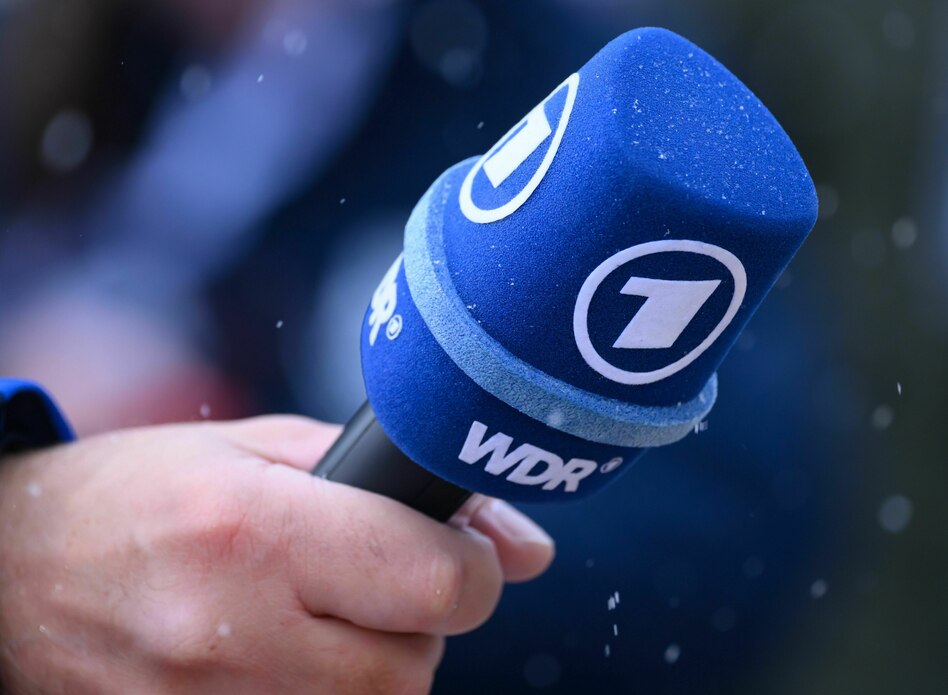
Considering that many things usually happen slowly on public broadcasters, the change at Westdeutscher Rundfunk (WDR) is now coming surprisingly quickly and concretely. 76 offers are expected to be discontinued by the end of 2027. Social media channels, television and radio formats, newsletters and websites are affected. Many employees only officially found out about the plans at the Broadcasting Council meeting on September 25th.
And that's not all. WDR director Katrin Vernau had already announced in April that the program offering would shrink from 600 today to 300 by 2030. Because of these 300, 100 new, digital-oriented programs are to be created at the same time, which means a reduction of around 400 existing programs.
The WDR management justifies the step primarily with the changed media usage. "The changes we propose are necessary for two reasons in particular: On the one hand, media usage is shifting away from linear television and towards digital at an unprecedented rate. On the other hand, artificial intelligence acts as an additional accelerator of this development," says Igmar Cario, television director of WDR, to taz.
The renovation will also have personnel consequences. “By 2030, 400 jobs will be freed up as colleagues retire,” says Ingmar Cario to the taz. One in three positions, i.e. around 133 positions, will not be filled.
The situation is even more unclear for the more than 2,300 freelancers at WDR. They are a central part of the station, but have significantly less security than permanent employees. “The volume of orders for freelancers will also not be able to remain the same,” says Cario to the taz.
The taz television director did not want to answer how many freelance employees will have to be eliminated in the future. For many free people, this is exactly one of the crucial questions. When a format is discontinued, not only does an offer disappear - the people behind it can also lose a significant part of their income. A WDR press spokeswoman writes in an answer to the taz that working hours for permanent employees will not be reduced.
The new portfolio gives different reasons why certain offers should be discontinued. Some no longer reach their target group sufficiently, others are no longer part of WDR's strategic focus or overlap with other offers.
"Let's take Ms. TV as an example. On average, only around 17,000 people see this among those under 50. We can no longer say that we are fulfilling our legal mandate with our offering in this subject area because the content no longer reaches enough people," said Cario to the taz. The Instagram channel “Girls’ Evening” reaches significantly more women under 50.
It is obvious that the audience is changing. Younger people in particular are increasingly getting information via digital platforms. For a public broadcaster, the legitimate question arises as to whether a service still fulfills its mission if it no longer reaches a large part of its audience.
But: Public broadcasting must not be judged solely on the basis of what reaches as many people as possible. Its mission also includes diversity, information and offers for different social groups.
The WDR Instagram format klima.neutral shows how complicated this balancing act is. This offer should also be discontinued. The justification refers, among other things, to other offers on the topic of climate, such as the podcast “ARD Climate Update”, and that responsibility for the topic of climate lies with HR, SWR and MDR.
“A podcast on the topic of climate cannot be compared with a digital offer on the topic,” criticizes a person from the environment of klima.neutral, who wishes to remain anonymous, to the taz. “We got the impression that we hadn’t really looked into what kind of offer we could offer and why it might be necessary to maintain it.”
In addition, klima.neutral is the only ÖRR online format with a climate focus. “One possibility would have been to take over the channel from another ÖRR station.” This might not mean that the direct jobs of the ten or so Klima.neutral employees would be secured, but at least the channel would remain intact.
The criticism points to a fundamental problem with the restructuring: If the ARD wants to dismantle double structures, it should first be clarified which content is needed. It must also be clear which broadcaster is producing it or, if it is no longer available, which broadcaster will take over the content. Otherwise the necessary reform threatens to turn into a logic of deletion.
Cario answers how WDR wants to ensure sufficient climate reporting even without climate.neutral with the station's regional mandate: "Nevertheless, regional climate reporting for North Rhine-Westphalia naturally continues to play a very important role for us. And we will make sure that we do justice to this in our reporting."
The employees certainly understand that WDR has to save money and change. Public broadcasting is under financial and political pressure. The existing frustration is directed more towards the way these reforms are communicated. In addition, many employees do not feel sufficiently included.
Verdi also criticized the approach. “It is incomprehensible that the WDR has so far not been open about these plans with the broadcasting council and the employees, but is now already specifying concrete figures and job cuts, which is not a good management culture from director Katrin Vernau in a broadcaster that is supported by society as a whole,” says Christoph Schmitz-Dethlefsen, member of Verdi’s federal board responsible for media.
The deputy chairman of the DJV-NRW, Stefan Lenz, also calls for more transparency - especially towards the freelancers, some of whom have supported the WDR for decades.
There is hardly any question that WDR has to save money. Even if the broadcasting fee were to rise to 18.64 euros, as suggested by the KEF (Commission for determining the financial needs of broadcasters), public broadcasting would remain under financial pressure.
A reform of the broadcaster is therefore necessary. Personnel and structures cannot be excluded from this either. The crucial question, however, is how this reform will be designed and whether a majority or only the management levels will decide on it.
Read the full story at the source
Source: taz