
Germany · taz · · 3h
Criticism of fuel price relief: harmful to the climate, expensive, unfair
Deutsch (original) · Auto-translated to English
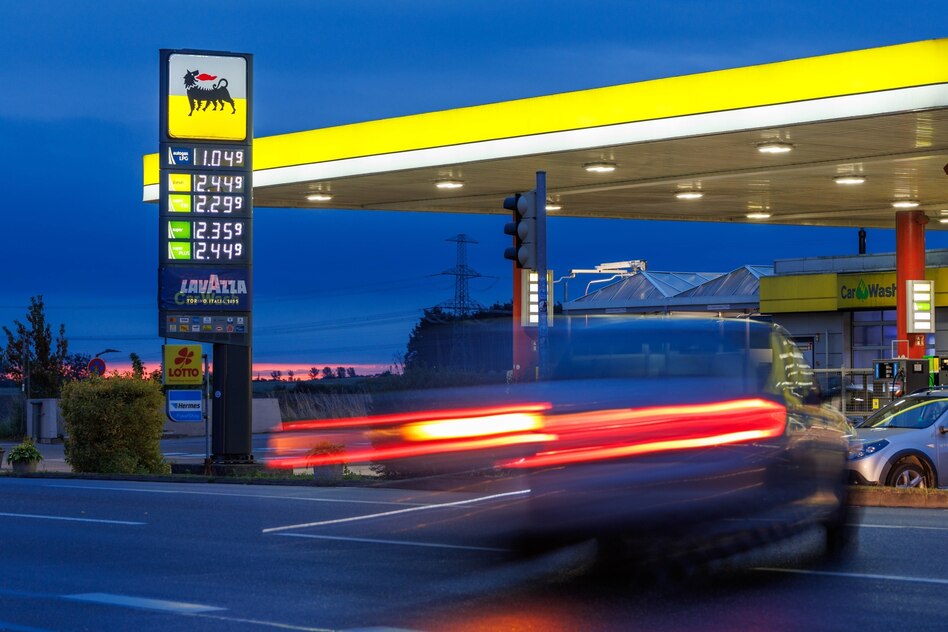
The federal government's planned relief for drivers of combustion vehicles has met with harsh criticism from climate activists and experts. It is “unbelievable” that after 16,000 heat deaths this summer alone, the federal government wants to support “the cause of the heat, fossil fuels,” with 2.5 billion euros, said Stefan Rahmstorf, head of the Department of Earth System Analysis at the Potsdam Institute for Climate Impact Research. “Most of the money then ends up back with the oil companies, the lobby against climate protection.”
Fossil fuel producers are likely to “feel like burglars who have the bank manager writing down the safe code,” explained Greenpeace mobility expert Marissa Reiserer. The fuel discount announced on Friday evening “is not targeted, is harmful to the climate and a big chunk of it ends up in the pockets of the oil companies as excess profits.”
The black-red coalition announced on Friday evening, two days before the important elections in Mecklenburg-Western Pomerania and Berlin, that it would reduce the energy tax on gasoline and diesel by 14 cents per liter by the end of the year. Including the VAT due thereon, the fuel discount should add up to 17 cents per liter. The same model also applied in May and June. A fuel price cap should also be introduced by January 1, 2027 at the latest in order to limit price increases.
The reason for the measure is the sharp increase in fuel prices due to the Iran war and the temporary closure of the Strait of Hormuz. “Anyone who relies on the car every day reaches their limits,” explained Chancellor Friedrich Merz (CDU).
The German Association for the Environment and Nature Conservation (BUND), however, called the plans “expensive, unsocial and unecological”. “A mobility or climate money with a per capita payout would have been a better solution,” explained BUND transport policy expert Jens Hilgenberg. The flat-rate refueling discount would, in relative terms, provide particular relief for high-income households with high fuel consumption.
Because of rising heating costs and compliance with climate targets, Germany must finally reduce its dependence on fossil fuels in the long term, said Ramona Pop, board member of the Federal Association of Consumer Organizations. "The federal government is once again resorting to watering cans. This is expensive, short-sighted and not very targeted."
Conservative economists also reject the measures - but for different reasons: The “Economist” Veronika Grimm spoke of “short-sighted” and “opportunistic” policies that lead to high debts. It is “cynical” to subsidize the driving of cars with combustion engines at the expense of the younger generation, she told the Kölner Stadt-Anzeiger. The government is trying not to alienate voters, "but in the end it only leads to many voters turning away from the established parties in frustration because they are not doing their job," emphasized Grimm, who sits on the Federal Government's Advisory Council for assessing overall economic development.
“I think the fuel discount is a mistake,” explained Clemens Fuest, head of the economically liberal Munich Ifo Institute. The state is spending a lot of money on the measure and is thus “reaching a large proportion of drivers who can afford the petrol prices,” he told the Bild newspaper. In his view, more targeted aid would make more sense; the high energy prices cannot be eliminated given the situation on the world market.
The planned cap on fuel prices is also not well received by experts. “Price caps have side effects that cost drivers time and nerves because they can easily lead to shortages and long queues at gas stations,” said Manuel Frondel from the RWI Leibniz Institute for Economic Research in Essen. This became apparent in Hungary in 2022, when oil companies stopped imports after fuel prices were frozen because the business was supposedly no longer worthwhile.
The direct payments to those in need that many other economists are calling for are also problematic. “From a distribution policy perspective, it is of course desirable,” said Frondel, “but in any case this solution would be associated with high bureaucratic costs.”
The German Farmers' Association, on the other hand, welcomed the fuel discount. Lowering the energy tax on fuels in the short term is the right thing to do, said farmers' president Joachim Rukwied. Farmers had previously urged the government to scrap plans for a possible reduction in VAT on petrol and diesel. Such a measure would be ineffective for companies because companies would have the VAT paid reimbursed by the tax office anyway. However, everyone paid the energy tax. The logistics association BGL also spoke of an “important signal”.
Read the full story at the source
Source: taz