
Germany · taz · · 3h
Criticism of the Chancellor: Uprising canceled
Deutsch (original) · Auto-translated to English
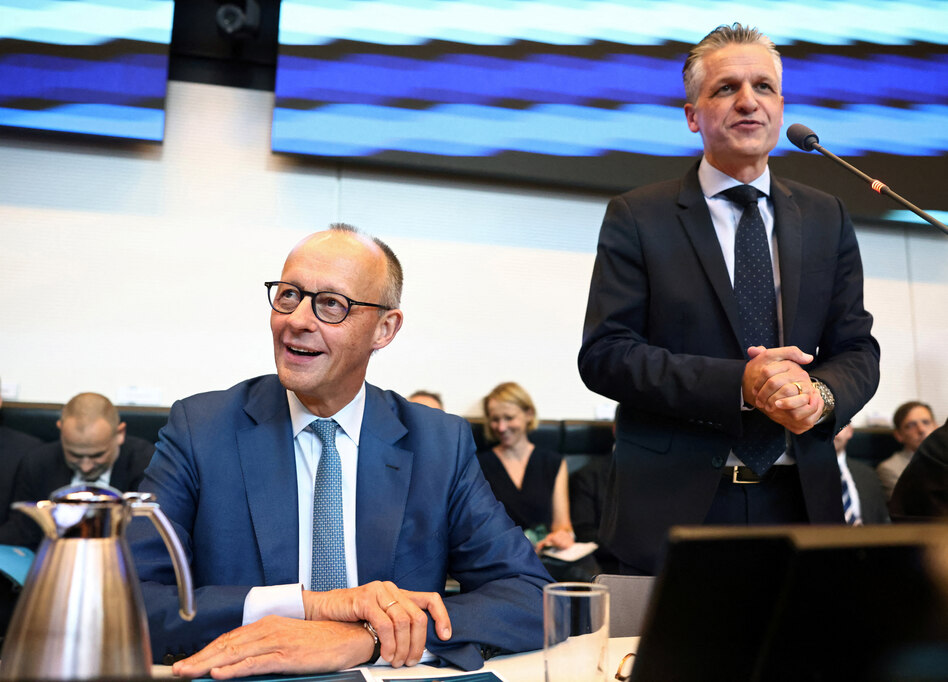
Friedrich Merz can now breathe a sigh of relief: The meeting of the Union parliamentary group on Tuesday was largely peaceful, two days after the catastrophic election Sunday for the CDU. According to participants, there was criticism of Merz and his management of expectations, but the revolution did not materialize. The greater outrage among MPs was directed against the Left Party in Berlin.
A lot had built up among the 208 representatives, the majority of whom are directly elected. The CDU was voted out of a state parliament in Mecklenburg-Western Pomerania for the first time in its history and had to admit defeat to the left in Berlin. The former in particular has shocked the Union; the attributes “disastrous” and “drastic” are on everyone’s lips. After the state election in Saxony-Anhalt, which was also lost, at the beginning of September, there was media-fueled speculation about a replacement of the Chancellor. However, these came to nothing.
Union parliamentary group leader Thorsten Frei and the newly elected First Parliamentary Managing Director Catarina dos Santos-Wintz set the tone before the parliamentary group meeting: The Chancellor has the parliamentary group's backing. CSU regional group leader Alexander Hoffmann also made the same statement.
It was said that Merz practiced self-criticism and appeared humble in the meeting. In his speech he once again spoke of a “disastrous” election result. The former parliamentary group leader Ralf Brinkhaus received a lot of applause with a fundamental criticism. According to the Bild newspaper, Brinkhaus attested that the CDU had a “credibility deficit and a future deficit” and that the lineup was too one-dimensional. “Our politics are not well received by people and companies, our team is not broad enough – we have lost our brand core, what unites us,” Bild quoted him as saying.
Digital Minister Karsten Wildberger, who is not even part of the parliamentary group, is said to have turned the mood away from the debate about Merz. In a very fundamental speech, he pointed out the threat to society - between the left and the right - and attested that the CDU was the only party that sought balance between different forces and interests. It's up to them now. You have to concentrate on reform work.
People close to the Chancellor said that now we can finally turn our attention to substantive issues again. At the meeting he insisted that the coalition must now implement the agreed projects such as the pension and care reform in the autumn. In addition, defense spending would have to be transferred back into the budget in the future. If MPs wanted a larger volume of relief from tax reform, they would have to make proposals where spending could be cut at the same time.
The reforms must now be implemented as quickly as possible and the Union must make a contribution to stabilizing the coalition, something that parliamentary group leader Frei has also advocated for. His predecessor Jens Spahn is said not to have spoken out.
Following the debate, Johannes Winkel was elected deputy group leader, replacing Carsten Linnemann, whom Merz had appointed health minister in July. Winkel is chairman of the Junge Union, and with him Merz would have integrated a critic more closely. And probably better under control too.
Read the full story at the source
Source: taz