
War & Militarism taz
Conscientious objection: Conscience is reporting a record
Almost 17,000 applications for conscientious objection have been received since January. It's not just the fear of war that motivates young people to say no. more...
Deutsch (original) ·Auto-translated to English
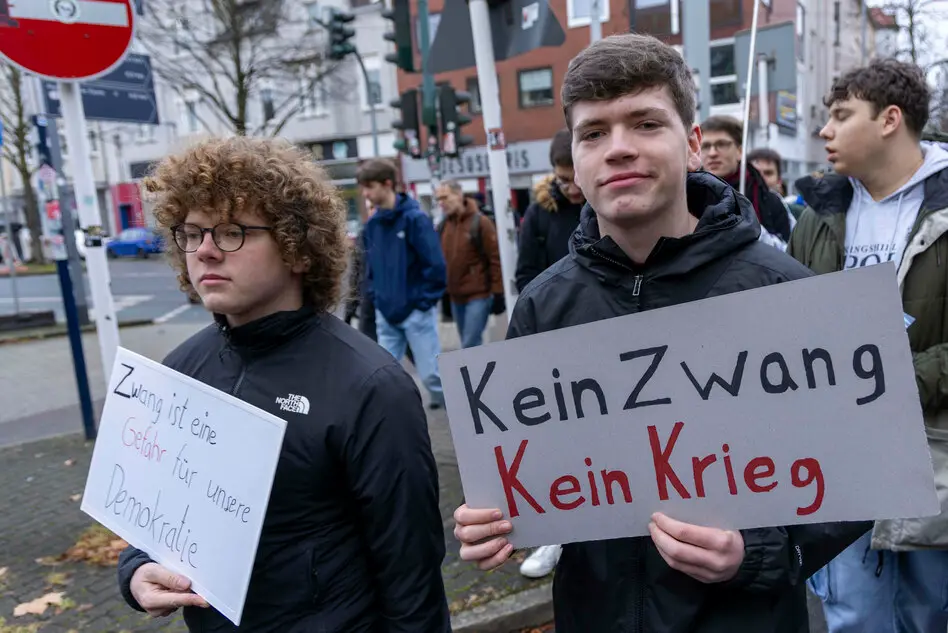
KNA | In Germany, the number of applications for conscientious objection continues to rise sharply. Almost 1,900 new ones were added in October alone. From January 1st to October 31st, a total of 16,869 applications were received. This emerges from data from the Federal Office for Family and Civil Society Tasks (Bafza), which is available to the Rheinische Post.
The number has almost tripled since the summer: 5,862 applications had been received by the end of June and 14,977 by the end of September. There were only 3,879 applications in the whole of 2025 and 2,249 in 2024.
Experts attribute the increase primarily to the tense security situation and the threat from Russia. Defense Minister Boris Pistorius (SPD) does not currently believe a return to compulsory military service is necessary. However, uncertainty among young people is still driving up the number of applications. Another reason are reports of sexual misconduct in the Bundeswehr. Pistorius presented a dark field study on Wednesday. Accordingly, more than one in three female soldiers experienced verbal sexual harassment in the twelve months before the survey.
The new Military Service Modernization Act came into force at the beginning of the year. Since then, all Germans born in 2008 or later have received a questionnaire on their 18th birthday, which the Bundeswehr uses to inquire about their willingness and suitability for military service. Filling it out is mandatory for men and voluntary for people with a different gender entry. Young men will also have to undergo military service again, but only from July 2027 onwards. Military service itself remains voluntary, and compulsory military service is still suspended.
You can still refuse military service now, as a precautionary measure. Advice centers such as those of the German Peace Society - United War Opponents (DFG-VK) or the Evangelical Working Group for Conscientious Objection and Peace (EAK) have been reporting increasing numbers for months.
An application for conscientious objection must be submitted in writing to the Federal Office for Personnel Management of the Bundeswehr. This forwards it - usually after the medical suitability has been determined through the examination - to the Bafza, which decides on the application.
The office can decide as soon as there is a signed cover letter that refers to the fundamental right to refuse military service in accordance with Article 4 Paragraph 3 of the Basic Law, a Bafza spokeswoman told the Rheinische Post. There would also be a tabular curriculum vitae and “a detailed and personally written justification in which the reasons for the conscientious decision are presented.”