
Climate taz
Circular economy: climate-neutral, child-neutral, democracy-neutral
The ants show us how it works. They use far more than we humans and are still useful. We would have to do that too. more...
Deutsch (original) ·Auto-translated to English
Many cities in Germany would like to be climate neutral, if possible by 2035. But that is only possible if they do not exist. Climate neutral means: no greenhouse gas emissions, no methane farts, no CO2, nothing, nada, zero. But nobody wants to be zero.
All people are burners. We oxidize hydrocarbons to carbon dioxide and water. Even if we sleep all year round, we emit CO2: 168 kg per person. When someone does exercise, that produces over a ton of CO2. And the bad thing is: These people then live even longer and emit carbon dioxide for even longer. With this logic, we should then honor the world's mass murderers in the future because they have relieved the burden on the earth.
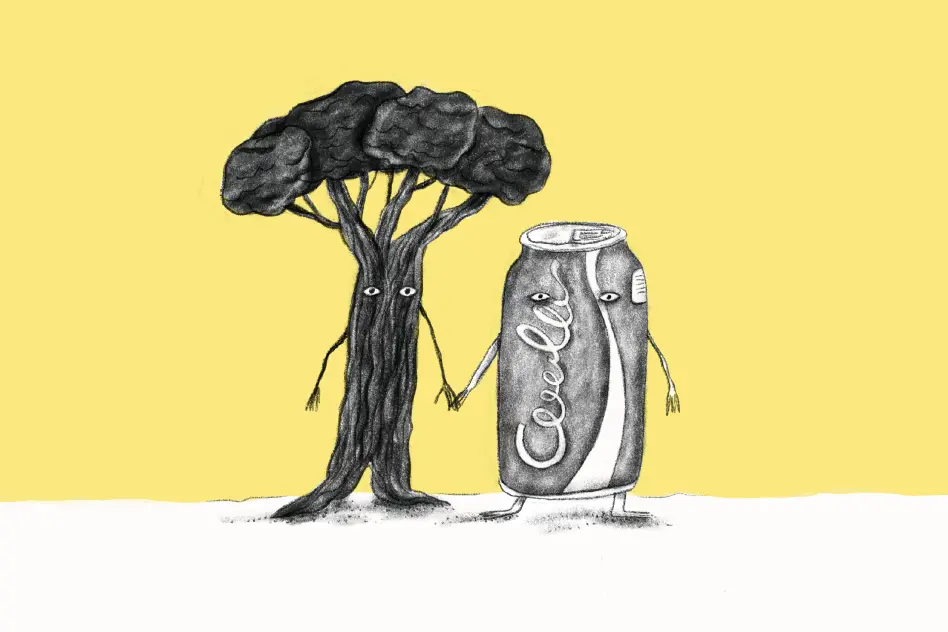
Should I be child-neutral or partner-neutral today? Or should I take to the streets to fight for democratic neutrality? A tree is not climate neutral either, it is good for the climate. Do I want to be dumber than a tree? The people in Saxony-Anhalt vote for the Nazis, even though, according to surveys, an overwhelming majority of them describe their personal situation as very good or good. They do it because they are afraid and do not see a long-term positive perspective. Climate neutrality is not a positive perspective.
The taz is an independent, left-wing and opinionated daily newspaper. We have been arguing in our comments, essays and debate texts since the taz was founded in 1979. We often cannot and do not want to agree on an opinion. That's why you'll find some completely opposing positions here - all part of the very broad left-wing spectrum of opinions.
It declares humans to be pests that better not exist at all if we want to save the world. In doing so, it deprives all people of their dignity and their right to exist. In fact, there aren't too many people on earth. We just have to learn to be useful to all living things. The biomass of ants corresponds to a global population of 30 billion people in terms of calorie consumption. The tropical rainforest in Brazil is only possible because the ants and other small creatures process the nutrients and minerals and make them available to the trees and other organisms.
Many people believe that if they destroy something less, they will protect the environment. This is nonsensical. You don't protect by destroying less. In the name of sustainability, major hotel chains are now mixing cotton with polyester so that bed linen can be washed 200 times instead of 140 times and does not need to be ironed. The fact that you have to sleep and sweat all night in microplastic dust doesn't count.
It's supposedly good for the environment. The fact that in the end you can't do anything with the polyester-cotton mixture doesn't matter either. So you do the wrong thing perfectly and therefore perfectly wrong. Telekom is asking us to return our cell phones because they are supposedly being recycled. In fact, of the 41 rare elements, only a few are partially recovered: only those that are really expensive.
At the same time, rare elements such as indium, gallium and germanium end up in the slag and are therefore lost. The EU demands a right to longevity for products, but the objects are not alive at all. My students do life cycle analyzes of Coca-Cola cans. Has anyone ever seen a live Coke can? Just because we humans want to live long, the products should live long.
A washing machine that lasts 30 years is the biggest nightmare for the economy because no innovation comes onto the market and the manufacturer has to keep spare parts available for 30 years. If you don't sell a washing machine, but only sell the right to wash it 3,000 times for 9 years, the manufacturer has an interest in integrity and not in repairs.
The digital world needs defined periods of use - not longevity, so that you know when the materials will be available again. Then, instead of using 85 cheap types of plastic, a washing machine can be made with four types of plastic that are worth reclaiming. The European Union has decided on a right to repair. What nonsense. What customers need is a right to integrity. Why should they still pay to repair hazardous waste?
The repair cafés definitely have an important social function, as they bring people together and give them the illusion of being powerful and understanding processes. It would be correct for the manufacturer to pay for the repair. No car has ever been recycled into a car. 46 steel alloys from a Mercedes are turned into primitive reinforcing steel and then presented as recycling. All non-ferrous metals in alloys such as nickel, cobalt, manganese, molybdenum, vanadium, palladium, chromium, titanium, bismuth, antimony and tungsten are therefore irretrievably lost.
If cars were turned into cars, all the people who are now losing their jobs in the thousands could be employed, but they would then have to be designed differently. Then one could prevent Stuttgart from becoming the new Detroit, because dismantling would follow assembly. 85 percent of steel could be made with just one alloy. If you want to keep the vehicle as a classic car after an average period of use of 18 years, you would only have to pay around 4,000 euros extra.
In addition, the number of plastics could be drastically reduced and they could be recovered in the same way. The material costs for a Mercedes are far higher than the labor costs, and you could keep the raw materials in circulation, making you less dependent on metal imports. The EU's new greenwashing legislation is itself greenwashing because it does not address the actual issues. If a discounter uses over 40 different types of plastic for its own brands, recycling is impossible.
If you really wanted to do something, you would have to ban PVC packaging, charge a deposit on all packaging and use mono-materials. If we continue as before, with the help of AI, cheese packaging in the future will have 11 different types of plastic instead of the current 6 and will be 5 percent lighter. This is then considered a saving of plastics. However, once you've used it, you can't do anything with it.
The cleaning costs are higher than the value of the plastic. The levels of microplastics that we have in our bodies are already leading to behavioral changes in a number of animal species. We will probably need AI when we soon run out of natural ones. The European Union wants to reduce the amount of tire wear per capita per year from 900 to around 500 grams. This makes tire abrasion even more dangerous for human health.
is a chemist and process engineer. With William McDonough he developed the Cradle to Cradle concept for circular economy.
The dust used to stay on the streets, but we are already breathing it in to a large extent. Today, 50 percent of the microplastics in the Elbe come from tire wear. According to calculations by the Federal Environment Agency, we in Germany also emit 110 grams of microplastics per capita through shoe wear alone. Instead, the treads of car tires would have to be biodegradable. Then the other living beings would have a useful substrate.
It's not about minimizing the human footprint, it's about having a large footprint but becoming a wetland for the other living things. How about making textiles and shoes that are biodegradable? Everything that wears out in use, such as car tires, zebra crossings, brake pads, street sweeper brushes, textiles, shoe soles and others - everything that is consumed could be useful for the biosphere.
Everything that is just needed becomes a technical nutrient. We don't use a computer, a washing machine, or a television, we just use the things. We humans are the only living creatures that produce waste. If there were less waste, the earth would only become one garbage dump a little later. The design principle is called Cradle to Cradle. Circular economy – from cradle to cradle, rather than cradle to grave.
No waste is created, only nutrients for the biosphere and technosphere. We can be useful to other living beings, rather than just less harmful. When people are treated as pests, they behave like them. However, if they are seen as an opportunity for this planet, then people are generous and friendly. Even the poorest of the poor always share with others when they belong and are liked.
We then come to a more humble lifestyle, not because anyone tells us to, but because we are happy to share with others. How about being climate positive and retrieving carbon dioxide from the atmosphere to create plastics and rebuild soils? How about building houses like trees? Houses that purify the air and water and are habitats for 200 other species of animals, like a cherry tree?
The prospect could be to achieve the same level of greenhouse gases in the atmosphere in 2100 as there were in 1900. That would be a positive perspective, a goal worth living for. Then no one would have to be afraid for the future and no one would vote for Nazis.