
Politics · taz · · 44m
Controversy over the documentary “Naza”: The matter of citizenship
Deutsch (original) · Auto-translated to English
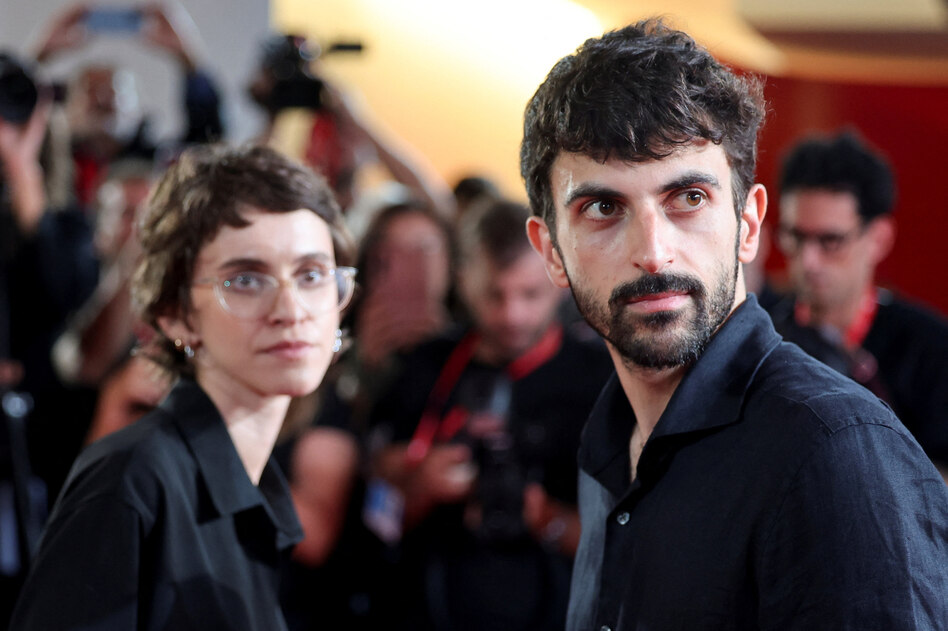
T he Israeli filmmakers Yuval Abraham and Rachel Szor stood on stage at the Venice Film Festival for 25 minutes, visibly uncomfortable and embarrassed, while the audience applauded them last Thursday. Her documentary film “Naza” – the Hebrew military acronym for “collateral damage” – was produced in collaboration with the British daily newspaper The Guardian. It features interviews with Israeli soldiers, primarily from military intelligence units, who explain their perspective on the systems and logic behind the Israeli Air Force's AI-based killing machine in Gaza.
At night, on a roof in Tel Aviv, all you can see are the silhouettes of the 24 interviewees. In distorted voices, they talked - sometimes even proudly - about how they had identified large numbers of targets in the Gaza Strip. The rate of “collateral damage” was so high that it was capable of destroying large parts of the Palestinian population and their livelihoods.
As Israelis Abraham and Szor explained in an article for +972 Mag, you don't need their film to understand what Israel has done in Gaza. Anyone who “listened to Gazans or simply took Israeli leaders at their word” should have recognized that the “mass killing of Palestinian civilians in Gaza was not a tragic byproduct” but part of genocidal warfare.
The taz is an independent, left-wing and opinionated daily newspaper. We have been arguing in our comments, essays and debate texts since the taz was founded in 1979. We often cannot and do not want to agree on an opinion. That's why you'll find some completely opposing positions here - all part of the very broad left-wing spectrum of opinions.
As part of the “Democracy needs many voices” action week, over 150 media outlets in Germany have joined forces - the taz is there. They want to draw attention to the fact that free, professional, responsible media are necessary for democratic cohesion. The organizer is the BDZV, the Federal Association of Digital Publishers and Newspaper Publishers.
Still, they wanted to let the desk clerks' side speak, they write, because such statements made it harder to deny Israel's crimes - "a denial that allows those crimes to continue today."
And apparently they succeeded. Even the Süddeutsche Zeitung titled its review of the film “We kill these children on purpose.” Other media, which to date have not taken note of Abraham's numerous research into Israeli war technology, have finally been disabused by the film's focus on Israeli witness statements.
Even more important: the film, and especially the aggressive reactions to it, have brought the issue to the attention of the Israeli public. As the Israeli website Ynet reports, the Foreign Ministry plans to launch a global PR campaign against the film, particularly on social media.
Right-wing Israeli activists attacked the film as an anti-Jewish work without having seen it. The opposition politician and Netanyahu opponent Naftali Bennett called him “a horrific ritual murder legend against our sons and daughters.”
Meanwhile, Culture Minister Miki Zohar spoke of the “fiery self-hatred of filmmakers who are willing to harm their homeland in order to receive applause from the world’s anti-Semites.” On Monday, he formally asked the Interior Ministry to consider revoking the two Israelis' citizenship because their activities constituted "support of the enemy in war."
This demand for expatriation makes it clear how the repression against pro-Palestinian voices abroad - especially through the instrumentalization of the concept of anti-Semitism - flies back to Israel like a boomerang and falls into the hands of nationalist politicians.
Because it was first the traffic light coalition with Habeck and Scholz in Germany that, with the new naturalization law, linked expatriation to negative attitudes towards the state of Israel. The coalition brought these opinions close to anti-Semitism and thus brought the two together.
Germany is also playing a pioneering role in the cultural sector by canceling events, film screenings or withdrawing funding from artists critical of Israel, for example in the current campaign against the literary scholar Maha El Hissy as a juror for the German Book Prize.
The German anti-Semitism debate regularly even declares Jewish Israelis to be enemies of Jews. It is not yet known whether the film will also be shown in Israeli and German cinemas. When Berlin's Yorck cinema group showed Abraham's last Oscar-winning film, "No Other Land," the company included a statement about the growing anti-Semitism "in our city." The action was not agreed upon with either the film team or the German film distributor.
Read the full story at the source
Source: taz