
Germany taz
Colonialism Memorial: Past the base
The planned memorial for the victims of colonialism could come to Bremen. But there hasn't been any talk with the local activists yet. more...
Deutsch (original) ·Auto-translated to English
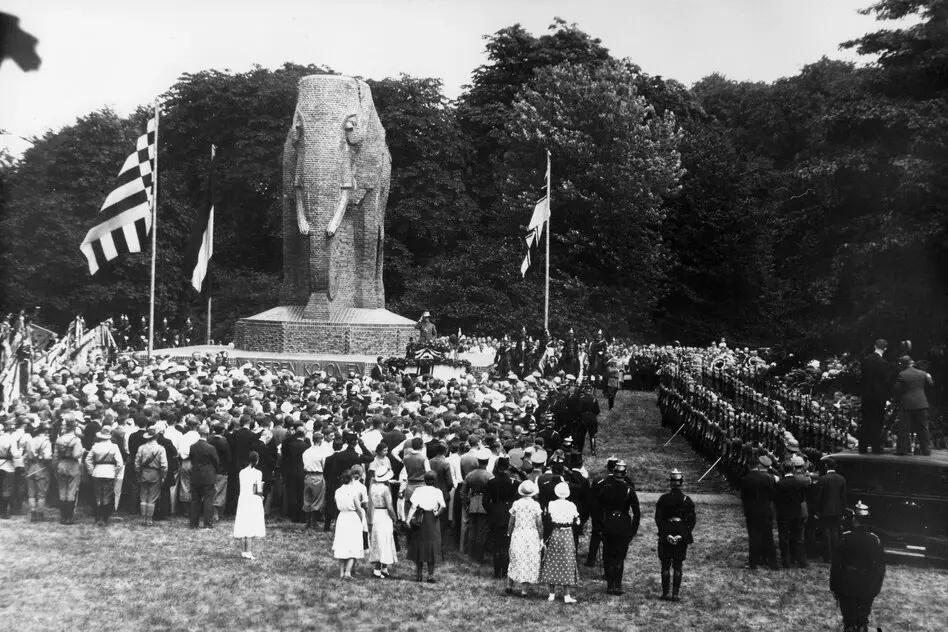
It is dark inside the walk-in brick elephant. Hardly any light penetrates the crypt, which is located at the foot of the anti-colonial monument in Bremen's Nelson Mandela Park. Ceremoniously inaugurated in 1932, the “Colonial Teaching Monument” was intended to glorify the city's bloody colonial perpetration.
It was the Bremen merchant Alfred Lüderitz who used fraudulent contracts to acquire land in what is now Namibia at the end of the 19th century. In 1884, “German South West Africa” became the first German colony. Lüderitz thus paved the way for the genocide of the Herero and Nama; by 1908, 100,000 of them were murdered by German colonial soldiers.
In 1988, after more than a decade of civil society struggle, the elephant became an anti-colonial monument. “The 10-meter-high elephant is not only the largest, but also the only place in Germany that is officially dedicated to the memory of German colonial crimes,” says Bremen Green politician Ralph Saxe, chairman of the “The Elephant!” association, which has been taking care of the maintenance of the memorial since 2011.
Saxe, who has also been Vice President of the Bremen Citizens' Council since the beginning of the year, suggested in the summer that Bremen and Bremerhaven should be made the location for the “Colonialism Remembrance Site” planned by Minister of State for Culture Wolfram Weimer, with the elephant as a reference point.
In fact, at the end of September it was said that Weimer had announced the decision for Bremen in the Bundestag's culture committee. Weimer's press office denied the news a short time later: The Minister of State for Culture was still in talks with the state of Bremen and the municipal overseas museum in Bremerhaven. A decision has not yet been made.
In advance, Weimer had emphasized that one criterion for the location decision was a vibrant civil society that was concerned with coming to terms with colonialism. However, it is precisely this civil society in Bremen that is not at all happy with the actions of the Minister of State for Culture. They are “irritated and even outraged” about how the current process is going, says cultural scientist Lilli Hasche from the “Decolonize Walls!” initiative, which, among other things, is committed to renaming street names.
When it was said at the end of September that the decision in favor of Bremen had already been made, activist Virginie Kamche from the Africa Network Bremen organized a meeting with the bremen.global network, an umbrella organization of over 30 development policy initiatives and associations. Kamche says they wanted to exchange ideas together about what they only heard from the media. “It was important to us to reach not only people from clubs and other initiatives, but also the African diaspora.”
Kamche has been involved in Bremen's decolonial community for over ten years. Since 2017 she has been a full-time One World promoter for migration, diaspora and development, and since March of this year she has also been chairwoman of the Bremen State Decolonization Advisory Board, which is intended to advise administration and politics on the decolonization of social structures.
Virginie Kamche has not yet been approached by the Minister of State for Culture about the planned memorial to colonialism, neither as chairwoman of the advisory board nor in any of her other functions. It is important that the voices of communities across Germany are heard, she says. "These are people who are still affected by the consequences of colonialism. If no one speaks to us, then that is a form of colonial continuity."
In the past few weeks, Kamche says, we have been working with actors from the decolonial community in Hamburg and Berlin - these cities are also being discussed as locations for a colonial memorial site. There was great frustration with the current process there.
The idea of finally establishing a national place of remembrance for dealing with German colonial crimes is not new: the traffic light coalition had already envisaged a “learning and remembrance place for colonialism” in its 2021 coalition agreement. Weimer's predecessor Claudia Roth even planned to include colonialism in the German memorial concept.
The memorial concept presented by Weimer at the end of 2025 is again only about the Nazi dictatorship and SED injustice. The Minister of State for Culture announced his own concept for coming to terms with colonialism. We've been waiting for this ever since. According to a press release from the end of September, the paper will be presented “this fall,” i.e. very soon.
It is still unclear what the “worthy place of remembrance” envisaged in the coalition agreement will look like. “It can’t be about putting a monument or an archive somewhere,” says the lawyer and co-founder of the Bremen Africa Archive, Manfred Hinz. Since the 1970s, Hinz has been involved in coming to terms with Bremen's colonial history. After Namibia gained independence from South African occupation in 1990, he also helped prepare the young state's constitution.
Hinz says he sees it as colonialism is not over yet: "It lives on in our heads. And the social and political consequences are still present in the formerly colonized countries too."
Meanwhile, Virginie Kamche is trying to look forward. “We are already thinking about how we imagine a memorial site, not only in Bremen, but also in Hamburg and Berlin.” It should be a place of encounter that calls for people to deal with colonial dependencies and racist structures.
At some point they would also communicate their ideas to the outside world, says Kamche. “I don’t want people talking for us, about us, without us again.”