
Germany taz
Organic farming: No money for new organic farms
Brandenburg's funding pot for converting conventional farms to organic farms is empty. The country played a pioneering role in this. more...
Deutsch (original) ·Auto-translated to English
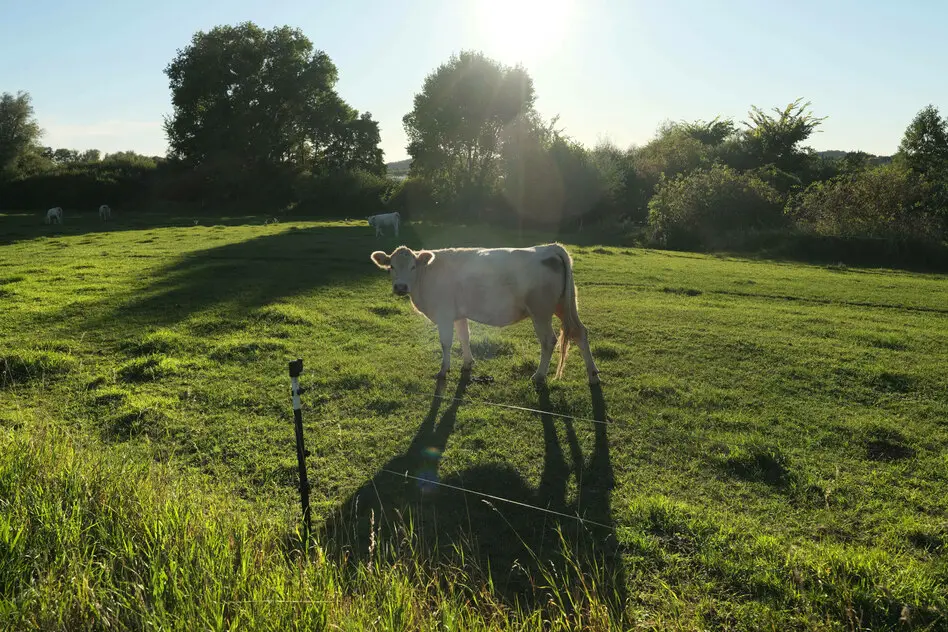
There is great excitement in organic farming in Brandenburg. A few days ago, the Ministry of Agriculture and Foodstuffs informed the associations that there was no longer any funding for converting conventional businesses to organic farming. “Apparently the cash register is empty,” summarizes Sascha Philipp, agricultural policy spokesman for the organic farming associations in Berlin-Brandenburg. Companies willing to convert, totaling around 2,000 hectares, had firmly trusted that they would receive money from the state treasury. There are also existing organic farms that have purchased or leased around 2,000 hectares of land this year.
In recent years, the funding program has helped thousands of farmers overcome the difficult transition phase. They require more expensive seeds and are no longer allowed to use synthetic fertilizers, which reduces harvest quantities. At the same time, they cannot market their products under an organic label and therefore at a higher price in the first two years.
"The new funding applications should have been submitted by the end of December. Being informed six weeks in advance that there is no money is the complete opposite of the planning security that everyone is talking about," summarizes Rahel Vorholz. She is head of the Havelland eco-model region, which is supported by the state until the end of 2028 and is intended to make organic farming popular. Vorholz has long been in discussions with fruit and vegetable businesses where a generational change is imminent in the next few years. “Many young farmers are open to a change – but the current signal is fatal for this.”
Nobody disputes that the program is extremely successful. Brandenburg received 188 million euros from the EU's Common Agricultural Policy (CAP) in the funding period 2023 to 2027. The first round of applications ran at the beginning of 2025 - 1,014 companies benefited from the conversion aid. The second round started in 2026. Because there were not enough funds to meet the high demand, the country redeployed 24 million from other areas.
"The money has been completely spent. It's nonsense that we're stopping anything," says Gabriel Hesse, press spokesman for the Ministry of Agriculture. Anyone who has an approved application will receive the promised money by the end of the CAP period. This means that the front runners benefit from the payments for four years, the second round for three years. “Now it would have only been two years anyway,” said Hesse. He admits that the ministry did not inform the farmers who wanted to convert earlier. But because of the budget negotiations there was no clarity beforehand, he explains the approach.
The former Green Agriculture Minister Axel Vogel, who was in office until the end of 2024, had set 20 percent organic farming as the target for Brandenburg. Currently, 17.6 percent of the areas are farmed organically, and more than one in five farms is an organic farm. This makes Brandenburg the leader among the territorial states in Germany.
A major advantage is the Berlin sales market, where at least 12.5 percent of fresh products come from organic production. However, there are no mills, slaughterhouses and other processing plants in the region, so many organic products still have to travel long distances before they end up on the shelves in the capital. A funding program is therefore also aimed at building value chains.
But much of what has been built up in recent years in terms of regionality and sustainability is in danger of disappearing again. The monitoring committee for the nutrition strategy is therefore considered dispensable. The daycare and school catering networking center will also no longer be funded in Brandenburg from 2028. It is precisely such organizations that drive practical implementation by bringing organic food from the region to the plate.
There are also the many ecological advantages of organic farming. The Thünen Institute points out that securing groundwater depends largely on the largest possible areas being managed organically. “And even the SPD says that organic farming is an important economic factor in Brandenburg,” says Philipp. But their policies are going in the opposite direction.