
Germany · taz · · 2h
Coalition formation in Berlin: The SPD is facing a breaking point
Deutsch (original) · Auto-translated to English
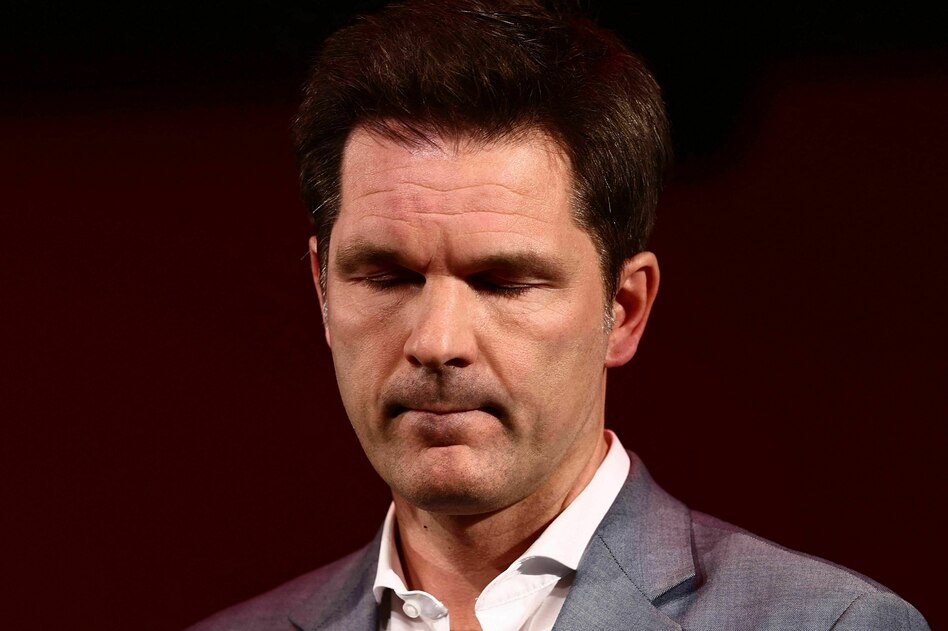
Without the rubble women, Berlin would not have been rebuilt after the Second World War. Is that what Steffen Krach has in mind when he appears in front of the camera in the Willy Brandt House on Monday? “At 12 percent you can no longer say that you are the Berlin party,” said the top candidate of the Berlin SPD, who lost the House of Representatives election on Sunday. “That’s why it’s now about rebuilding the Berlin SPD.”
Steffen Krach, the wrecker of the Berlin Social Democrats, even made another demand for a possible coalition with the Left Party and the Greens. Left-wing election winner Elif Eralp must clearly distance herself from anti-Semitism in parts of her party. Without consequences there could be no cooperation, said Krach, referring to the visit of a leading clan member to a left-wing election party.
The loser of the election is therefore setting further conditions after he had already confirmed his rejection of the socialization of large private housing stock after the election. Is Krach perhaps working to make the hurdles to an alliance with the Left Party and the Greens insurmountable before talks even begin?
On the evening of the election, Krach said a remarkable sentence: “This election result is not a government mandate.” One can interpret this as humility, but also as an announcement: the path to a left-wing alliance under the leadership of Governing Mayor Elif Eralp is not automatic for the Berlin SPD.
How torn the comrades are was also evident at the SPD's election party in the Astra Kulturhaus in Friedrichshain. The fact that the Left Party won the Berlin election and the former “Berlin Party” SPD came in last place was difficult to bear, especially for older people. Some people even remembered the times when the city was divided.
The question of how to prevent a left-wing alliance concerns many people in the “pragmatic” wing, even if no one can be quoted as saying it. After all, Krach's statement can also be interpreted as meaning that the SPD, which has governed and co-governed Berlin for 37 years, could also benefit from five years in the opposition. Why not a minority government made up of the Left Party and the Greens tolerated by the SPD, they say behind closed doors.
The person who can be quoted is the faction leader Raed Saleh, who remained largely invisible during the election campaign. “People will no longer allow themselves to be stuck with meaningless and empty phrases from the failed and voted out pragmatic policies of the center,” Saleh said on Monday. A statement towards the federal party that does not answer the crucial question for Berlin.
But Steffen Krach has to find an answer. Is there a left-wing alliance, despite its rejection of socialization? Is the SPD letting the explorations with the Left and the Greens fail in order to then enter into talks with the CDU? Or is the answer to all the questions actually opposition?
CDU top candidate Stefan Evers – like Krach, a loser in the election – has already shown himself to be open to a “coalition of reason”. But the fact that the two state chairmen Nina Stahr and Philmon Ghirmai decided on a left-wing alliance on the evening of the election initially excludes this option.
In addition, Franziska Giffey, who is still Senator for Economic Affairs and is the most prominent opponent of a left-wing alliance, missed out on being elected to the House of Representatives. Giffey, who was not secured on the district list, narrowly lost the race for the direct mandate in her constituency in Rudow to the CDU. Only Lars Düsterhöft won a constituency for the SPD in Treptow-Köpenick.
Quite a few Social Democrats are therefore in favor of a left-wing alliance. “The will of the voters is clear,” says SPD MP Linda Vierecke, who, however, will no longer be represented in the next House of Representatives in Pankow due to the shift to the left. For them, this is also a question of democratic self-image. “I don’t see that the election result is a mandate for a coalition with the CDU or a minority government.”
In addition, according to the preliminary official final results, a Kenya alliance made up of the CDU, Greens and SPD would only have a majority of 2 seats in the House of Representatives. A left-wing alliance, on the other hand, would have a majority of 15 seats. The coalition would therefore not be dependent on MPs from the Neukölln Left district association, who previously made headlines with anti-Semitic positions. That shouldn't calm the noise, but it will calm others in the SPD.
If the Left Party votes with a large majority in favor of starting exploratory talks on Friday, it would then be the SPD's turn and, above all, the new parliamentary group. One possibility would be for Krach to put everything on one card in his reconstruction mission and run for parliamentary group chairmanship. But that comes with great risk. If he fails, he would probably be politically finished. Saleh would then have a free hand - even for a left-wing alliance.
Krach has to sit through the state executive board meeting on Monday evening. He also has a say in the question of the future Senate alliance. On the one hand, he could rely on a member survey and hope that the base speaks out against a left-wing alliance.
Or the state executive committee clears the way for a coalition under Elif Eralp. But then probably without the development helper Steffen Krach, who only seems to make the SPD's situation more difficult with his red lines. Even if he still tries to spread optimism in the Willy Brandt House and emphasizes: In the future, “the Berlin SPD will be rebuilt everywhere in Berlin”.
Read the full story at the source
Source: taz