
Germany taz
Coalition committee: Schwaz-Rot decides to reduce electricity tax initially for 2027
The Union and the SPD agree on a reduction in electricity taxes for all consumers. But the financing is initially only secured for 2027. more...
Deutsch (original) ·Auto-translated to English
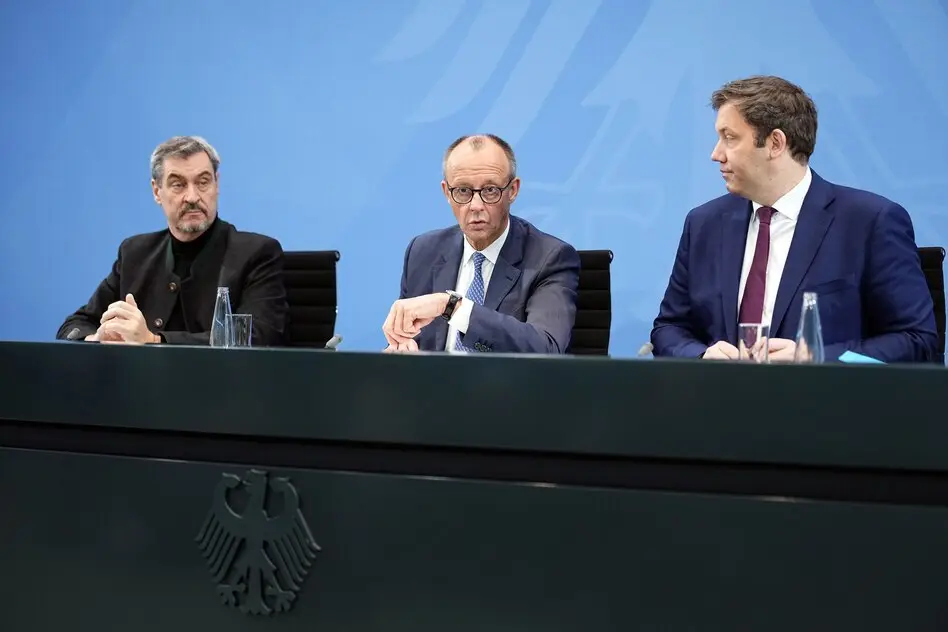
dpa | After several failed attempts, the leaders of the Union and SPD have agreed to reduce electricity taxes for all consumers. However, the financing is initially only available for the year 2027, as the coalition partners announced this morning. “A permanent reduction is intended,” says the coalition committee’s results paper. However, this requires sustainable counter-financing in the 2028 federal budget.
The leaders of the Union and SPD negotiated in the Chancellery for more than eight hours until late into the night - even though Chancellor Friedrich Merz (CDU) had announced that a solution could be reached quickly. Merz had clearly promised a reduction for the citizens and used a lot of political capital to achieve this. Finance Minister Lars Klingbeil (SPD) also supported a tax cut, but demanded solid counter-financing. In the budget negotiations, attempts were made in vain to raise the necessary 5.4 billion euros.
For the coming year, the tax cut to the European minimum is now to be financed through leeway in the EEG account. How much money is available in this account depends largely on the prices for electricity from renewable energies. The coalition partners have therefore decided that if the surpluses in the EEG account are not sufficient, the coalition will decide on a package of measures. It would then be conceivable, for example, to eliminate subsidies or increase other taxes such as the withholding tax on capital gains.
In the coalition agreement, both parties agreed to reduce the electricity tax for everyone to the European minimum as an immediate measure, but subject to financing restrictions. Initially, the tax was only reduced for industry, agriculture and forestry because of tight budgets.
The agreement from the coalition committee must now be subsequently incorporated into the budget for 2027 that has already been approved by the budget committee. This is due to be finally decided by the Bundestag on November 27th.
The European minimum electricity tax is 0.1 cents per kilowatt hour; the electricity tax is currently 2.05 cents. A reduction to the minimum costs around 5.4 billion euros annually. According to the comparison portal Verivox, for a three-person household with an annual consumption of 4,000 kilowatt hours, this means a monthly relief of 7.75 euros. For a single household with 1,500 kilowatt hours it is around three euros. For companies, shopping centers or even data centers with their higher power consumption, the relief is significantly greater.