
Germany taz
Coalition struggles over electricity tax: crash test for Merz
The Chancellor wants to achieve a reduction in electricity tax in the coalition committee this evening. Otherwise, will the budget become a question of trust? more...
Deutsch (original) ·Auto-translated to English
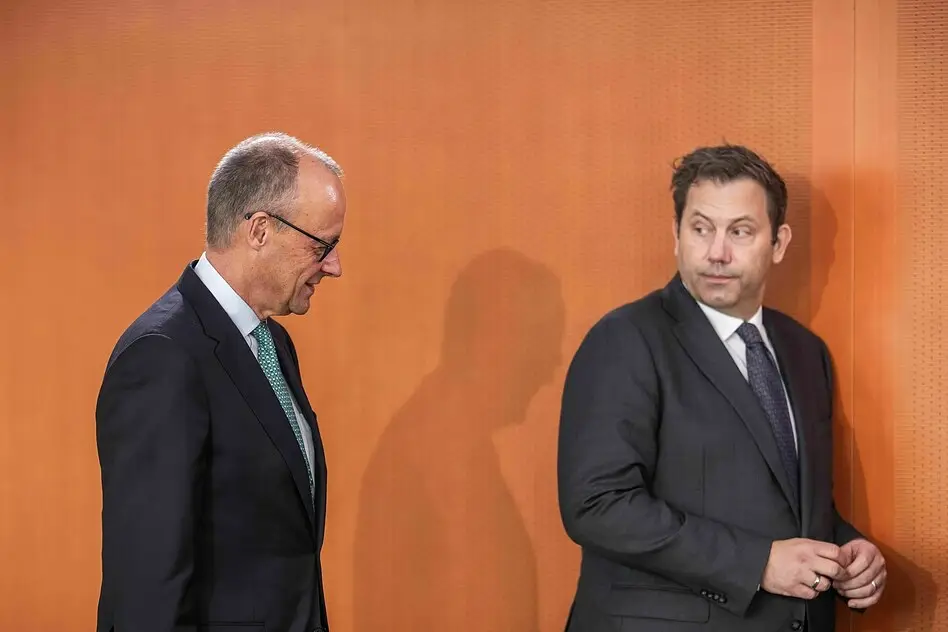
For Friedrich Merz, the matter seems clear: When the coalition committee meets this Tuesday evening, the top politicians from the Union and SPD present will still agree on a reduction in electricity taxes for private households and small companies. In any case, the Chancellor is optimistic that the meeting will be “relatively short,” as he announced from Bavaria on Monday. Numbers were compared again over the weekend “so that we can come to a decision to completely reduce the electricity tax to the European minimum for 2027”. The finance minister knows that the decision is necessary.
The announcement is clear: the finance minister, SPD leader Lars Klingbeil, should find the necessary 5.4 billion in his budget. Es ist aber vor allem auch ein Versprechen an die eigene Fraktion: Ich klär das.
Last week, the householders from the Union and SPD were unable to agree on reducing the electricity tax for private households, even though all three parties had agreed on this in the coalition agreement. But they have not yet found a common answer to the question of how they finance this year after year, despite several rounds of discussions at the level of the group leaders and specialist politicians. The budget committee's nightly clean-up meeting on Thursday didn't reveal any hidden treasures either.
Nerves are on edge in the Union, and the credibility of its own chancellor and party leader is – once again – at stake. After a meeting of the executive committee in October, he once again announced the prospect of reducing the electricity tax as the only tangible result. The chairman of the Young Group of Union MPs in the Bundestag, Pascal Reddig (CDU), warned on Deutschlandfunk on Tuesday: “If you announce this three times now, then we have to implement it.”
It is unclear whether enough Union MPs will approve the budget on November 27th if this promise is broken again. The coalition has a slim majority of 12 votes.
The SPD is angry and in a dilemma: Should we help the Chancellor out of trouble and stabilize the coalition and accept budget holes that will inevitably lead to new discussions about social cuts?
“We are open to a reduction in electricity tax and ready to accommodate the Chancellor,” says the deputy parliamentary group leader for budget and finance, Wiebke Esdar, to the taz. However, it would be important to counter-finance the relief in such a way that it does not come at the expense of those who are to be relieved. Esdar considers an increase in VAT to be “utopian”. She calls on the Chancellor to finally make his ideas for sustainable counter-financing public. “We’ve been waiting for this for two weeks.”
Reddig doesn't see many people understanding why there shouldn't be any money for the tax cut. However, it doesn't help to always point to the SPD. Reddig brings into play a reduction in subsidies and financial aid, which add up to 60 billion euros, and also believes that a postponement of the mother's pension is possible.
But the latter doesn't work with the CSU. “The mother’s pension has been decided, it is not up for discussion,” CSU regional group leader Alexander Hoffmann confirmed to the Kölner Stadt-Anzeiger. He receives support from the German Social Association. Its chairwoman Michaela Engelmeier warned in the Rheinische Post that a reduction in electricity tax should not come at the expense of mothers' pensions.
So what remains is the reduction of subsidies. The President of the Federal Audit Office, Ansgar Heveling, has also spoken out in favor of this. The former CDU MP sees a potential of 17 billion euros per year just by eliminating demonstrably ineffective or climate-damaging tax breaks, as he told the Rheinische Post. But will the CDU/CSU really agree to abolish the company car privilege or the reduced energy tax for diesel?
If the coalition committee met without a result, Merz could, in the worst case scenario, rally the parliamentary group behind him by throwing his office into the balance and linking the vote on the budget to the vote of confidence.
For the chairwoman of the Left Party Ines Schwerdtner it is already clear: "Merz has miscalculated. He promises people a quick reduction in electricity taxes, but he doesn't know where the money will come from." According to Schwerdtner, it is very easy to raise the billions: “The federal government just has to finally trust the excess profits of the oil companies.” The Left sees 6.7 billion in excess profits in Germany that could be skimmed off.
The SPD would also like to put the excess profits tax on the agenda of the coalition committee. By the way, the deputy party leader, the Saxon Social Minister Petra Köpping, is taking part for the first time to replace the resigned SPD leader Bärbel Bas. It doesn't look like a short meeting for her and the other 10 members at the moment.