
Germany · taz · · 3h
Climate change: Eleven trillion tons of ice have been lost since 1979
Deutsch (original) · Auto-translated to English
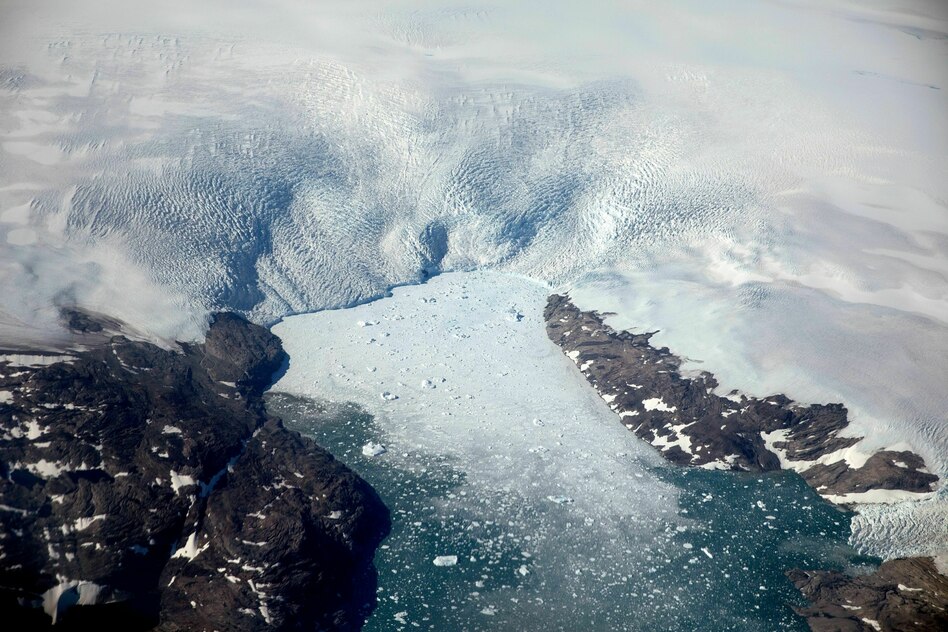
dpa | The Earth's two major ice sheets in Greenland and Antarctica have lost more than 11 trillion tons of ice in the past almost 50 years. This ice loss between 1979 and 2023 caused sea levels to rise by 3.14 centimeters, reports a research team in the journal Scientific Data.
For their investigation, the polar researchers from the Ice Sheet Mass Balance Intercomparison Exercise (IMBIE) looked at 42 individual surveys, which in turn were based on data from 27 satellite missions. Their goal was to get a consistent picture of how the ice sheets have changed over the decades. Specifically, they looked at where exactly how much ice was lost and how much the process accelerated.
Result: Ice loss has increased significantly since the 1990s. While around 60 billion tons of ice disappeared annually in Greenland in the 1980s, in the hot summers of the 2010s it was around 264 billion tons per year. The team observed a similar trend in Antarctica. While around 48 billion tons of ice were lost annually in the 1980s, in the 2010s the average was around 202 billion tons per year.
Much of the ice loss did not come from above. “More than four-fifths of the ice loss was released into the ocean by faster-flowing glaciers and did not melt on the surface,” says co-author Inès Otosaka from Northumbria University in the UK. “This tells us that the long-term trend is driven by the dynamic response of ice sheets to a warming ocean.” In fact, in Antarctica, ice loss was entirely due to glacier flow accelerating and ice melting due to warmer oceans.
The ice sheets have an enormous influence on sea level rise. According to the European Space Agency (ESA), which supported the study, Greenland and Antarctica are responsible for about a quarter of rising sea levels. The remaining roughly three quarters are due to the melting mountain glaciers and, above all, the thermal expansion of the warmer sea water.
The contribution of ice sheets to rising sea levels so far is considerable. “Just over 3i centimeters of sea level rise may sound like little, but this puts another 6 to 9 million people at risk of coastal flooding and erosion,” says Andrew Shepherd, also from Northumbria University.
In the last years of the study, between 2020 and 2023, ice loss slowed somewhat. However, experts warn that this is not a reversal of the long-term trend. The ice sheets continue to lose more than they grow.
Read the full story at the source
Source: taz