
Germany · taz · · 1h
Catastrophe in Nepal: After the Flood
Deutsch (original) · Auto-translated to English
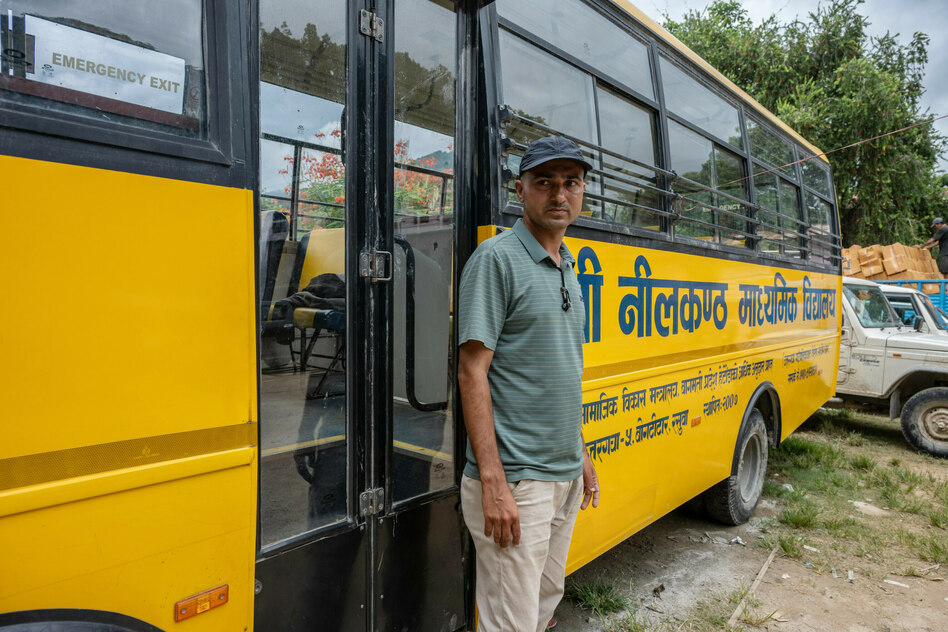
The schoolyard no longer belongs to the children alone. SUVs and trucks rumble through the half-open gate of the Neelakantha Secondary School in Betrawati, northern Nepal, and people carry rice sacks and gas cylinders on their shoulders. Food is stored under tarpaulins in the schoolyard, and boxes of relief supplies are also piled up on the building's veranda.
On August 26, a climate change-related collapse on the Langtang Lirung glacier in northern Nepal triggered a massive flash flood that swept through the valleys. Over 1,450 deaths have been confirmed and over 5,000 people are still missing. And according to UNICEF, around 32,000 children are affected by the consequences of the disaster on the border with Tibet - even those who appeared to be uninjured.
Madhav Lamichhane, a slim man with short hair, is working to give the children here in Betrawati a more everyday life. The 41-year-old runs the Neelakantha Secondary School. He has two ballpoint pens stuck in the button placket of his polo shirt and his cell phone keeps ringing. Sometimes he's in the school building, sometimes he's walking over to the boarding school. Helpers, parents and teachers – everyone wants something from him. He hasn't slept much since the flood, sometimes spending the night at school.
There is a yellow bus in the middle of the schoolyard. Behind it, shielded from the constant comings and goings, children play volleyball. They shout to each other, laugh, hit the ball over the net. Some sit on the benches and watch, others rest on foam pads in the midday heat.
Here you can observe on a small scale how Nepal continues after the flood disaster. Relief supplies still need to be distributed and many people need to be cared for. It will soon be cold in the region and people are still looking for relatives and a new home. At the same time, schools are reopening and everyday life is slowly returning. Not because the loss has been overcome. But because life must go on.
Also for Madhav Lamichhane. He wanted to reopen classrooms as soon as possible. Concern for the children motivated him. “The school is in a safe place,” he says. So why wait? He resumed teaching a good two weeks after the flood. Of four schools in the area, Neelakantha was the only one to survive the flood.
First, Lamichhane had to create space between the relief supplies: improvised lessons took place again in three classrooms - 20 to 25 minutes per hour. Lamichhane hopes every day that the news will spread that the children from the destroyed schools are waiting in Neelakantha.
On the first day of school after the flood there were 110 children. Some came barefoot, others had neither schoolbags nor books nor notebooks. “They came as they were,” says Lamichhane. Of the approximately 500 students, around half have returned. Others are now living with relatives or in reception centers, some in the capital Kathmandu. Lamichhane has not yet been in contact with around 100 of his students. Three teachers and a school nurse are also missing. Around 50 of his students have lost both parents and an equal number have lost one parent.
This article was made possible through the financial support of the Forschungsfonds Ausland e. V. You can support the research fund through a donation or membership.
On the morning of the deadly flood, Madhav Lamichhane was already at work when the school bus driver called him. He had already brought the first children to school. Now he was off for another round. He called Lamichhane in a panic and warned about the floods. The headmaster began calling parents and teachers, asking them to seek refuge on higher ground. He didn't reach everyone with this warning in time.
Even after the disaster, Lamichhane continued to make phone calls. Now to find out where his students were. He called parents and contacted reception centers. At some point the calls were no longer enough. So he set out himself. He found around 160 of his students in emergency shelters in Nuwakot, about 40 kilometers south. Some wanted to come back. But it wasn't that easy.
Families were accommodated in distant places and usual routes were cut off. Even if schools in the flood zone reopen, they won't be able to reach everyone again. Lamichhane's school itself became a relief center.
At lunchtime, Madhav Lamichhane walks to the new boarding school building, a few hundred meters from the school. The scent of dal rice is in the air. The first new beds are in some rooms in the fenced buildings. Not everything is set up yet. Families who have lost their homes currently live here. In the future, Lamichhane also wants to take in students who can no longer live with their families or who cannot get to school because roads have been destroyed. There will be room for 100 to 200 children here in the future.
On the upper floor, Chippumendo Tamang is having lunch with her seven-year-old son Syrush. Rice and lentils are served with chicken and spicy pickled vegetables. Syrush's old school in the neighborhood no longer exists, here in the emergency shelter children run around, shuttlecocks fly outside.
25-year-old Chippumendo Tamang speaks quietly and smiles at her son. Normally the two are thousands of kilometers apart. Tamang works as a domestic worker in Kuwait, Syrush lived with his grandmother in Nepal.
After the flood, Tamang's brother-in-law called her. Her son was brought to Kathmandu. Tamang dipped into her savings and quickly flew to Nepal. To this day, Syrush's mother still doesn't know exactly how Syrush got to Kathmandu. On the morning of the flood, his grandmother had gotten him ready for school. But the bus got stuck on the way. “That’s why he’s still there,” she says. She believes this coincidence saved his life. The family home is destroyed.
Tamang found her son in the capital and they now both live in boarding school here. She had heard that a school had reopened near her former home and found space here. Syrush has a fever. As soon as he feels better, he should go to class. “I feel safe here and I feel better now,” says his mother.
Tamang doesn't know what will happen next. She sent a large part of her earnings to her father, from whom she has not heard since the flood. Now she doesn't know how to get the savings. Maybe she has to work abroad again. But for now she is staying with her son: “I will do my best to give him a good education.”
There are three bunk beds in another room, next to a desk with a printer. Raunak Raj Sarraf from the Sano Paila organization has set up shop here. Occasionally his radio statics. From here, Sano Paila organizes food, emergency accommodation and care, supported by the German Andheri Aid, among others.
"A warm meal is one thing. But it is just as important that the school makes sure that no one drops out," says Sarraf. After a disaster, the pressure to contribute to income increases, especially for young people from poorer families. Those who no longer go to school and live away from their families are particularly vulnerable. This increases the risk of child labor, early marriage and human trafficking. Families would be lured with promises of a better school or a better life.
The situation also remains difficult in the emergency shelters. “People are together in a small space and don’t even have the privacy to talk to each other,” says Biju Dangol from Welthungerhilfe. There is no place to retreat even to mourn. Shaurabha Subedi from Rural Reconstruction Nepal accompanies people in the reception centers and says: “Children need a safe space to express their feelings and deal with what they have experienced.” Confidants, friends and teachers are particularly important. “We have to plan for the long term and not just be active in the emergency aid phase.”
Many faces are still missing from the Neelakantha School. But on the farm we are playing and, above all, learning again. Relief supplies are still lying around, some families are still quartered here and don't know where to go. “We hope that the children will come back,” says school principal Madhav Lamichanes. He waits for each one.
Read the full story at the source
Source: taz