
Germany taz
Journalistic gaffes: A little more respect, please!
Berlin election winner Elif Eralp has been under fire for weeks. Behind this is also the fear of left-wing women. more...
Deutsch (original) ·Auto-translated to English
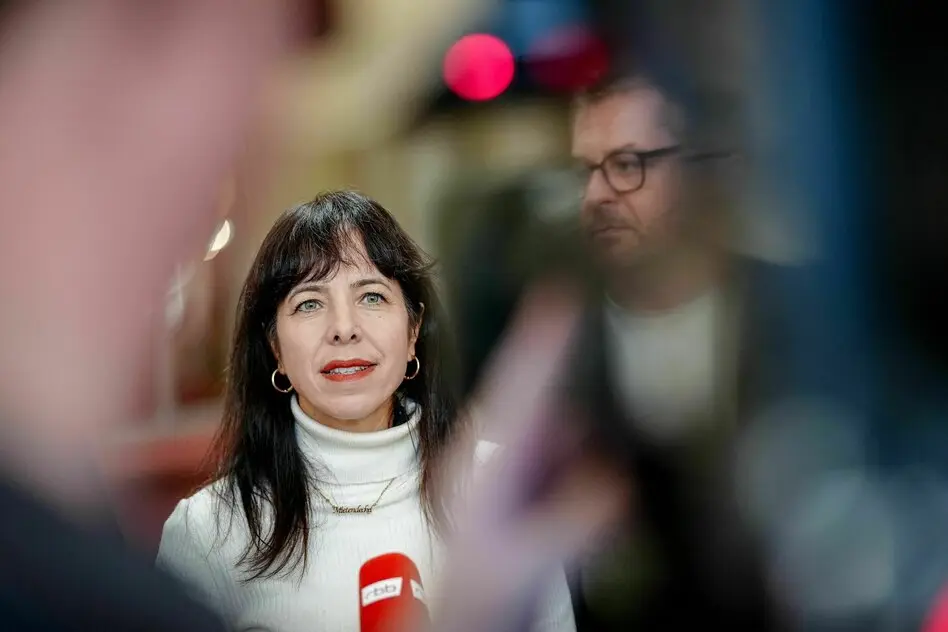
A radiant woman who speaks of “love and justice” in the federal capital and wants to fight for education, cheap rents and migrants: This shining image of the Berlin election winner Elif Eralp quickly went out. The left-wing mayoral candidate soon became a symbolic figure for radical fringe groups in her party - even though she herself had taken action against them. “Left-wing clan mayor”, “deeply anti-Jewish”, “accessible to blackmail”: speculation, at best chains of evidence, were enough to label her in numerous media.
Such defamatory headlines bring back memories of other happy election winners like Andrea Ypsilanti. The Hessian Social Democrat also had to endure a “tsunami wave of demagogic frenzy” (Tom Schimmeck) in 2008. No matter how different the conditions may be, a comparison is still illuminating 18 years later. It not only shows that anti-left resentments once again seem to justify journalistic gaffes and an almost conspicuous lack of interest in objective, democratic struggles. The problem also seems to be the woman on the left.
Christiane Grefe is a freelance author, including for Die Zeit, where she worked as a reporter and editor for 25 years. She writes about social and ecological issues. Most recently, her book (with Tanja Busse) “Der Grund” about conflicting goals in land use was published.
As a reminder: In an election campaign that (like Eralp) was driven by justice issues, Ypsilanti convinced over 36 percent of Hessian citizens to join the SPD. But she narrowly missed the chance to replace CDU Prime Minister Roland Koch alone in alliance with the Greens. Torn between two election promises - not with Koch or the Left - Ypsilanti ultimately convinced her group to convince the Left to tolerate a red-green coalition. Then - assisted by a media barrage (selfish, power-mad, "dilettanti", "ligilanti") - four renegades withdrew their support a few hours before the last vote. Her intrigue, disguised as a torment of conscience, led to Ypsilanti's downfall.
The taz is an independent, left-wing and opinionated daily newspaper. We have been arguing in our comments, essays and debate texts since the taz was founded in 1979. We often cannot and do not want to agree on an opinion. That's why you'll find some completely opposing positions here - all part of the very broad left-wing spectrum of opinions.
This doesn't have to happen with Elif Eralp, but her ability to govern is also prematurely denied, and other parallels are striking. In both cases there were highly unusual journalistic violations. Last week, the Spiegel editorial team published corrections to an interview that Eralp had requested in reliance on such authorization processes. The fact that the politician - on the advice of the LKA - wanted to delete the name of a Palestine activist who sympathized with Hamas in order to protect her family was just as much an indiscretion as a side note to left-wing colleagues that her office had accidentally sent. In it, Eralp named her personal fear.
Déjà vu: In the Ypsilanti case, the then Hesse Prime Minister Kurt Beck revealed to a group of journalists that as federal chairman of the SPD he would accept the left's tolerance. He did this in a background conversation, which precludes publication. But the report went out immediately - and mobilized a campaign by right-wing social democrats and business representatives against the election winner.
There are good reasons to question such common agreements between the media and politics. But if both sides accept it, what then legitimizes breaking it unilaterally? Is it actually responsibility? It's more likely that the journalists acted out of hubris and thereby achieved what is considered taboo in the industry: they made politics themselves.
And especially with women? One could dismiss the question as conspiracy theory if it weren't for the fact that trite femininity clichés were at play then and now. Just one example is a comment in the FAZ feature section about an appearance by Eralp: Faced with a group of party friends who stood behind her, “we almost said clan,” he asks whether the gentlemen came along “for moral support or more as watchdogs.”
“Overwhelmed”, “puppet of dark forces”: such attributes are similar to those for “this small, snarling woman”, the “former stewardess” – Ypsilanti. Such a person could - and now it comes to the point - only have been “imposed” on their planned, ambitious energy transition program. Rather, the weaker sex had shown both courage and political sense by appointing the social democratic pioneer for renewable energies, Hermann Scheer, as the designated economics minister. Scheer's practical vision of a decentralized “energy of the people” turned out to be a secret of successful electoral mobilization in Hesse's municipalities.
But in doing so, the Scheer-Ypsilanti team swam against the tide of their party's fossil majority. In particular, the then Finance Minister Peer Steinbrück and Wolfgang Clement from North Rhine-Westphalia were able to impose their spin on the irresponsible, illusionary project of the “amateur” in the media in a remarkably monochrome manner. There is a lot to suggest that we would have made further progress in climate protection today if the experiment in Hesse had been successful.
Admittedly, it is speculative if one assumes that behind the tirades against Elif Eralp there is also the defense of the status quo against a complex reform project. What is meant is the partial socialization of large real estate companies planned by the Left and demanded by Berliners in a referendum. When it comes to resistance, it is at least noticeable that personal defamation and lack of interest in the content go hand in hand. In any case, serious discussions with the attempt to regain municipal influence on rental prices, let alone with the Left's overall housing policy package, can only be found with a magnifying glass, even though the long-delayed issue of housing contains social fuel.
You don't have to consider the ideas that Elif Eralp stands for to be the ultimate. But one thing is certain: “madness” or “envy-driven loser politics” (Ulf Poschardt, Die Welt) are not arguments. Rather, this kind of divisive cacophony is further damaging the branches of democracy, which has become more and more fragile since 2008 - and is even more dependent on respect from political opponents.