
World taz
Israel's head of government and the Shoah: not forever a victim, not forever guilty
Netanyahu exploits the Holocaust. His goal is to legitimize all means and the myth that only he protects his people. more...
Deutsch (original) ·Auto-translated to English
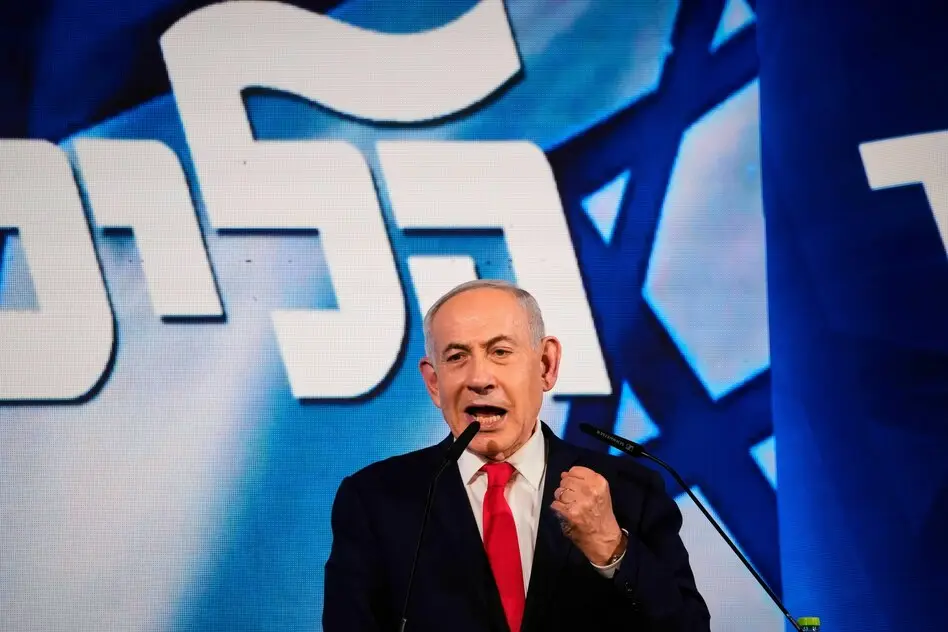
Israeli Prime Minister Benjamin Netanyahu is a master when it comes to politically exploiting the memory of the Shoah. These weeks are critical for him. The end of his long term in office could be imminent, which may have motivated him to reach into his bag of tricks again shortly before the elections. The country would face a second holocaust if he were to lose his position.
Over decades, the Shoah transformed from a singular historical crime and an unprecedented tragedy into a political resource of enormous impact. Israeli politicians used the memory of the extermination of European Jews to deflect criticism, normalize injustice and mobilize support at home and abroad. From the beginning, this instrumentalization fulfilled a dual function.
Internally, it served to strengthen the mentality of a beleaguered nation in need of strong leadership to protect the Jewish people from ever-threatening annihilation. Externally, it functioned as a source of political and moral legitimacy. In particular, the guilt feelings of Europe and Germany were mobilized and converted into diplomatic capital.
The Israel-Palestine conflict is discussed controversially, especially in left-wing circles. There are also some fundamentally different positions on this in the taz. In this section you will find all comments and debate contributions on the topic of the Middle East.
The paradox is that the State of Israel mobilized the memory of the Shoah for political purposes, while many of its survivors lived in poverty and social neglect in their own country. Politicians who liked to invoke the Shoah often showed far less interest in the fate of those people who had actually survived the persecution and extermination. This fuels the suspicion that the focus was not on memory itself, but rather on its political use.
Netanyahu took this method to the extreme after the October 7, 2023 massacre, when he referred to Hamas as “the new Nazis.” The traumatic event was ultimately embedded by numerous Israeli politicians in a pattern of interpretation that equated Hamas with National Socialism and thus pushed back the boundaries of what was considered morally and politically legitimate in the war in the Gaza Strip.
This strategy gave Netanyahu enormous political capital and strengthened his image as an indispensable guarantor of Israeli security. At the same time, the myth of the eternal victim promoted a collective sense of entitlement that could legitimize almost any action. Violence, injustice and even crime can be justified under the banner of the sacred promise “Never again.”
is a historian, writer and essayist who lives in Berlin. He writes regularly for the Israeli daily Haaretz.
The trauma reactivated after October 7th became a mechanism for self-justification and avoidance of self-criticism. Anyone who called for reflection was considered a traitor; Those who insisted on complexity were accused of adopting the narratives of Israel's enemies. The same victim narrative that served to mobilize fear and political support domestically became a source of political legitimacy internationally.
Since its founding, Israel has benefited from an extraordinary moral credit, which grew largely from the lessons of the Shoah and the guilt of Germany, Europe and the West as a whole. But the more the memory of the Shoah is exploited and the more openly historical guilt is used as political pressure, the more this moral credit dwindles.
The tragedy is that this strategy ends up having the opposite effect of its original purpose. This mechanism harms Israel and also puts a strain on German-Israeli relations. For too long, Germany has bound itself to an awareness of historical guilt, sometimes replacing active historical responsibility with a culture of permanent atonement.
Instead of perceiving Israel as a living, contradictory and changing society, Germany often allowed Israel to become an eternal symbol of Jewish victimhood in its imagination. As a result, profound demographic, cultural and ideological changes in Israel were overlooked, as was the increasing strength of nationalist, racist and illiberal tendencies.
However, when memory becomes the basis of unconditional political loyalty, it loses its character as a source of moral judgment and turns into a political dogma. In Germany, fatigue and resistance to the politics of remembrance are increasing. Paradoxically, the very attempt to link the memory of the Shoah with unconditional support for Israel undermines the legitimacy of the German culture of remembrance and provides ammunition to populist forces that want to break away from it completely.
Instead of consolidating a self-confident culture of remembrance, it creates a feeling of moral paternalism. Furthermore, it blurs the line between actual anti-Semitism and legitimate political criticism of Israeli policies. If every criticism is presented as an expression of hidden anti-Semitism, the term loses its persuasive power. The fight against anti-Semitism is not strengthened, but runs the risk of losing public credibility and making it harder to recognize real manifestations of hatred of Jews.
A mature society does not deny its past. But she doesn't make herself a prisoner either. Israel's and Germany's decision to keep the Shoah as an open wound, as a trauma that must never heal, traps both societies in a dialectic of victimhood and guilt: Israel in the identity of the eternal victim, Germany in the identity of the eternal culprit.
In both cases, this makes it difficult to develop self-confident democratic citizenship. 82 years after Auschwitz, it is time to give the Shoah its proper place back: not as political capital, but as a universal warning to future generations.