
World · taz · · 2h
Israeli football: Far from normal
Deutsch (original) · Auto-translated to English
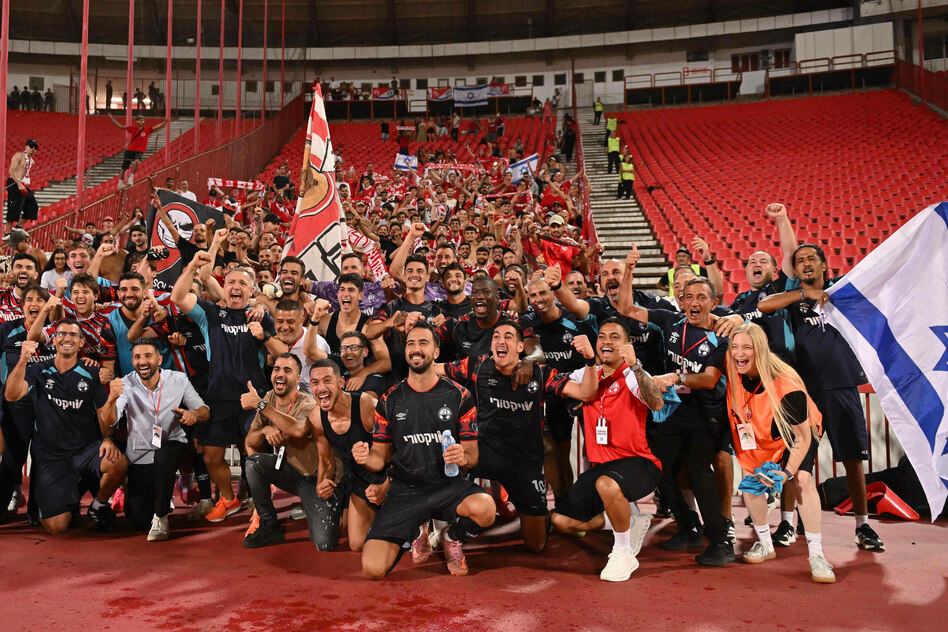
There can no longer be any talk of home games in the traditional sense because the hometown is far away. For security reasons, the Hapoel football club from Kiryat Shmona, Israel's northernmost city, has to play its home games in Netanya, 150 kilometers further south. “We feel like refugees in our own country,” says Yehiam Cohen, who grew up in Kiryat Shmona and has been a fan of Hapoel since childhood. “Our community is segregated and spread across the country.”
October 7, 2023 was a turning point for Israel. More than 1,200 people were killed and over 250 were kidnapped in the Hamas attack. Even today, three years later, this trauma and the war that followed continue to shape Israeli society and the Palestinian territories. For many civil society groups, remembering the victims has become a central concern - including in football.
This was also clear in the north. After the escalation in October 2023, Hezbollah from neighboring Lebanon attacked Israeli cities with rockets and drones. Particularly under fire: Kirjat Shmona with its 23,000 inhabitants. In just a few days, hundreds of apartments, public buildings and roads were damaged or destroyed. The Israeli government ordered the evacuation of northern communities. 60,000 people were housed in hotels, apartments and emergency shelters across the country.
Hapoel Ironi Kirjat Shmona, the 2012 Israeli football champion and 2014 cup winner, was also affected. The stadium with around 5,000 seats was hit by seven rockets and was badly damaged. Within a few days the club had to organize its evacuation. “In the first six months, our team had to train on a different pitch almost every day,” says Yehiam Cohen. “Fortunately, many clubs have made their facilities available to us free of charge.”
Yehiam Cohen is a key figure in the Blue Lions 07, the largest fan association of Hapoel Ironi Kirjat Shmona. He spends several hours a day on his cell phone and on social media to keep the network active. Before the games, he coordinates buses and carpools between four or five cities so that as many fans as possible can travel to the alternative base in Netanya. If it goes well, 200 spectators come, says Cohen.
There can be no question of normality in other locations either, not even in Hapoel Be'er Sheva, a city that is 40 kilometers from Gaza. On October 7, 2023, Hapoel fans were among the Hamas victims at the Nova music festival. In the weeks that followed, supporters gathered to talk about their shock.
But the mood remained tense. In September 2024, almost a year after October 7th, the Israeli military offensive in Gaza had already claimed around 40,000 lives. At this time, Hapoel Be'er Sheva was hosting FC Bnei Sakhnin, the most important Arab club in Israel, in the Israeli league. During the Israeli anthem, Bnei Sakhnin fans turned their backs to the field and booed. Dozens of Be'er Sheva supporters then stormed the lawn with poles. The game didn't even start.
“The shock of October 7th was simply too deep and everyone dealt with it differently,” says Yaron Alfi, a long-time ultra from Hapoel Be’er Sheva. “Such a storm would be unthinkable today.” Alfi and his friends have established formats for remembering in Be’er Sheva.
Fans like Yehiam Cohen and Yaron Alfi were guests in Berlin in September, at the invitation of the Fan Projects Coordination Office KOS. There they spoke to German fans and experts about solidarity and remembrance, politics and racism. And it quickly became clear that the boundaries between these topics are often blurred.
Studies by the Israeli anti-discrimination network “Kick It Out” show that racism against Arab people in Israeli stadiums rose more sharply than ever before after October 7th. This became clear at the traditional club Beitar Jerusalem. Beitar fans have repeatedly celebrated the right-wing extremist security minister Itamar Ben-Gvir, who has spoken out in favor of mass killings of Palestinians. Israeli soldiers have been photographed several times with Beitar flags in front of ruins in Gaza. Matan Segal, former head of Kick It Out, stressed that neither Beitar nor the Israel Football Association took adequate action against racism.
But even in Beitar the community is not homogeneous. For example, there is the young fan Bar Shimon Levi. He would also prefer not to condemn La Familia, Beitar's largest right-wing extremist group, to a foreign journalist, because then he would get into problems in the stadium. Instead, he would like to mention the social projects he has initiated with some friends.
In Kiryat Shmona, in the north of the country, around 16,000 people have now returned, but the security situation remains fragile. A third of the original population have built a new life elsewhere.
The football team cannot return to the old stadium for the time being. The club has to raise almost an additional million euros per year to maintain operations. “We want to rebuild our community,” says fan Yehiam Cohen. “That’s the most important thing.”
Read the full story at the source
Source: taz