
Germany · taz · · 2h
International climate finance: Federal government breaks 6 billion promise
Deutsch (original) · Auto-translated to English
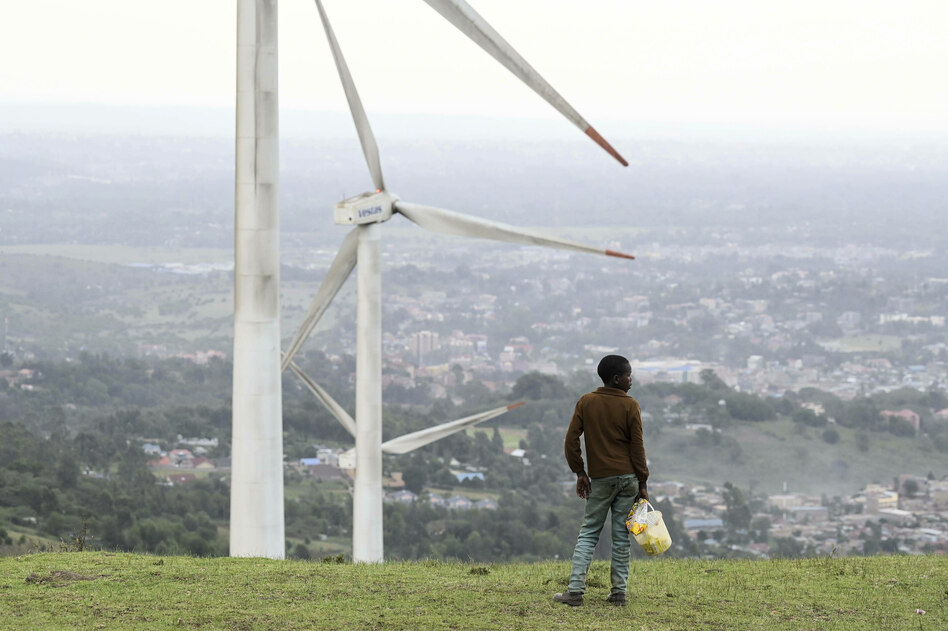
The federal government has not achieved its commitment to contribute 6 billion euros annually to climate financing in the Global South in 2025. The Federal Development Ministry (BMZ) and the Federal Environment Ministry announced this jointly on Tuesday. Accordingly, only 4.7 billion euros from public funds were available in 2025. In 2024, the target was reached for the first time with 6.1 billion. The decline is primarily due to the severe cuts in the BMZ budget, from which 85 percent of German climate financing comes.
The money flows into climate protection projects, such as the transformation from fossil fuels to renewable energy, as well as adaptation to climate change. This can, for example, involve adapting agricultural production to changing climatic conditions or dealing with droughts or floods.
The ministries explained that Germany is thus making the “fair share” for international investments in climate protection as set out in the coalition agreement. Climate expert Jan Kowalzig from the development organization Oxfam, on the other hand, speaks of a “blow against the basis of trust that has been painstakingly built with those countries that have contributed the least to the climate crisis but are particularly badly affected by its consequences.” “Even if Germany remains a large donor country, the federal government must now go to the UN World Climate Conference in Antalya by breaking its word.”
Before the World Climate Conference, the UN conference on biodiversity will also take place in the Armenian capital Yerevan at the end of October. Here too, Germany has missed its goals. A contribution of 1.5 billion was planned for the global protection of ecosystems, but 1.1 billion was spent in 2025.
On the other hand, the proportion of loans that Germany has granted for climate protection and adaptation has increased. A total of 5.15 billion euros were made available in 2025 by the state-owned development banks KfW and DEG - so they have to be repaid by the states. In 2024 it was still 4.6 billion euros.
As a rule, these loans are granted at a low interest rate - often much cheaper than what poorer countries in particular would get on the capital market. The proportion by which Germany makes the loans cheaper is counted as a public contribution from budget funds towards climate financing.
Oxfam is critical of increasing climate financing through loans in view of the growing debt crisis in many countries. “Loans make sense when projects are economical and generate profits that can be used to repay loans, for example in the energy sector,” explains Kowalzig. However, in development cooperation, loans are often issued which are assumed to increase the country's general economic strength, i.e. to generate more tax revenue so that the loans can be repaid. “If that doesn’t happen, the mountains of debt will grow.”
If the trend increases, Kowalzig also sees the danger that more and more money will be available for profitable projects, “but less for those that do not generate returns, such as adaptation to climate change.”
Figures from the BMZ confirm the concern. Accordingly, the budget funds went equally towards climate protection and adaptation. When it came to loans, however, it was 84 percent for CO₂ reduction and 16 percent for adaptation.
Since many donor countries, especially the USA, have drastically cut their public development funds, loans and the mobilization of private funds are playing an increasingly important role in climate financing.
The issue of financing was the biggest point of contention in recent climate conferences and is likely to set the tone again at the upcoming UN conference in November. The 6 billion target that the then Chancellor Angela Merkel (CDU) once set expired in 2025. So far, the federal government has not announced a new target. At the climate conference in Baku in 2024, the industrialized countries promised to make a joint total of $300 billion available by 2035, instead of the previous $100 billion annually.
Based on Germany's economic performance, Oxfam is demanding a federal government contribution of 12 billion euros annually. “We know that this is currently unrealistic given the budget situation,” says Kowalzig. At the same time, there are ways to mobilize money: Oxfam is calling for, among other things, a wealth tax, the taxation of fossil fuel companies and a levy on first-class flights. “This means that there would be significantly more money for the common good and climate financing,” says Kowalzig.
Read the full story at the source
Source: taz