
Germany taz
Informal EU summit in Dublin: dispute over EU mediators intensifies
Who should speak for the EU when there are talks about ending the war in Ukraine? Merz sees Germany as set. Not everyone sees it that way. more...
Deutsch (original) ·Auto-translated to English
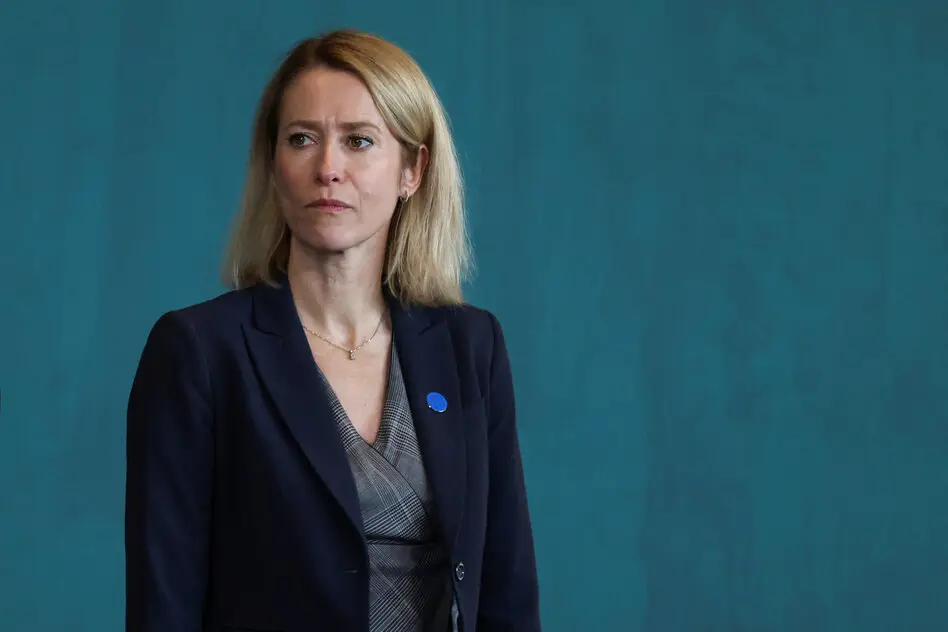
There is movement in the discussion about who could be the EU representative at the next Ukraine negotiations. Estonian Prime Minister Kristen Michal spoke out in favor of EU Council President António Costa - and EU Foreign Affairs Representative Kaja Kallas - at the informal EU summit in Dublin on Friday. “If we have to say that Europe should be represented, then it is also clear that we have people who are institutionally responsible to the people of Europe and also to our countries,” Michal said in the Irish capital. Costa comes from Portugal, Kallas like Michal from Estonia. The EU foreign policy chief had already requested their participation.
Luxembourg's Prime Minister Luc Frieden also suggested Costa, and he was supported by Lithuanian President Gitanas Nausėda. Ireland currently holds the EU Council Presidency and will be replaced by Lithuania in January. If there are talks with Russia about ending the war in Ukraine, the coming months will be crucial.
The situation for the major players in the European Union is not as clear as it is for the Baltic countries and Luxembourg. Germany and France would rather stick to “tried and tested formats”. German Chancellor Friedrich Merz had already spoken specifically about the E3 format on Thursday. These include: Great Britain, France and of course Germany. Poland and Italy are also regularly included.
This should probably be a reference to the angry letter from Italian Prime Minister Giorgia Meloni last week. Meloni had called on Costa to put the issue on the agenda in Dublin and to make a quick decision - at the latest by the EU summit shortly before Christmas. On Friday, Merz announced that Germany's participation in talks about ending the war in Ukraine was "set." According to the Chancellor, there should be concrete peace talks in the next few weeks.
Support for Merz’s proposal comes from Sweden. In Dublin, Prime Minister Ulf Kristersson advocated that Germany and France be included, as well as Italy and Poland. When it came to Great Britain, the Swede showed more restraint. The EU must speak with one voice. Great Britain is part of the European Political Community, but no longer the European Union.
The German argument is based primarily on its previous involvement in support for Ukraine and any security guarantees. There are likely to be a number of bitter discussions about the latter in particular in the coming weeks. Not only with Russia, but also with the USA, which sees the European NATO states in particular as having a duty.
Security consultants from Germany, France and Great Britain were on site at this week's talks in Abu Dhabi - i.e. the E3 format. Representatives from the EU Commission and NATO were also present. However, not all representatives were present at the talks. That should change in the future. Russian President Vladimir Putin had also signaled that he would be willing to hold talks with European representatives.
Not mentioned so far are Finnish President Alexander Stubb and Norwegian Prime Minister Jonas Gahr Støre. Both had spoken to Putin on the phone a few weeks ago. This campaign not only met with positive reactions, criticism also came from Denmark, among others.
The Russian war of aggression in Ukraine was also the top topic at the so-called NB8 meeting on Thursday. These include the three Baltic countries, Norway, Finland, Sweden, Denmark and Iceland. “The discussion about a broader European security architecture distracts from the essential point: Russia must be forced to stop attacks on Ukraine and the killing of civilians,” Estonian Foreign Minister Margus Tsahkna said after the meeting.
“As long as Russia continues its military operation, it is clear that Putin has not changed his goals.” Possible negotiations with Moscow should not lead to Russia achieving something that was not possible on the battlefield. This refers to the Russian demand to re-discuss a European security architecture. The Baltic countries in particular, but also Finland, are repeatedly and specifically affected by the consequences of the war in Ukraine. Same this week. A swarm of drones that Estonian security authorities said came from Russian airspace were spotted over the Gulf of Finland on Wednesday near a Russian warship. “We agree that the cause of such incidents lies in Russia’s war of aggression against Ukraine,” Tsahkna said.
Estonia, Latvia and Lithuania raised the alarm on Wednesday. NATO fighter jets took off, and the alarm was later lifted. In Finland, airspace and maritime traffic were temporarily restricted.