
War & Militarism taz
Informal EU summit in Dublin: EU countries cannot manage a negotiating team
The Ukraine war once again overshadows the EU meeting in Dublin. The member states are running out of time to agree on who should negotiate. more...
Deutsch (original) ·Auto-translated to English
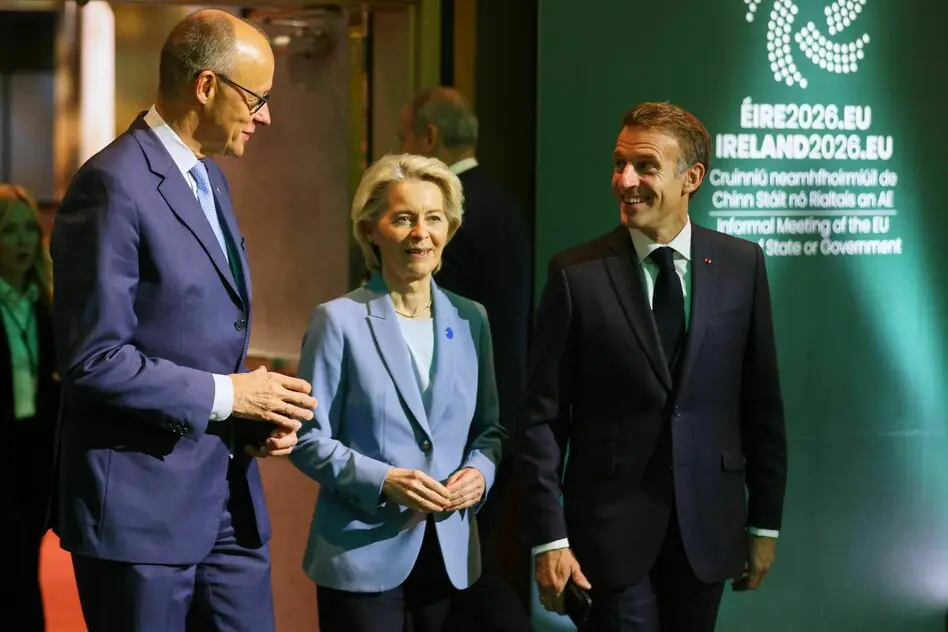
The EU is to be involved in future peace talks for Ukraine - but who will be allowed to sit at the negotiating table remains unclear. The Europeans are also setting new conditions that could complicate future negotiations with the USA and Russia. Details would be worked out in the next few weeks, it was said at an informal EU summit on Friday in the Irish capital Dublin.
In Dublin, the 27 heads of state and government actually wanted to concentrate on the topic of “artificial intelligence” and the EU’s race to catch up. But the AI debate, like the summit of the “European Political Community,” was overshadowed by Ukraine. The EU grandees discussed for hours the question of how to act in future peace talks.
US negotiators Jared Kushner and Steve Witkoff, like Ukrainian President Volodymyr Zelensky, called on the Europeans to nominate a chief negotiator for possible talks with Russia. “If Europe could identify a person to speak on its behalf, that would be a greater success than getting the Russians to participate,” Kushner said.
Russian President Vladimir Putin has signaled his willingness to talk to the Europeans, Kushner added after a visit to Moscow. “We have to have the Europeans at the table,” he emphasized. Zelenskyj, who also traveled to Dublin on Thursday, made similar comments. However, the Europeans once again failed to agree on a negotiating team.
Luxembourg and several Baltic states called for the EU to be represented by Council President António Costa and foreign policy chief Kaja Kallas. According to the EU treaty, they are responsible for foreign and security policy. However, Germany and France do not want to give up a place at the negotiating table, and the EU Commission also wants to be there.
Therefore the issue was postponed. This is not a problem for Federal Chancellor Friedrich Merz: “There should be concrete peace talks in which Europe is represented for the first time in the next few weeks,” said Merz. This will “probably be among the Europeans” who were most recently at the talks in Abu Dhabi: “Germany is involved, that is completely clear.”
As in Abu Dhabi, two Germans are likely to sit at the negotiating table in the future: the Chancellor's security advisor, Günter Sautter - and the head of cabinet of EU Commission President Ursula von der Leyen, Björn Seibert. Merz emphasized that he had “no problem” with this and other formats. Costa announced that they would appear in different formats until further notice.
The Portuguese had previously formulated several conditions with which the EU wants to enter its first round of talks. A ceasefire is the absolute priority, he said in Dublin. Then free shipping in the Black Sea must be restored - fierce fighting is currently raging there. Only then can we talk about the “conditions for a peace agreement”.
The EU is thus embarking on a confrontation course with Russia. Putin rejects ceasefire; He first wants to talk about a new security order for Europe. But the Europeans don't want to know anything about it. “We don’t have to talk about a European security architecture, we have that,” said Merz. Europe's security will "continue to be guaranteed first and foremost by a strong, united and European NATO."
The EU is combative. But they are still not united. It is also still unclear when the Europeans will plunge into their first diplomatic battle: no date has been announced in Dublin. According to Kushner, it could happen soon.