
Germany taz
Infections in times of the Trump era: USA loses “measles-free” status
Germany has never been classified as measles-free, but the USA has been for more than 25 years. Now the status will probably be revoked. How could this come about? more...
Deutsch (original) ·Auto-translated to English
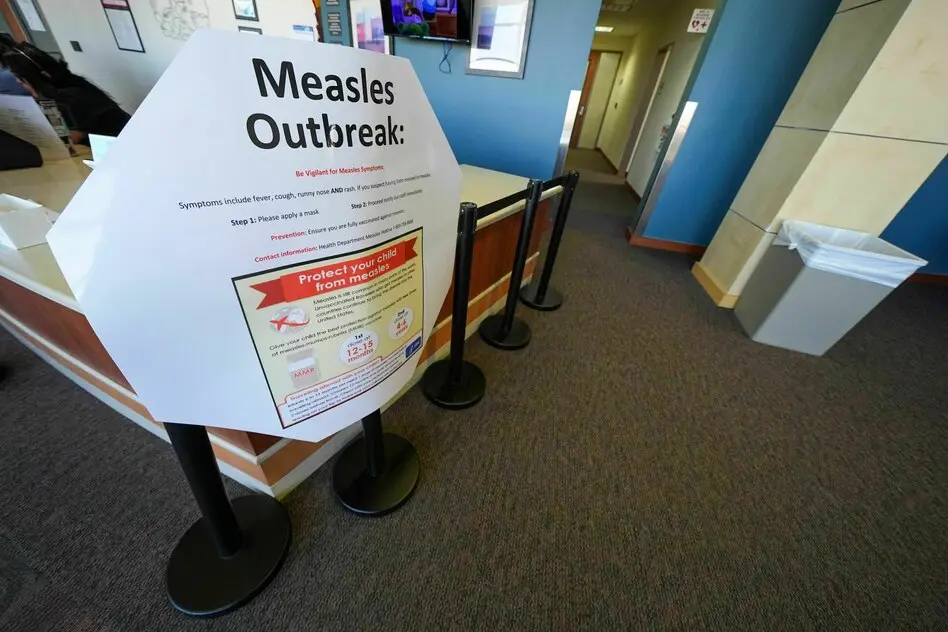
dpa | The United States has been officially “measles-free” for more than a quarter of a century. Now, according to media reports, the Pan American Health Organization (PAHO) will revoke this status from the country. The “Wall Street Journal” and the “Washington Post”, among others, reported that she had come to the conclusion that the USA no longer met the requirements for this. The reason is that the same measles virus strain has been transmitted continuously within the USA for at least twelve months. The official announcement is expected on Tuesday.
According to the head of the World Health Organization (WHO), Tedros Adhanom Ghebreyesus, the measles virus is the most contagious virus in the world. Almost every unprotected contact person of an infected person becomes ill. This often happens unknowingly: According to the Robert Koch Institute (RKI), infected people are contagious four days before the typical rash appears.
The virus is transmitted when speaking, coughing and sneezing. It remains infectious in the air of a room for up to two hours - anyone who briefly enters the same room, supermarket or bus later can become infected, even though the sick person has long since left.
The disease begins with symptoms such as fever, cough and headache, and the rash typical of measles only develops a few days later. After contracting measles, the immune system can be weakened for up to a year or even longer, meaning there is an increased risk of other infections. You usually only get sick once in your life.
Classifying a country as “measles-free” does not mean that there are no more cases of measles there. What is crucial is that there is no persistent domestic transmission and that a powerful surveillance system can prove this. According to the WHO framework, elimination is regularly verified when domestic transmission has been interrupted for at least 36 months. To re-verify a country that has lost its status, PAHO cites at least twelve months without endemic transmission and other evidence.
The classification has been in effect for the USA since 2000 - Germany, on the other hand, has never been officially verified as measles-free. According to the RKI, chains of infection in this country usually break off quickly, at least due to the fairly high vaccination rates. In 2024, according to RKI data, 87 percent of 15-month-old children had received the first measles-mumps-rubella combination vaccination (MMR) and 78 percent of 24-month-old children had received both recommended MMR vaccinations.
According to the WHO, around 95 percent of the population must be immune to the highly contagious measles so that there is sufficient community immunity and virus transmission can be reliably interrupted. The UN agency recommends a vaccination rate of at least 95 percent with both doses of measles vaccine. Even a small decline in vaccination rates can lead to significantly more outbreaks.
For example, if the rate of immune people falls from 95 to 93 percent, there will be an additional 2 unprotected people per 100. These gaps are often concentrated regionally, for example in certain schools, communities or social groups. A single introduced infection is enough to start a local outbreak. In addition, unvaccinated people accumulate over time if the vaccination rate remains too low over the long term.
According to authorities, several children have died of measles in the USA since last year, most recently including a baby in the state of Wisconsin. Measles weakens the immune system. Bronchitis, middle ear infections or pneumonia can result – even in unprotected adults.
Brain inflammation occurs less frequently, but up to 20 percent of those affected die from it. According to the RKI, survivors often remain with brain damage such as reduced intelligence, behavioral and personality changes or paralysis.
Sometimes the disease only leads to death years later: in the very rare but feared measles encephalitis SSPE (subacute sclerosing panencephalitis). According to the RKI, it occurs on average six to eight years after measles, progresses inexorably and is always fatal. Children gradually lose their abilities and their personality.
The perfidious thing: Infants who contract measles in their first year of life have a significantly higher risk of later developing SSPE than older children - but most of them have not yet been vaccinated. This usually only happens around the age of one year because the vaccination is often less reliable in the first few months of life.
This means that families who take the vaccinations as recommended can be plunged into a terrible tragedy by those unwilling to vaccinate. The most important protection for babies is herd immunity: siblings, parents, grandparents, caregivers and other close contacts should be fully vaccinated. There is no specific treatment for measles.
In 2000, the disease was actually already considered defeated in the USA. According to data from the US health authority CDC, in the past two years there have been far more cases than in the previous 25 years combined. New York Governor Kathy Hochul even declared a state of emergency at the beginning of October due to the increasing number of infections in rural areas in order to be able to react better.
The CDC recommends a first dose at 12 to 15 months of age and a second dose at 4 to 6 years of age. In August, however, the authority reported falling vaccination rates among preschool children. Experts see political reasons: Health Secretary Robert F. Kennedy Jr. is considered an outspoken vaccine skeptic. He often cast doubts about vaccinations and recommended vitamin A and cod liver oil. It was only in response to child deaths last year that the minister appointed by US President Donald Trump cited vaccinations as the most effective way to stop the outbreaks.
But the number of measles infections in the country is now at its highest level in decades. More than 5,400 cases have been recorded by the CDC this year through November 12th. The virus threatens to be introduced to other countries via air traffic.
In Germany, the number of registered measles cases fluctuates greatly from year to year. According to the RKI, the number - often in the three-digit range - depends on individual large outbreaks and on imported measles viruses. In the period from 2012 to 2025, the minimum was 8 recorded cases in the pandemic year 2021 and the maximum was 2,465 cases in 2015. There were 645 recorded cases in 2024 and 234 last year.
Since 2020 there has been a requirement to provide proof of measles protection. Daycare and school children in particular must be vaccinated, as do educators in daycare centers, teachers, childminders and employees in medical and other community facilities.
The Standing Vaccination Commission (Stiko) recommends two combination vaccinations for measles, mumps and rubella (MMR) at 11 months and 15 months. If the child is admitted to a daycare or other community facility early or after contact with a person suffering from measles, earlier vaccination is recommended from the 9th month, in exceptional cases such as a measles outbreak from the 6th month.
According to the WHO, measles vaccination prevented nearly 59 million deaths worldwide between 2000 and 2024. “Before the introduction of the measles vaccine in 1963 and widespread vaccination, major epidemics occurred approximately every two to three years and caused an estimated 2.6 million deaths per year,” the UN agency said.
In 2024, an estimated 95,000 people will die from measles due to a lack of sufficient protection, especially children under the age of five. Any such death from a disease that could be easily prevented with an inexpensive vaccine is unacceptable.