
Germany · taz · 2h
Industrial production: China's auto industry is great on the outside, poor on the inside
Deutsch (original) · Auto-translated to English
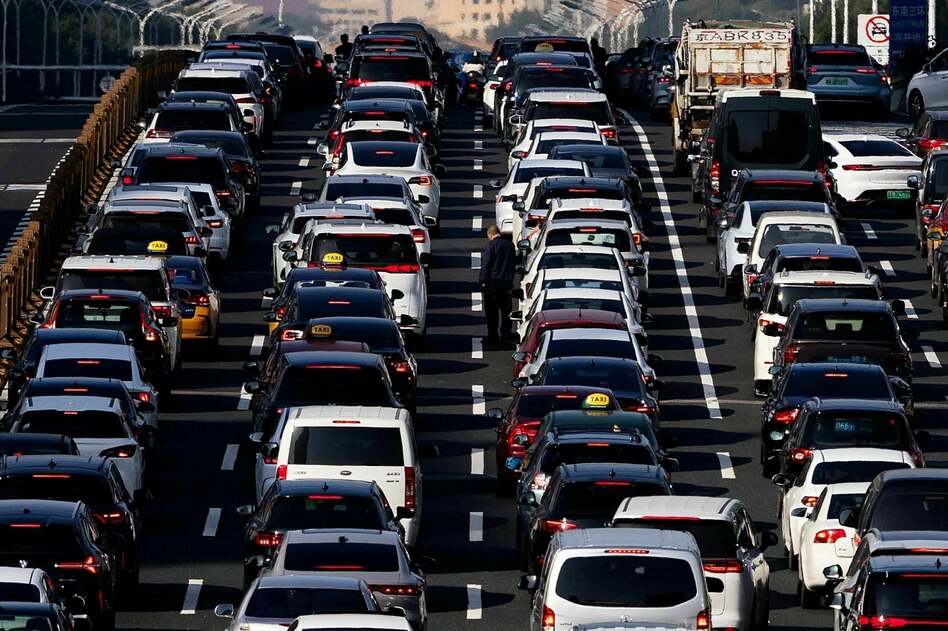
China's rise to become a global car power is unprecedented: in August, car manufacturers in the People's Republic exported almost 900,000 vehicles abroad, according to figures published by the industry association CPCA on Tuesday. This means that monthly exports increased by 78 percent compared to the same period last year. They now correspond to around a fifth of what the German car industry produces - in the entire year.
Chinese car manufacturers don't have much reason to celebrate, however, because the export boom is accompanied by collapsing domestic demand. In August, the number of vehicles sold in China fell for the eleventh month in a row - most recently by almost 24 percent. The auto industry shows the fundamental dilemma of the Chinese growth model as if through a magnifying glass.
A look back: Beijing's party planners chose electromobility as a key industry over a decade ago and have massively supported the industry with subsidies for years. This attracted a large number of market participants: at the peak of the Chinese electric car boom in 2018, there were almost 500 domestic car manufacturers. In a free market economy, consolidation would normally follow: a wave of bankruptcies would cause the industry to shrink.
In China, however, local governments are keeping the de facto insolvent car manufacturers alive with state money - also for political reasons. Because each province wants to raise its own national champions in order to meet the requirements of the central government in Beijing. The result is ruinous competition in which manufacturers try to outdo each other with ever lower prices.
The problem is also openly denounced within China. The renowned business magazine Caixin recently wrote in a much-noticed commentary about “zombie car manufacturers” who were fueling the country's export chaos. The economic journalist Zhai Shaohui argues that the escalating car exports are ultimately rooted in a structural problem in the Chinese domestic market. Companies can no longer sell their excess capacity domestically because Chinese consumers need to hold on to their money after years of economic uncertainty and stagnating wages.
Car manufacturers are therefore aggressively expanding into foreign markets where they can still achieve healthy profit margins. But this is also made more difficult for them: the US government has blocked its market for Chinese electric cars with high punitive tariffs.
Europe is thus becoming a real lifeline for companies from the Middle Kingdom. Due to Chinese competition, German car manufacturers are having to close their factories and suppliers are having to lay off most of their workforce.
This change is by no means limited to the automotive industry, but can also be seen in trade relations in general: In August, China's exports to Germany rose by 9.8 percent compared to the same month last year, while imports from Germany fell by 9.7 percent. If you compare the first half of 2021 with the first half of 2026, the German trade deficit with China has increased more than fivefold - to currently around 64 billion dollars.
Beijing itself has now recognized that hyper-competition is becoming a problem. On September 1, the Ministry of Commerce released “Guidelines for Chinese Auto Manufacturers’ Overseas Competitive Conduct and Compliance.” Among other things, it calls on companies not to damage the reputation of Chinese brands in foreign markets with aggressive discounts, misleading advertising or a lack of security precautions.
The party leadership is trying to curb the excesses that it has fueled with its industrial policy. However, a sustainable solution would have to involve a restructuring of the Chinese growth model. Economists Sander Tordoir and Brad Setser recently explained what this could look like in their paper “China Shock 2.0”: If China revalues its artificially low currency, expands its welfare state and strengthens private households with an economic stimulus package, then this would boost consumption and generate new economic growth in the long term. At the same time, dependence on exports would decrease.
But from the Chinese government's perspective, this also means giving up control over its own economy. For Beijing, industrial capacity and control over key supply chains - from e-mobility to robotics to artificial intelligence - are not just a question of growth, but essential for national security. And Xi Jinping sees China's industrial power as a strategic trump card, especially in system competition with the USA.
Read the full story at the source →
Source: taz