
Politics taz
Indian politician on mass protests: “The system is failing young people”
India's cockroach movement is fighting the Election Commission as a tool of Narendra Modi's government, says opposition politician Shashi Tharoor. more...
Deutsch (original) ·Auto-translated to English
taz: Mr. Tharoor, what is driving the protests of the young cockroach movement CJP in India?
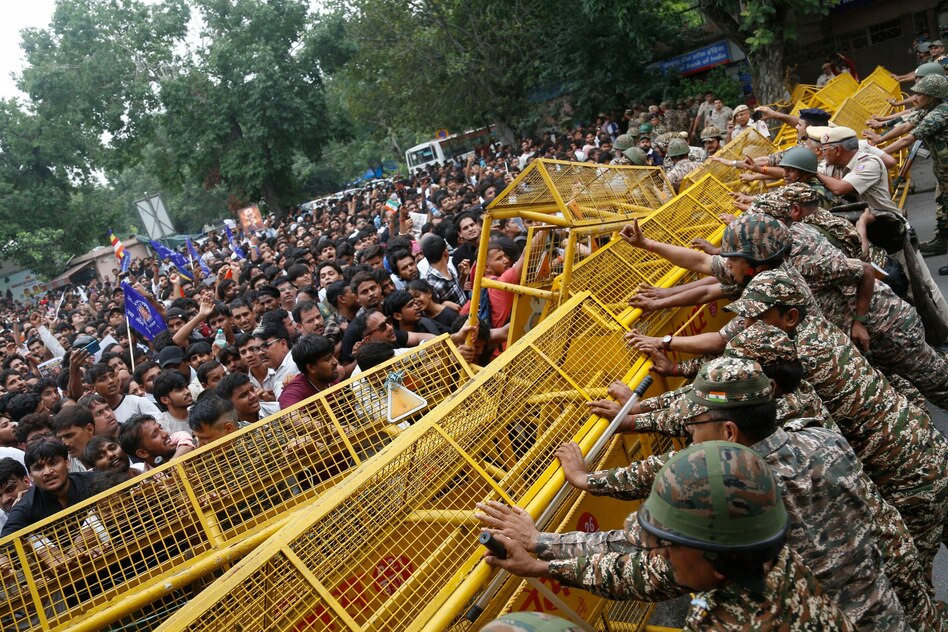
Shashi Tharoor: There is a lot of frustration among young people: they study hard for exams and do everything that is expected of them. But the system lets her down. Examination tasks will be announced in advance, exams will be canceled.
taz: Now the protests are directed against the electoral commission. Why?
Born in London in 1956 to South Indian parents, he worked for the UN for almost 30 years before entering the Indian Parliament for the first time for the Congress Party in 2009. He is the author of several books on India's politics and history.
Shashi Tharoor: There is a feeling that the system is no longer working. The CJP showed images of government schools with leaky roofs, broken windows and inadequate facilities. The message: What is the government doing to ensure a decent life? The concerns extend beyond the younger generation. Increasingly, the electoral commission is seen as hand-picked by the government to serve its interests. The review of voter lists in particular sparked outrage, as many voters were deprived of their right to vote due to arbitrary decisions by the electoral commission. The opposition, the CJP and independent parties are demanding a stop to the review and the resignation of the commission chairman.
taz: Why couldn't the Congress party create this dynamic itself?
Shashi Tharoor: Our initial criticism was perceived as party-politically motivated: we were accused of criticizing because we had lost the election. Now it's not about winners or losers, but about India's citizens being deprived of their constitutional right to vote.
taz: Why doesn't the Congress party work more closely with the CJP?
Shashi Tharoor: We organized our own rallies. The CJP did not invite us to their actions. Despite its name, the CJP is not a party but a loose movement, which makes coordination difficult. The opposition parties coordinated during the protests on October 6th and 10th and are planning joint actions in the future.
taz: In the 2024 election, the opposition was united by the demand to “save democracy”. Will it hold together until the next general election in 2029?
Shashi Tharoor: Regional interests prevail in state elections. At the national level in Kerala, the Congress party and the Communist Party are both against the ruling party BJP, but at the state level they are opponents. You cannot therefore judge the unity of the opposition based on regional elections. In national elections, given the BJP's vast electoral machinery and financial resources, the need to vote and not split the opposition votes will grow.
taz: Rahul Gandhi has led the opposition in the Indian parliament since 2024. With his march across India, he tried to appeal to young people and reorganize the Congress party. Was that successful?
Shashi Tharoor: That has become very clear over the course of this year at the latest. Rahul Gandhi has gained credibility and the Congress party has gained momentum. The question is whether we can maintain this momentum. At the moment we believe so.
taz: What is the state of Indian democracy?
Shashi Tharoor: International observers are basically saying the same thing as we in the opposition: independent institutions are being undermined, tax authorities are being used against political opponents and dissent is being demonized. There are autocratic tendencies in government that we oppose.
taz: The current criticism of the government is expressed in memes and satire. What do they do?
Shashi Tharoor: Meme culture is part of the Gen Z phenomenon. That's refreshing. Satire pierces the bubble of complacency and pomp. The current government shows a lot of arrogance, but the memes have trimmed them down.
taz: What differences do you see between today and the months-long farmers' protests in 2020/21?
Shashi Tharoor: The BJP got away with saying that only farmers who were affected by the new farm laws were protesting. The protests this summer were different: people from the middle of society, including schoolchildren and students from families that had voted for the BJP, took to the streets.
taz: Can the CJP movement change something in the long term?
Shashi Tharoor: It is easier for a powerful government that largely controls the media space to discredit a protest if it appears to be the cause of a single group. But the current movement is broader. I don't know whether it can hold up over the next three years. But it will not be easily defused if the head of the electoral commission does not resign. Education, inflation and unemployment affect everyone irrespective of caste, language or religion.
taz: Why is youth unemployment so politically explosive?
Shashi Tharoor: It used to be said that anyone who studied at the Indian Institute of Technology (IIT) had a secure professional future. This year, for the first time, IIT graduates did not get jobs. The tech industry is hiring less as AI takes on more tasks.
taz: How vulnerable is Prime Minister Narendra Modi after twelve years in power?
Shashi Tharoor: Internationally, he is India's energetic voice. But his position in the country is more vulnerable than ever. The incidents surrounding the election commission have focused a lot of anger on the government. The BJP must ask itself whether it can permanently remain a party that is entirely tailored to a single leader. Modi is a visible target for the opposition. We can ask people whether they are better off today than when he took office. Unfortunately for many this is not the case.