
Germany taz
IG Metall announces warning strikes: There will be strikes again!
For the first time since 2018: IG Metall announces 24-hour warning strikes. The aim is to get five percent more money for a year. more...
Deutsch (original) ·Auto-translated to English
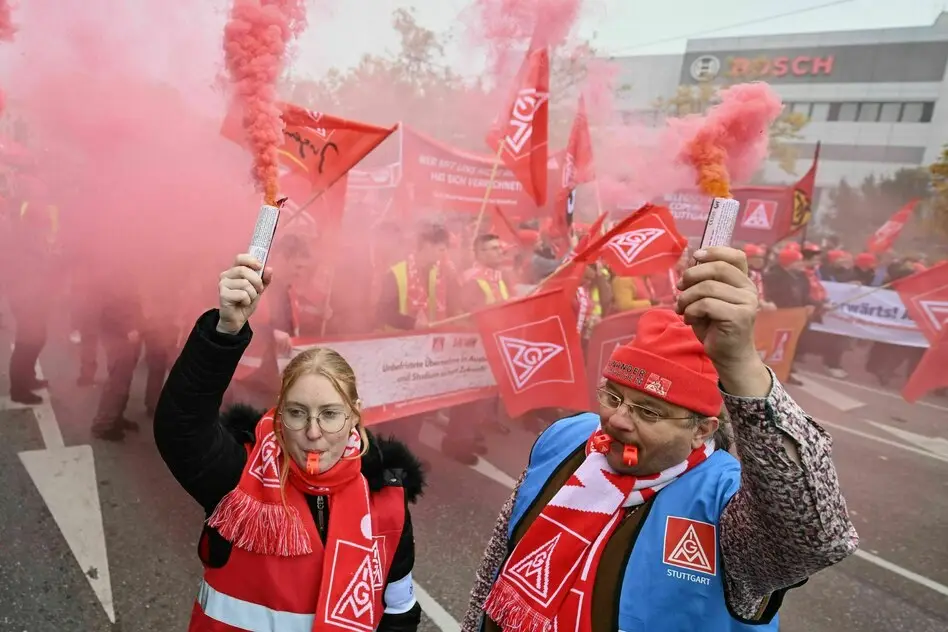
afp | In the collective bargaining dispute in the metal and electrical industries, IG Metall has announced 24-hour warning strikes. The union initially did not provide any information on Thursday as to which companies would be affected and when. The third round of negotiations remained inconclusive - a fourth round “has not been agreed”.
24-hour warning strikes have been part of IG Metall's toolbox since 2017 and are an additional escalation level in collective bargaining disputes. They were used for the first time in the 2018 collective bargaining round. In contrast to indefinite strikes, no strike votes are necessary.
The union's board decided on the all-day warning strikes on Thursday. The union said this would allow employees to be called upon to do so. The IG Metall members in the companies would have to vote on this beforehand. You will receive strike support for loss of wages.
The employers' side strongly criticized the 24-hour strikes on Wednesday "in view of the dramatic situation in large parts of the industry". This is collective bargaining with a crowbar, explained Südwestmetall chairman Peter Krause.
In the current collective bargaining round, which affects around 3.7 million employees nationwide, IG Metall is demanding five percent more money over a period of twelve months, a social component for lower pay groups and profit sharing in economically successful companies. The union also wants to talk about securing jobs.
Employers have so far offered a one-off payment of one percent of the average collectively agreed annual gross income in July 2027 and a permanent wage increase of 1.3 percent from July 2028. The term of the new collective agreement should last until the end of 2028.
The economic situation of companies varies greatly. The automotive and supplier industry is weakening, and the south and southwest of Germany are particularly affected. Südwestmetall highlighted on Wednesday that 350,000 jobs have been lost nationwide in the metal and electrical industry since the peak in 2019, including almost 100,000 in Baden-Württemberg. However, other sectors such as aerospace, medical technology, electrical engineering and defense technology are currently booming.