
World taz
Humanitarian aid in Ukraine: Fear and hope before the evacuation
Hundreds are to be brought out of the besieged Ukrainian town of Oleshky on Friday. They hope to leave the country, but are afraid of torture in Russia. more...
Deutsch (original) ·Auto-translated to English
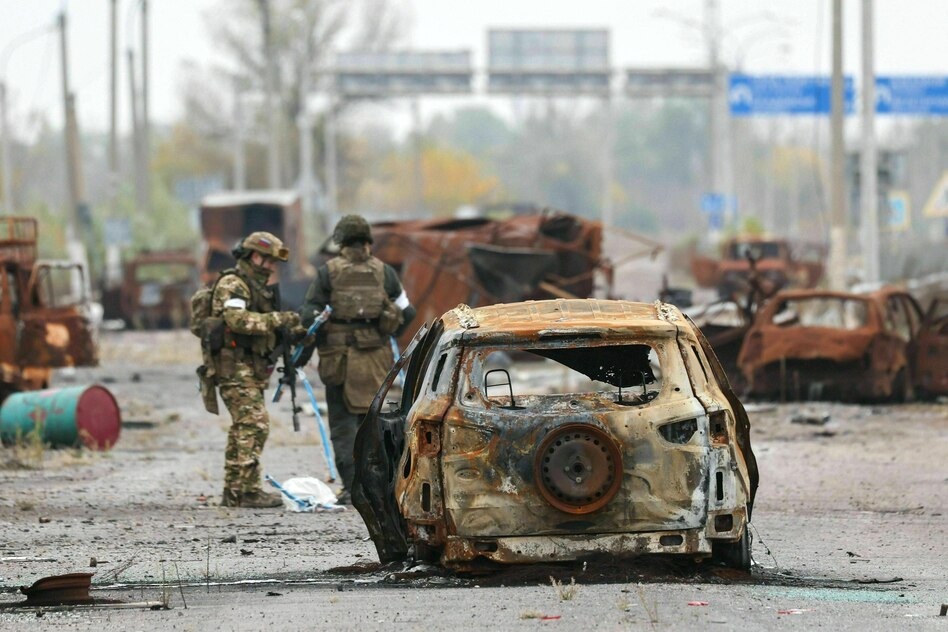
Since 3 a.m. on Tuesday, the town of Oleschky, which once had 24,000 inhabitants on the eastern bank of the Dnipro River, has had what people have been missing for months: peace. No roar of guns, no hunting of people with drones, no rocket strikes. Since then, the ceasefire negotiated with Russia and Ukraine by US First Lady Melania Trump and Pope Leo has been in effect in the city, which is surrounded by Russian troops and is located on the other bank of the Dnipro from the city of Kherson.
And in the midst of the ceasefire already known as the “Melania Peace,” the evacuations are scheduled to begin on Friday morning. “My mother registered online through volunteers to leave the country,” Anna, who fled Oleschky, reported to the taz. The evacuation route will initially lead to the Russian Black Sea city of Anapa and from there the people from Oleschky will be flown with military aircraft to Gomel in Belarus.
For days, the access roads to the Russian-occupied southern Ukrainian front-line town of Oleschky have been cleared of mines for the humanitarian aid operation.
"My husband was put under a lot of pressure. So I don't expect that leaving the country will be easy. Most likely they will undergo filtration in Anapa before boarding the plane," fears the mother of a five-year-old daughter.
Russia has repeatedly subjected Ukrainians from encircled cities such as Mariupol and people living in areas occupied by the Russian army to so-called filtration: They sometimes had to completely undress in order to be examined for supposedly pro-Ukrainian tattoos. They were interrogated for hours, sometimes tortured, according to human rights organizations, to find out whether they had fought for Ukraine.
According to reports, numerous people died. To ensure the safety of the Ukrainians wishing to evacuate, the Ukrainian human rights officer Dmytro Lubinets is to travel with the operation.
"I am quite positive about the evacuation. I had hoped that people should have left before the Kakhovka dam was blown up," said 30-year-old Anna.
The dam was blown up on June 6, 2023, resulting in major flooding in the lower reaches of the Dnipro. Oleschky was captured by Russian troops in February 2022, immediately after the full Russian invasion. When the Russian army had to withdraw from the regional capital Kherson opposite in November after large-scale counterattacks by Ukraine, Oleschky became a front-line town.
According to Ukrainian information, of the 24,000 people who once lived there, around 1,700 are still living there. Most recently, they had to survive for months without running water, without electricity and without food because the access roads were mined. Ukraine had repeatedly tried to supply people with food using drones.
Meanwhile, numerous uninvolved civilians were again killed in Russian attacks on Ukrainian cities. 14 people were killed and others were injured, some seriously, in a drone attack on the main train station in the city of Dnipro. Two 15-year-olds were killed in an attack on the center of the northern Ukrainian city of Chernihiv.
Hardly anyone believes that things will remain calm in Oleschky after the evacuation: “I heard from other people in Oleschky that Russia is using the ceasefire to bring military equipment here for a massive attack on Kherson,” Anna reported.