
World · taz · · 1h
Historian on Antifa and Trump: “I make no secret of my political beliefs”
Deutsch (original) · Auto-translated to English
taz: Mr. Bray, why did you return to the USA?
Mark Bray: My partner and I both teach history at Rutgers University. Getting two academic positions at the same university is difficult. Our family and friends are also here. And basically, the far right tried to drive me out of my job, my life, and my country. I didn't want to begrudge them this triumph.
was long known primarily in left-wing, anti-fascist and academic circles. In 2017, the Rutgers University historian published “Antifa: The Anti-Fascist Handbook.” When Donald Trump declared Antifa a “terrorist organization” in September 2025, Bray publicly disagreed: Antifa was not a unified organization. Shortly thereafter, the organization Turning Point USA, founded by Charlie Kirk, targeted him. A petition called Bray "Dr. Antifa" and called for his firing. Suddenly the Antifa expert himself had become a public figure in the controversy over Antifa. His home address was published and he and his family received threats.
In October, Bray left the United States with his wife and two young children for Spain. He has been back since the end of June. He has now written a book about these months: “Notes from a Fascist Present” will be published in January.
Bray: Yes. We were worried that I would be stopped, questioned or detained. I had a letter from my lawyer with me and the media and politicians were informed in case I was arrested. And this despite the fact that there are no charges against me.
Bray: When we got off the plane, one of the federal agents who had questioned me when I left the country was waiting there. He said, “Hi Mark, how are you?” Then, on the way to the luggage, he asked me: "Which countries have you been to? What did you do there?" I kept thinking that he was about to take me into a room. But that didn't happen.
taz: How does it feel to be back?
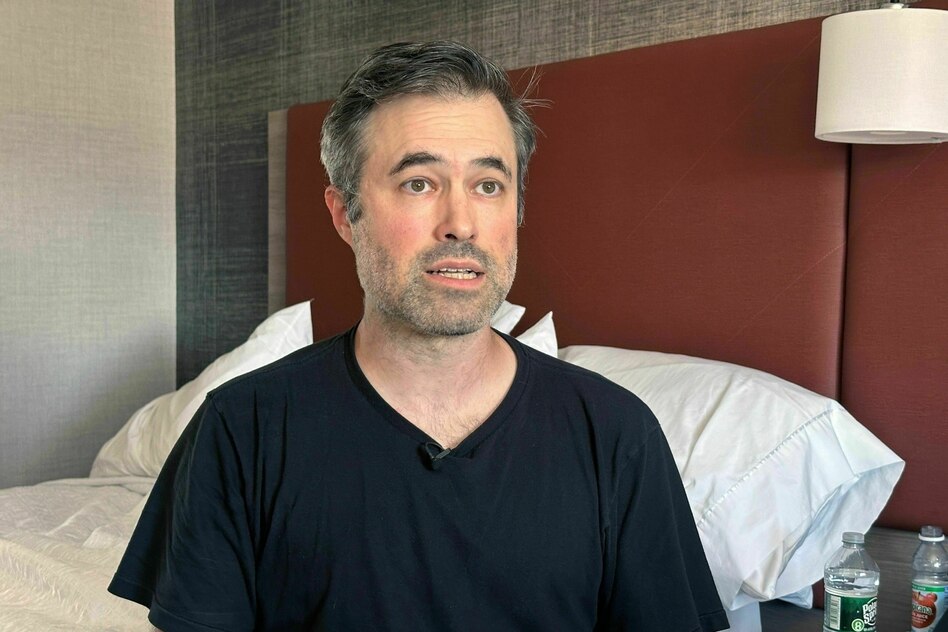
Bray: At first we lived in a hotel that no one knew about except my mother. On campus, I check to see if anyone is following me. When I leave a building, I change clothes, take different paths and exits. I know this is a bit overkill. A friend says: “Low probability, high impact.” The likelihood of something happening is low, the possible consequences would be serious. I feel safe enough.
taz: The organization Turning Point USA, founded by Charlie Kirk, called you “Dr. Antifa” and an Antifa member. What is actually your political background?
Bray: I have been politically active for many years: in the anti-globalization and anti-war movements. In 2011, I was one of the organizers of Occupy Wall Street in New York. I make no secret of my political beliefs. I am a historian of the radical left. My political work helped me with my research because anti-fascist organizations are very reserved towards the public. But I myself was never organized in an anti-fascist manner. In a broader sense, I consider myself an anti-fascist, someone who rejects fascism without any ifs or buts. My book also makes it clear that I am not neutral on this issue.
taz: What is Antifa then – an ideology, a movement, a network or an organization?
Bray: Depending on the context, it is a policy or ideology, a milieu or a current within the anti-fascist tradition. There are organizations that call themselves Antifa, but Antifa itself is not an organization. There may be a bird-watching club in Paris and one in New York. They aren't necessarily connected just because they do the same thing and perhaps align with each other.
taz: Is militancy part of this tradition?
Bray: That depends on what we mean by militant. Confrontation and violence have historically been part of the repertoire of possible means. This is not to say that violence is the most common tactic or first choice. One argument goes: Hitler and Mussolini started with small movements. That's why you don't wait to see whether a fascist group becomes big and dangerous, but rather you try to stop it early.
taz: What you describe as part of militant anti-fascism - organized confrontation and political violence - is now described by the US government as terrorism. How do you see that?
Bray: As a terrorism researcher, I am a subjectivist. I don't think terrorism is a useful term. Is all violence terrorism? Most people would say: no. The term is associated with al-Qaeda, IS, the World Trade Center and beheadings. Comparing this to non-lethal physical violence stretches the term to the point where terrorism is equated with violence. My short answer to the question “Is Antifa a terrorist organization?” is: It is neither an organization nor terrorist. I view terrorism as a socially constructed category that has been used to delegitimize political movements.
taz: The US government has classified the German “Antifa Ost”, also known as the “Hammer Gang”, as a foreign terrorist organization. Is this even an organization that actually exists?
Bray: I don't know enough about this group to judge what is reality and what is myth, or whether they even existed. But I think from the State Department's perspective it doesn't matter whether all of these entities actually exist. Four suspected organizations were classified accordingly. For the two Greek groups, from what I've read and heard, the names may have been used more as signatures for actions. There is no legal mechanism in the United States for a domestic group to be designated a foreign terrorist organization. It exists for foreign groups. I would imagine that it is also about establishing connections with American groups. However, this has not happened publicly so far.
taz: The US government now also speaks of “Antifa-aligned”, i.e. “Antifa-close”. Why is this important?
Bray: A few days after the order, the Department of Homeland Security began talking about “Antifa-aligned.” This means: Whatever Antifa is exactly - through association with it, what one locates in its environment also becomes a problem. Later there was a further shift towards left-wing violence and left-wing terrorism in general. My impression is that this lowers the hurdle of having to prove the existence of a specific organization.
taz: Your new book is about what happened to you and your family. Why did you write it?
Bray: It's about key moments in our history, but also about the history and politics that led to it. One strand is about what it means to me to be Jewish in the face of the resurgence of fascism, about the fact that part of my family was murdered in the Holocaust, and about my relationship to Jewish identity. Writing helped me process what I had experienced and turn something negative into something positive.
taz: You have built a life again in the USA. Will you stay?
Bray: I'm cautiously optimistic. I hope that when we meet again in ten years, this phase of American history will be at least partially behind us. I don't think MAGA or its underlying causes will go away. So I hold on to hope – and my ability to live my life here. But I would still like to spend my retirement in Europe.
Read the full story at the source
Source: taz