
Germany taz
Hebrew-German publishing house in Berlin: Back to the diaspora
Theodor Herzl's “Altneuland” is a founding text of Zionism. Altneuland Press, on the other hand, consciously founded itself in Berlin as an exile publisher. more...
Deutsch (original) ·Auto-translated to English
When Theodor Herzl published his novel “Altneuland” in 1902, very few people believed in the utopia outlined in it: a Jewish state in Palestine. But the novel helped spread the Zionist idea worldwide until it culminated in the founding of the State of Israel in 1948.
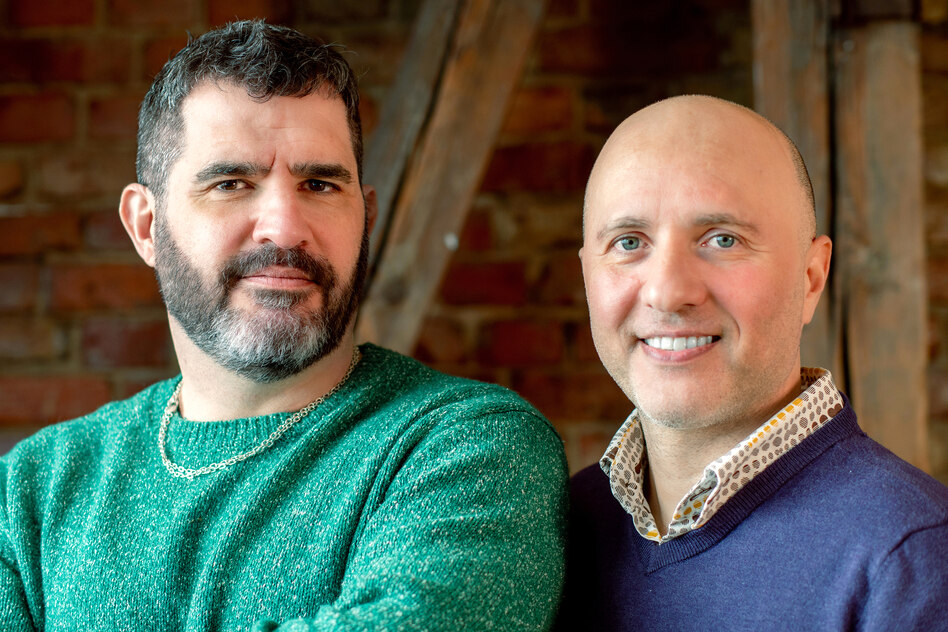
124 years after the publication of Herzl's novel, Moshe Sakal and Dory Manor are sitting in their living room in Berlin-Kreuzberg, rocking their baby and talking about “old new land”. Or better: about what they made of it. Altneuland Press is the name of their publishing house, which they launched in 2024. With Hebrew and German books. For the Israeli, the German, the international market. The reference to the novel is unmistakable, except that Sakal and Manor's publishing house points the opposite way: the way back to the diaspora.
More and more Israelis are leaving their country. They can no longer tolerate the right-wing extremist government and do not want to support the war in Gaza, which some of them describe as genocide, by remaining silent and staying there. For others, fear prevails over the never-ending rockets. From Gaza, from Lebanon, from Iran.
Manor and Sakal also emigrated and, like so many people, moved to Berlin. That was 2019. They wanted to have peace and quiet, didn't want to let politics pressure them the way they knew it from Israel, wanted to breathe deeply and live. And above all this: write.
But living abroad as an Israeli writer brings problems: the Sapir Prize, for example, has been reserved for those who live in the country since 2015. These problems came up again and again in bar conversations in Manor and Sakal's new home. “Why don’t you start a publishing company yourself?” new acquaintances asked her. Manor and Sakal waved him off.
A few years later, Manor carries a stack of books into the living room. “Cedrick,” is written on the top cover of the book, one of the publisher’s most recent releases. The book is about a teacher who recognizes his former student in a photo of a soldier who died in Gaza.
The novel has recently been published in three different editions. Two in Hebrew: one for the Israeli market, the paper is slightly thinner, paperback edition; one for the German market, hardcover, stronger paper. And finally a third, translated into German.
The concept is ambitious. Altneuland wants to do something to counteract Israel's financially ruined literary world. Many Israeli publishers, including the long-established and established ones, now charge the vast majority of authors money for publication.
Sakal and Manor reject this. But setting up a publishing company for an initially small target group that wants to do things differently also costs money. Can Altneuland – niche as the publisher has been so far – be sustainable? Start-up funding comes from Migdalor, a company founded by Germans and Israelis. But the goal is to become financially independent.
This is also why Manor and Sakal think ahead, translate into German and back, also take the Israeli market into account, and dream of being a gathering place for the entire diaspora, not just the German one. Altneuland Press should be multilingual and Hebrew at the same time, not tied to one country.
But it's not just about financial considerations. It's also about positioning yourself. Manor speaks of autocensorship, albeit one that is difficult to measure. The more critical the books, the more hesitant publishers and even the authors are. You can say: Altneuland Press doesn't just want to be a diaspora publisher, but also a political exile publisher.
And in a place where everything comes full circle. The modern Hebrew language experienced one of its early peaks in Berlin. The national poet of the Hebrew language, Chaim Nachman Bialik, celebrated his big 50th birthday in the Berlin Philharmonic in 1923, shortly before he emigrated to Palestine.
Samuel Josef Agnon, the only Hebrew-language poet to win the Nobel Prize, lived in Germany from 1912 to 1924 and wrote some of his important Hebrew-language works here. Publishers printed magazines and books in the newly awakened language. Berlin was a vibrant center of Hebrew-speaking culture until the handover of power to the National Socialists.
Manor and Sakal know that Israel is today's center of Hebrew language and literature. But they want to expand it again. Their goal is to bring Hebrew back to the world. “We believe that Hebrew can, should and indeed will be written in many places – without borders, without territory.” Now it remains to be seen whether the publisher can cope with reality.