
Germany · taz · · 3h
Half-empty storage: How Reiche wants to secure more gas for the winter
Deutsch (original) · Auto-translated to English
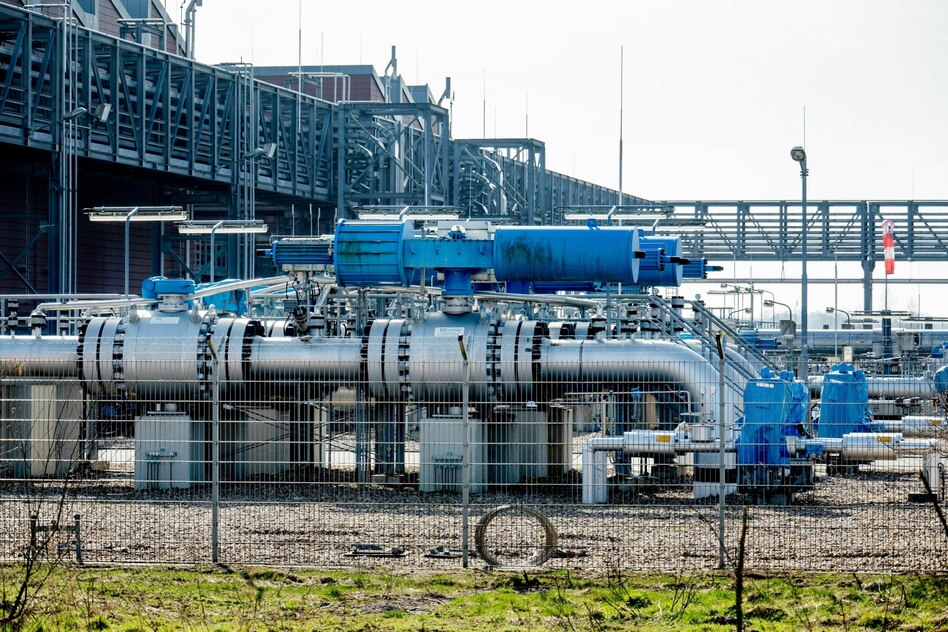
The heating season is just around the corner, but the underground gas storage facilities are emptier than last year - while the local storage facilities were 76 percent full in mid-September 2025, they are now only 56 percent full. But now Federal Economics Minister Katherina Reiche (CDU) is apparently pushing for gas traders to store more fuel.
The discussion has been going on for months. The association of storage operators warns that the existing quantities may not be sufficient for a very cold winter. Then the prices would probably rise significantly.
The Ministry of Economic Affairs had previously stated that there would definitely be enough heating energy available due to the new liquid gas terminals on the coast. Now the Reuters agency reports that Reiche wants Trading Hub Europe (THE), a gas network operator company, to tender larger storage capacities than before.
The gas traders involved would thereby promise to store additional quantities of gas, which would then be available from January 2027. In return, THE dealers received a provision fee, and the gas network operators could then pass on the costs to the gas price. This means that the state does not bear the costs; Private households and companies that need the gas for heating and production have to pay.
This mechanism has already been used so far. For the first winter months of 2026, this has already cost around 50 million euros. Now the quantities are expected to increase. It could also be a little more expensive because of the low storage capacity, but overall the measure would have relatively little impact on end customer prices.
At the same time, the state-owned German gas companies Sefe, formerly Gazprom Germania, and Uniper want to buy more fuel as a precaution for the winter. “We expressly welcome the fact that Sefe wants to increase its activities to fill the storage facilities,” said a spokeswoman for the Ministry of Economic Affairs.
The storage facilities are now emptier than they were at the same time last year because natural and liquid gas has become more expensive on the global market. This is a consequence of the Iran war and the extensive closure of the Strait of Hormuz. Because of the high purchase price, gas traders fear that their profit from selling the stored quantities in winter will be too low.
Economics Minister Reiche had more or less let developments run their course so far. In her opinion, companies are primarily responsible for ensuring supplies, not the state. She also wants to avoid a situation like after the Russian attack on Ukraine in 2022, when THE gas bought at extremely high prices and in the end the state paid the bill, which it did not want to burden the customers with.
However, the Minister of Economic Affairs accepted that the requirements of the Federal Government's filling level regulation were not met. After that, the underground storage facilities should actually be filled to an average of 70 percent by November 1st. It is now unrealistic to achieve this goal the normal way.
And what happens next in 2027? The filling level regulation expires at the end of March. The pressure to store sufficient gas could then decrease further. A possible consequence would be that THE begins to tender larger quantities earlier in the summer. The gas reserve that Reiche is planning to set up in the event of crises and war may also help. According to their plans, this should not serve as normal winter precautions. But the gas would be in the same storage facilities and would also act as a buffer for particularly cold periods.
Read the full story at the source
Source: taz