
Migration taz
Border procedures for refugees: Four months in the transit area
Two Somali women who suffered genital mutilation have been held at Frankfurt Airport since July. Are the authorities here testing how far they can go? more...
Deutsch (original) ·Auto-translated to English
They sought protection from sexual violence, the traces of which they still bear today. But the two Somali women who have been held at Frankfurt am Main Airport since early summer and are now threatened with deportation are now part of a larger political conflict. Based on her case, authorities, courts, lawyers and activists are wrestling with how hard Germany will implement the latest reform of the Common European Asylum System (Geas). Pro Asyl, which advises the two women, reported in detail about the case on Thursday. The taz has documents on this.
The two young women fled independently from Somalia to Ethiopia in the spring. From there they flew to Frankfurt with the help of smugglers and applied for asylum. Both are victims of female genital mutilation - a brutal practice that often torments those affected for life. Nevertheless, they have been stuck at Frankfurt Airport for over four months, in conditions that resemble imprisonment.
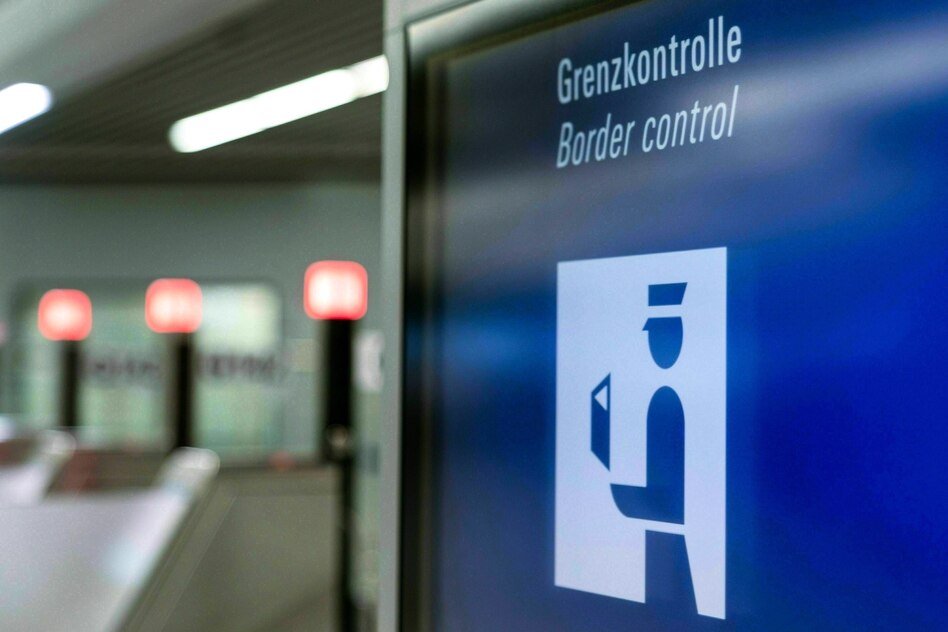
After applying for asylum, the authorities took the women into the so-called border procedure. The Geas reform that came into force in June stipulates that refugees from non-EU countries are still detained and detained in the transit area. The authorities examine the asylum applications in a fast-track procedure; if they are rejected, they are immediately deported. This is possible because those affected are legally considered not to have entered the country, even though they are on German soil.
The two Somali women are among the first refugees to fall under the new Geas rules. Actually, refugees who are particularly in need of protection should not go through the border procedure, but should enter the country regularly and go through their asylum procedure within the country. Requirement: There must be “relevant medical reasons” or “the necessary support” cannot be granted in the border procedure.
There is much to suggest that this is the case with the two Somali women. According to the World Health Organization, female genital mutilation is often associated with a variety of serious physical and psychological problems and secondary illnesses. Nevertheless, the Federal Office for Migration and Refugees (Bamf) saw no reason to remove the two women from the border procedure.
Lawyer Lena Ronte represents both women and reports that her clients were each examined for less than a minute at the airport. The doctor did not speak to them and an interpreter was not present. Is it really possible to determine whether someone is physically and mentally healthy? Healthy enough to go through border procedures? The Bamf only answers these and other questions from the taz by saying that it does not comment on individual cases.
Ronte says: “These procedures make it clear that the special procedural guarantees for particularly vulnerable protection seekers only exist on paper.” Although the federal government always claims to take female genital mutilation seriously as a problem, it “obviously has no interest in implementing this in its own procedures”.
But the case may be about more than the two Somali women or the handling of female genital mutilation alone. Pro-Asylum managing director Helen Rezene says: “The border procedure serves as a laboratory in which the authorities test how far they can go.” The responsible authorities always deny such allegations.
In practice, the rules in asylum policy often leave a lot of room for interpretation: Who is considered a hardship case? What as a credible report? The Geas reform in June added new scope. And in order to test how harshly the new rules can be interpreted, the border procedure actually offers good “laboratory conditions,” as Rezene calls it. Once detained, the refugees here are largely cut off from the public. Lawyers, activists and the media find it much harder to get to them than usual.
Anyone who looks beyond the case of the two Somali women will recognize a pattern: in the past few months, the Bamf has arrested several people for whom there is much evidence that they do not belong in the border procedure. For example, an Algerian family with small children at Berlin's BER airport, in whose case a court later decided that the family could not be expected to undergo the procedure. Or an Uzbek trans woman who was a victim of human trafficking and was only released after her lawyer intervened. The case of the Somali women is probably the most blatant that has come to light so far.
But what is striking is not only that the Somali women had to remain in the border process - but also that the Bamf rejected their asylum applications after a few weeks. A look at the Bamf statistics shows how unusual this is: in 2025, asylum applications from Somali women were only rejected in around five percent of cases on average.
The Bamf justifies the rejection by saying that the women's accounts of forced marriage, domestic violence and rape are unbelievable. How this assessment relates to the women's physical impairments remains an open question. The UN refugee agency UNHCR sees female genital mutilation in itself as a reason for refugee protection.
In many cases, this is not a one-time injury that occurred in the past, but rather a recurring threat. Affected women are often mutilated again later, for example when they get married or give birth to children. One of the two women stated that her husband had specifically threatened to mutilate her again.
The Bamf also accuses the women of concealing their identities. Both got on the plane with passports, but no longer had any documents when they arrived. Pro Asyl and lawyer Ronte explain that these were false Ethiopian passports that were provided by smugglers. The smugglers also instructed the women to return the documents after the security check or to destroy them on the plane. If that's true, it was exactly the other way around than what the Bamf portrayed: making false passports disappear cannot be identity deception.
This cannot be proven. But the fact that false passports are easy to obtain in Ethiopia is also evident from the Foreign Office's current country report for the country, which is available to taz.
While the women have been constantly threatened with having to fly back to Ethiopia since their rejection, their case is now also being dealt with by various courts. First of all, the Frankfurt Administrative Court and the Hessian Administrative Court, which confirmed the rejection several times. It was only on October 16th that the Federal Constitutional Court stopped the threatened deportation of the two women until it had decided on a constitutional complaint that had also been filed by the lawyer. The Frankfurt administrative court also did not sufficiently examine whether the conditions for rejection were met and whether the Somali women were really suitable for the border procedure.
Nevertheless, just under a week later, on October 23rd, the Frankfurt Administrative Court decided that there was no reason to fly one of the women out of the country. The judges' adventurous argument: The Federal Constitutional Court had only banned a "deportation" - but forcing the Somali women onto the plane was a "refoulement" because the women had never legally entered Germany. This is a remarkable interpretation, simply because the words “deportation procedure” and “deported” are used in the EU regulation that regulates departures according to the border procedure (VO 2024/1349).
Lawyer Ronte speaks of a “brazen disregard for a constitutional body” and says: “The administrative court’s decisions of October 23, 2026 read as a request to the federal police to finally deport the two women.” According to her own information, the lawyer intervened with the Constitutional Court, whereupon the Federal Police confirmed that it would not deport the women for the time being.
The Somali women are still stuck at Frankfurt Airport. But there is at least some hope: the border procedure stipulates a maximum detention period of three months after the asylum application is rejected. If the authorities are unable to fly those affected out during this time, they will be allowed to leave the airport and will be accommodated as normal - even if the threat of deportation remains.
In the case of Somali women, the deadline is mid to late November. It is already foreseeable that the courts will no longer be able to clarify the open questions about your case beforehand.
Because deportation is not possible for that long, the two women will most likely be released in about three weeks. When asked by the taz whether the women could not be released now, the Bamf did not answer.