
Germany taz
Gregor Schneider's “Haus u r” Düsseldorf: Art with no way out
Gregor Schneider recreates interiors for his exhibition “Haus u r 2026” at the Kunsthalle Düsseldorf. The horror is slowly creeping in. more...
Deutsch (original) ·Auto-translated to English
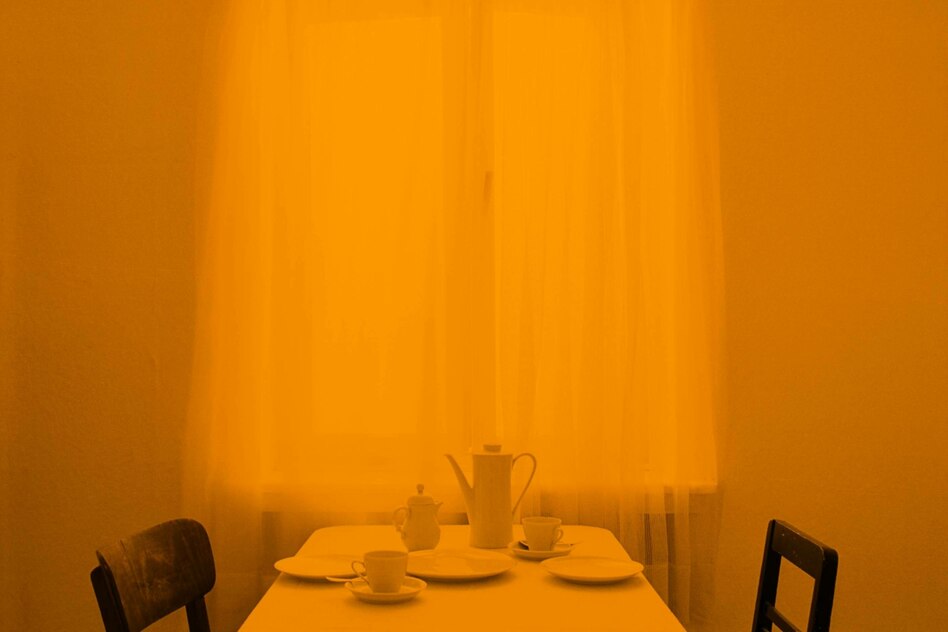
Gregor Schneider is a special case in the global art world. When he installed his “Totes Haus u r” in the German Pavilion for the Venice Biennale in 2001 and received the Golden Lion for it, it was a great start. Since then, he has repeatedly caused a stir with irritating projects, such as a black cube reminiscent of the Kaaba or a replica of a death chamber.
The artist does not live in Berlin or New York, as befits an art star. He is still based in Mönchengladbach-Rheydt, the city where Joseph Goebbels was born. Schneider bought the house where he was born so that it wouldn't be left to neo-Nazis.
He explored it, lived there for a time and invited visitors there for coffee. He is still pushing forward with the project: a book about his purchase and gutting of the Goebbels House, not far from “Haus u r”, has just been published. “I see myself more as an enlightener,” says Schneider.
Gregor Schneider: “House u r 2026”. Kunsthalle Düsseldorf, until January 17, 2027
For Venice, he had incorporated parts of the interior of his parents' house in Rheydt into the German Pavilion. Since around 1985, Schneider has been working tirelessly on this abandoned house, putting in new walls, doubling rooms, installing gaps and false windows and thus building labyrinthine structures out of completely unspectacular rooms.
He always starts from the real, lower-middle-class West German living conditions of the second half of the 20th century, but leaves out a lot, replicates other things, adds tiny but suggestive details and postpones everything until apparent normality becomes irritating.
It is a quiet horror that creeps in when the elements of West German post-war normality are exposed through Schneider's shifts into recognition: as attempts to repress the past and to find deceptive peace from the ghosts of the past in banal non-aesthetics. But they continue to rumble in the deserted bedrooms without a bed with fuzzy carpets, a cheap wardrobe with a mirror in which you can see yourself, and milky windows looking out into nowhere.
Schneider calls his gigantic collection of replicas “my spatial memory”. They are stored like massive puzzle pieces in a huge hall. “I have to do it because no one else will do it for me,” is how he describes his life project. He is therefore “a bit inflexible” and cannot “just paint in Paris,” he admits on the sidelines of his exhibition in the Düsseldorf Kunsthalle: he has now installed two of his nested room labyrinths there.
The exhibition was born out of necessity. The art gallery was actually supposed to be renovated. But the planned closure and renovation of the brutalist building on Grabbeplatz was surprisingly postponed for three years in the spring.
Alicia Holthausen, the acting director, had been thinking about a show with Schneider “at some point” during the interim period. But now she had to pull the current one out of the hat quite spontaneously. This was possible thanks to the modular storage of Schneider's “spatial memory” and because, as his own logistician, he was able to deliver quickly.
The exhibition poster is already a trap: it shows the ominous family home in Rheydt from some distance. The shot is romantic, taken at night behind blossoming almond trees. In the Kunsthalle, however, “Haus u r 2026” provides experiences that are at least uncomfortable.
It starts with the fact that you can only enter the two room courses individually. Depending on the number of visitors, a longer waiting time is taken into account. The feeling that you know from a doctor's waiting room is already spreading.
When it's your turn, you first grope into the pitch dark. There you are forced to strictly follow the planned course. This means that you open doors that close behind you and can no longer be opened: a way back is therefore not possible. The only way to continue is through the next door.
Sometimes you are monitored by cameras. In a gaming room you see yourself filmed live on a screen. The next room is the reflection of the room you just left. Every now and then you end up in a night-black hallway and grope for the next door handle.
First you stand in an icy cold chamber, then in a cellar. In the dim light you can see a discarded mattress and an orphaned children's bicycle.
You can also fail in the second course. It starts with an aseptic bathroom with a low ceiling and a shower cubicle but no sink. Something is dripping somewhere. Behind the next door: the same bathroom, the dripping sound again. Chinese water torture? And isn't the ceiling even lower? Another bathroom. And another one.
After the fourth one you get the impression of running in circles. Another dark hallway. Am I trapped in the hell of the baths? I end up at the emergency exit again, the escape reflex is stronger than the will to art. Again reprimanding looks and a supervised walk back. They are – spoiler alert! – not four, not five, but ten identical bathrooms, as a result of which you systematically lose your orientation.
In addition to the two large spatial courses, Schneider's documentary photographic works, films and changing live streams from the original “Haus u r” in Rheydt are also exhibited in two rooms. Before attempting the room course, the live streams from the silent rooms seem a bit boring. After the inspection, Georg Büchners Lenz comes to mind, who heard a “terrible voice that screams across the entire horizon and which is usually called the silence.”