
Germany taz
Global Coral Report: Impending end of an ecological service provider
It is dramatic: the corals, which are vital for many people and animals, are in danger of perishing. But society doesn't care. more...
Deutsch (original) ·Auto-translated to English
Once again bad news for the climate: The EU Parliament has postponed the climate protection rules for foreign fossil fuels. Originally, importers were supposed to have to prove that the producer in the country of origin monitors and reduces its methane emissions. Just a reminder: methane is much more harmful to the climate than carbon dioxide. Parliament justified the postponement until 2031 with the “energy price crisis”.
There is always something that puts climate protection on hold. Science warns that without a rapid reduction in methane emissions in the next few years, the 1.5 degree target set out in the Paris Protocol can no longer be achieved. But firstly, it's already clear to everyone and secondly, it's a crisis right now.
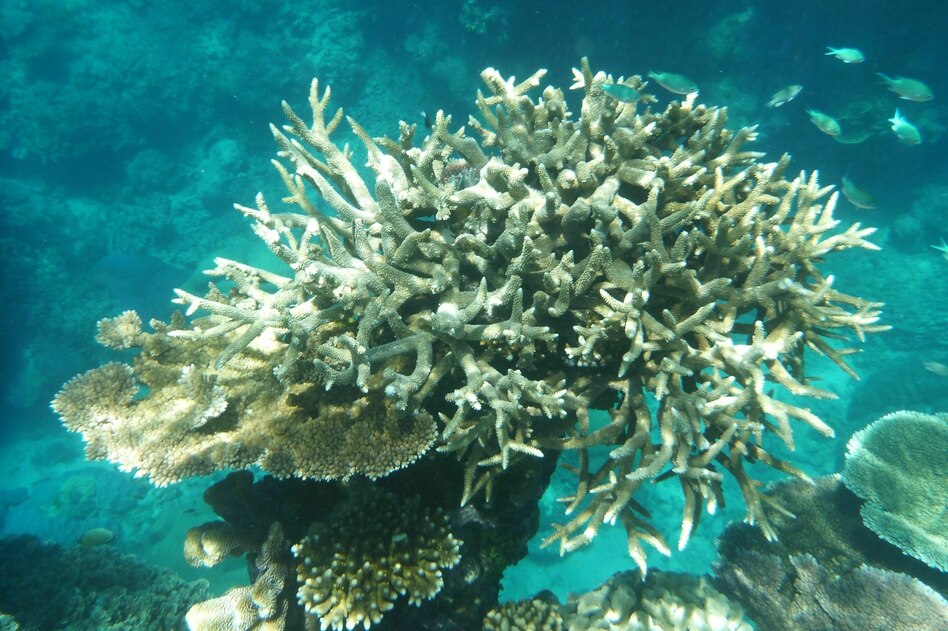
It is dramatic that politics and society no longer trust the findings of science. This has long been warning: If global warming permanently exceeds 1.5 degrees, coral reefs worldwide will die. A report by the International Union for Conservation of Nature (IUCN) warned this Thursday that global warming will destroy 96 percent of all coral reefs in the world's oceans within the next 50 years. Other research concludes that 99 percent of the world's coral reefs will be destroyed if temperatures move 2 degrees above pre-industrial times.
The taz is an independent, left-wing and opinionated daily newspaper. We have been arguing in our comments, essays and debate texts since the taz was founded in 1979. We often cannot and do not want to agree on an opinion. That's why you'll find some completely opposing positions here - all part of the very broad left-wing spectrum of opinions.
Corals are native not only to tropical waters, but also to colder ocean regions. However, they are fighting even harder for their survival because temperatures are rising more sharply in the northern and southern latitudes than around the equator. Human life without corals - that seems unthinkable: at least half a billion people base their livelihoods on the services of coral reefs. With their diversity of species, they are the starting point for many food chains.
Without corals, there is no algae and zooplankton, there are no snails or crabs, and therefore no predatory fish. The reefs are nurseries for commercially important fish. According to studies, the value of ecological services amounts to 6.8 billion dollars per year. The reefs are also effective breakwaters that absorb most of the wave energy - thus cushioning erosion and flooding on the coasts.
This will be over in 50 years if the report proves to be true. It may be that politicians and society don't believe that yet. But then it will really become clear what a crisis is.