
World taz
Trump, Xi and Putin Summit: The Brazen Three
The heads of state of Russia, China and the USA meet in Shenzhen in a highly publicized manner. But nothing more than diplomatic pomp can be expected. more...
Deutsch (original) ·Auto-translated to English
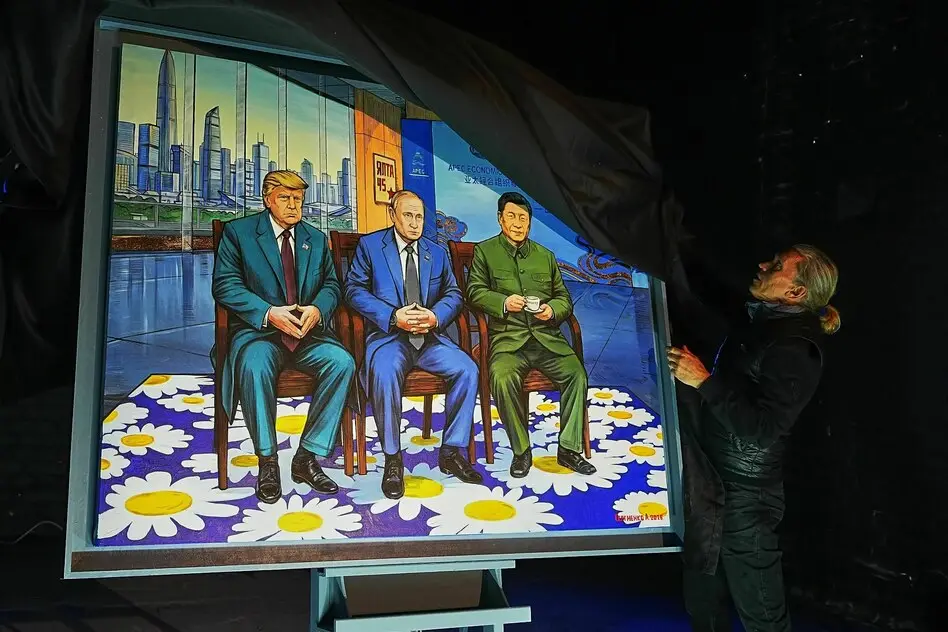
When the world's three most powerful heads of state meet in Shenzhen on Thursday, the real occasion - the summit of the Asia-Pacific Economic Cooperation (APEC) - will become a minor matter. The focus of attention is a diplomatic premiere of historic proportions: the presidents of the USA, China and Russia are meeting for the first time to sort out the geopolitical world order. In addition to denuclearization and the Iran war, the US President will also talk about his “favorite topic: Ukraine,” said Donald Trump shortly before his departure to Asia.
The historical parallel to the Yalta Conference of 1945 is obvious: At that time, Franklin Roosevelt (USA), Josef Stalin (Soviet Union) and Winston Churchill (Great Britain) decided on the future of Europe after the Second World War during a meeting in the Crimean resort town of the same name. Will Trump, Xi Jinping and Vladimir Putin of all people now try again to promote a new order in the world?
A possible answer to this could be provided by a saying by Karl Marx, which Gideon Rachman – chief foreign policy commentator for the Financial Times – used in his recent column: “History repeats itself – first as tragedy, then as farce.”
It is obvious that the initial situation over 80 years ago, when Europe was in ruins, is very different from the present. Many experts consider the so-called G-3 format to be little more than a diplomatic aberration that is unlikely to produce any lasting results other than a few photos for the history books. And yet the tripartite summit is certainly worrying from a European perspective.
"The big problem is concern about precedent. There will be a meeting staged as if three heads of state were solving global problems," said Shanghai-based analyst Han Lin of consultancy Asia Group. The message to today's so-called middle powers is clear: they must potentially accept decisions made over their heads.
This affects not only Europe, but also the US allies in the Indo-Pacific: Both Putin and Xi will want to pressure Trump to respect their respective core interests - Ukraine and Taiwan. However, it is unlikely that the US President will be willing to make significant concessions.
The unusual thing about the spectacular three-party summit is less that the world powers are exchanging ideas about global conflicts. What is more difficult to understand is why Russia – an economy the size of Italy – belongs to this select group. The impression is that not only Trump is being duped in Shenzhen, but also Xi Jinping. The clear beneficiary of the summit is already clear before it even begins.
“The big winner of this meeting is Vladimir Putin, because it gives him the legitimacy of a head of state who is on a par with the two far more powerful countries, China and the USA,” says Kurt Tong, a former US diplomat in East Asia who now also works for the Asia Group.
China's head of state Xi Jinping should at least like the idea of being at the center of world diplomacy as a host. The fact that he managed to bring Putin and Trump together against the futuristic backdrop of Shenzhen could also give Xi a boost in domestic politics. Next year, the most powerful Chinese leader since Mao Zedong, the country's founder, would like to secure his fourth term in office.
At the same time, the 73-year-old will act cautiously when making concrete diplomatic moves. Xi is someone who always goes into negotiations meticulously prepared; He prefers protocols that are detailed down to the smallest detail and feels uncomfortable with spontaneously flowing, highly associative discussions like Trump likes to have. “Beijing wants to enjoy the prestige without having to take on any responsibility for resolving these conflicts,” says expert Tong.
China has sometimes contradictory interests in the Iran war. On the one hand, the People's Republic benefits from the fact that a number of countries are pushing forward the transition to renewable energies in the wake of rising oil prices. After all, the country produces en masse the electric cars and solar modules for which global demand has recently risen sharply.
At the same time, these high oil prices are having a major impact on the global economy. And China, whose economy is extremely dependent on its exports, is particularly suffering from the falling consumption of its trading partners. In this respect, the bottom line is that Beijing would probably be interested in a quick end to the conflict.
When it comes to the Ukraine war, however, China's priorities are different. For Beijing, Moscow is a de facto ally in the systemic competition against the political West. Last summer, Chinese Foreign Minister Wang Yi told EU foreign policy chief Kaja Kallas that China “cannot afford” for Russia to lose the war. In the event of a Russian defeat, the US would turn its attention entirely to China. This position has not changed to this day.