
Germany · taz · · 4h
Trade union protests against cuts: Social protests are becoming more widespread
Deutsch (original) · Auto-translated to English
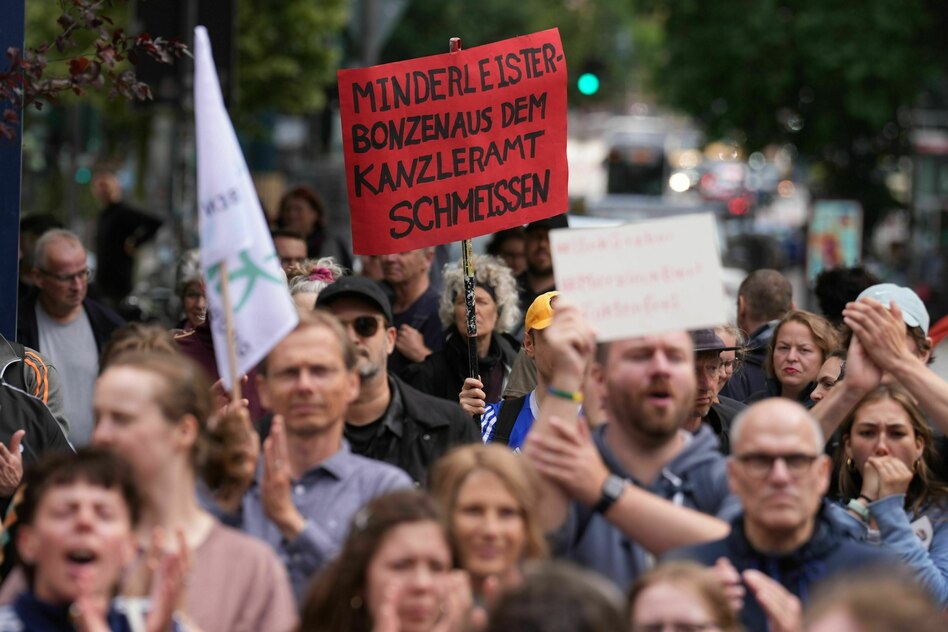
The unions are making another attempt to go on the offensive. For the coming weekend, the DGB is calling for nationwide social protests against the federal government's austerity plans. Under the motto "Hard earned! Your work. Your health. Your pension", rallies are planned in 15 cities, including Berlin, Essen and Frankfurt am Main. The union expects 10,000 participants for the rally in Essen alone, where DGB leader Yasmin Fahimi is scheduled to speak.
Recently, however, the DGB has had to struggle with mobilization problems. At the beginning of July, the unions and the Left Party called for a day of action, which barely 1,000 people came to in Berlin. A DGB protest in Hamburg, which mobilized at least 4,000 people, showed that there is definitely potential for improvement - but a sustainable protest movement did not develop.
So now the unions are trying again. “The reform package is perceived by broad sections of the population, with good reason, as unfair and sometimes even disrespectful,” Verdi chairman Frank Werneke told the taz on Thursday. The call criticizes a wide range of planned measures, including the discussed weakening of the 8-hour day, the planned sick leave from the first day of work, the planned abolition of the pension without deductions at 63 or the significant expansion of the fixed-term limit without any objective reason.
After the CDU's disastrous election results in Mecklenburg-Western Pomerania and Berlin, Chancellor Friedrich Merz announced that he would stick to these reforms. Shortly afterwards, he surprisingly stated that he recognized that many people see the “coexistence of private and statutory health insurance” as a “justice problem” and announced changes. But Health Minister Carsten Linnemann (CDU) immediately rowed back.
“The federal government is acting according to the motto: Close your eyes and get through it,” says Werneke. Above all, he sees the SPD as having a duty to “finally stand on its hind legs and put up a stop sign.” The trade unionist, who is himself a member of the SPD, sees this as an existential question for social democracy. "They absolutely want to hold this coalition together. But legislation that is deeply unfair will lead the SPD into political insignificance because it will lose all connection to the workers."
But the DGB does not attack the government directly either. All that is required is an active policy that secures jobs and locations - a call for Friedrich Merz to resign, for example, is missing from the call. In fact, the DGB initially had difficulty criticizing the reform package. Immediately after its announcement in July, DGB boss Yasmin Fahimi even spoke of “the right signals for employment, growth and relief”.
IG Metall appeared more combative earlier this week. On Monday, the union called for an “automobile day of action” in which, according to the union, up to 175,000 employees in over 280 locations protested against threatened job cuts, factory closures and the deterioration of working conditions. In doing so, the union also pushed the narrow limits of the German right to strike - for example, by scheduling internal company meetings and interrupting them for protest actions.
On Saturday, some left-wing groups plan to shake up the union protests. In Berlin, for example, the alliance is shouting “It’s enough – for everyone!” formed its own bloc, which consists of left-wing groups such as the school strike movement against conscription, the anti-fascist alliance Resist, but also the aid organization Doctors of the World and the action alliance “Secure Psychotherapy”. “The Merz pain must finally stop, that’s why this anti-poverty government has to go,” said a spokesman for the alliance to the taz.
The means of choice for these activists: redistribution. A mobilization video from the alliance states that Germany could spend a trillion euros on schools, youth clubs and local transport – “if there were no billionaires”. That's why massive redistribution is needed, the spokesman told the taz. Other left-wing groups, such as the anarchist union FAU, also want to critically monitor the union protests at the weekend, some with their own blocs at the protests.
Read the full story at the source
Source: taz