
Politics taz
General strike in Senegal: Unions demand bread instead of the Olympics
Shortly before Africa's first Olympic sporting event starts in Senegal, the unions stage an uprising. The government has no more money. more...
Deutsch (original) ·Auto-translated to English
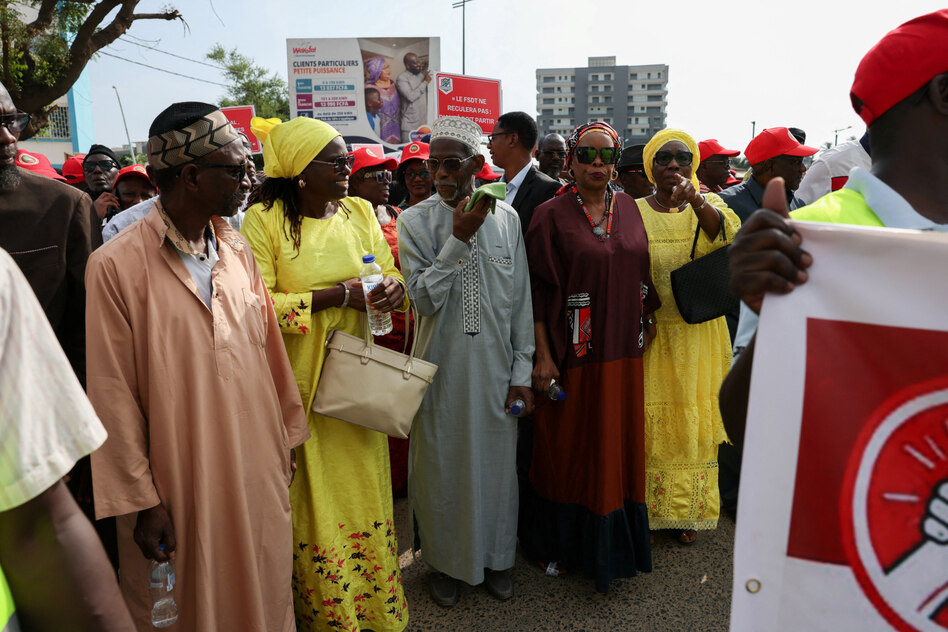
Music echoes loudly across the sidewalk, where numerous people with red hats and flags and homemade signs are crowding around. Loudspeakers on a pickup truck crack loudly, then a deafening squeal interrupts the music: "Comrades, gather together! It's starting!" the announcer shouts into the microphone. Led by the pick-up truck with the loudspeakers, the entourage sets off and blocks a main road in Senegal's capital, Dakar, just in time for rush hour traffic.
An alliance of 13 trade union associations has called for a three-day general strike in Senegal starting on Wednesday. The timing was chosen deliberately, just eleven days before the start of the Youth Olympic Games (JOJ) in Dakar on October 31st.
Around 2,700 young athletes from all over the world are expected in Senegal's capital in the next few weeks; it will be the first Olympic event on the African continent. Preparations have been in full swing for months. Road markings were neatly repainted, sidewalks were spruced up, and even the train connection between the international airport and the central train station was ceremoniously completed just in time. The government wants to present itself as a good host that has its infrastructure under control.
A general strike would be extremely inconvenient. In a desperate attempt, Senegal's Minister of Public Service and Labor, Mamadou Lamine Dianté, called on the unions to suspend their strike. The games are of great importance for the country's international reputation, he argued, appealing to the "sense of responsibility" and "patriotic spirit" of employees to ensure the functioning of the public service during the major event.
But for the strikers, retreat is out of the question: “We have been waiting for months for the government to promise, now it is enough,” says teacher Marieme Sakho Dansokho, one of the demonstrating strikers. The dispute between President Diomaye Faye and his former Prime Minister Ousmane Sonko has paralyzed the country for months. Even after his dismissal, Sonko still holds the majority in parliament and was elected speaker of the parliament. His latest threatening gesture is the announcement that he will block the upcoming vote on the budget in Parliament.
Marieme Sakho Dansokho is not alone in her frustration with political discord and the lack of implementation of election promises. "We are suffering from enormous inflation. A year ago I paid 8,000 CFA francs (12.20 euros) for a bag of rice, today it's 12,000 or even more," the teacher gives an example. When Sonko and Faye took office in 2024, then still allies, hopes were high for the duo and their promises of reform. But since then purchasing power has fallen, there have been massive layoffs in large companies and, despite booming oil and gas production, Senegal's public finances are massively burdened by high national debt.
Shortly after Faye took office in 2024, a previously unknown budget hole of the equivalent of $13 billion was discovered. For years, under the previous government of President Macky Sall, balance sheets had apparently been falsified, concealing the true extent of Senegal's debt. Since then, the government's financial flexibility has been severely limited and savings are being made wherever possible. The fact that millions were spent on sprucing up and sports infrastructure in this context is not only met with enthusiasm.
The demands of the unions - they represent teachers, nursing staff and transport workers, among others - range from better working conditions to higher pensions and bonuses to a housing allowance of 100,000 CFA francs (around 153 euros). The new labor code, which came into force on September 3rd, is also being criticized. Among other things, it allows employers to employ employees on fixed-term contracts for up to four years. What is required is a timely revision of the regulations with more security for employees.
The fact that people are going on strike despite the appeals angers the government. In a statement on Tuesday, the ministry threatened the civil service with wage deductions, disciplinary measures and labor law consequences. The conflict is not new. Both sides have been struggling to reach an agreement for months, but have so far been unsuccessful.
On October 15, Prime Minister Ahmadou Al Aminou Mohamed Lô called on the unions to suspend their strikes for three months. The state will gradually meet its obligations as soon as public finances stabilize, he appealed for more patience. But that has long since been used up.